Complete Employer, HR & Payroll Compliance Guide (MyTax, e-Filing, EA Form & PCB Explained)
Income tax season is one of the most critical compliance periods for Malaysian employers. While individual employees are responsible for submitting their own tax returns, HR and payroll teams play a central role in ensuring accurate reporting, correct EA Form issuance, and alignment with LHDN (LHDNM) records.
With Malaysia’s tax filing system now fully digital via MyTax e-Filing, employers must ensure payroll data, PCB (Potongan Cukai Bulanan) deductions, and statutory reporting are consistent and compliant.
This guide explains:
-
Who needs to file income tax in Malaysia
-
Income tax filing deadlines
-
Required documents (including EA Form)
-
Step-by-step MyTax e-Filing process
-
EPF & insurance tax relief rules
-
Common mistakes employers should help employees avoid
-
Why income tax compliance matters for HR governance
Who Needs to File Income Tax in Malaysia?
Income tax filing obligations apply to more than just salaried employees.
An individual must file income tax if they fall into any of the following categories:
-
Salaried employees earning above the taxable threshold
-
Individuals earning more than RM37,333 annually (after EPF deductions)
-
Freelancers, gig workers, e-hailing drivers, and delivery riders
-
Self-employed individuals and business owners
-
Individuals registered with LHDN and issued a Tax Identification Number (TIN)
-
Employees with multiple income sources (salary + rental + freelance income)
Even if no tax is ultimately payable, individuals with an active tax file may still be required to submit a return.
From an employer’s perspective, this means ensuring accurate payroll reporting and timely EA Form issuance.
Income Tax Filing Deadline in Malaysia (2026 Assessment Year)
Income tax in Malaysia is assessed annually based on the calendar year (1 January – 31 December).
For most individual taxpayers:
-
March–April: Filing period opens
-
e-Filing submissions generally receive an extended deadline compared to manual filing
Late submission may result in:
-
Penalty assessments
-
Increased tax payable
-
Enforcement action by LHDN
HR teams should encourage employees to file early to avoid last-minute portal congestion and documentation errors.
Essential Documents Required for Income Tax Filing
Before filing via MyTax e-Filing, individuals must prepare supporting documents.
Key Documents Include:
-
EA Form (issued by employer)
-
EPF contribution statement
-
Insurance and takaful premium statements
-
Lifestyle and medical receipts
-
Donation receipts (approved bodies only)
-
Business income and expense records (if applicable)
⚠️ Important Compliance Rule:
All tax-related documents must be retained for seven (7) years, as required by LHDN for audit purposes.
For HR, issuing accurate EA Forms before the statutory deadline is critical to prevent employee reporting discrepancies.
How to Register for a Tax Identification Number (TIN)
First-time taxpayers must register before filing.
Registration is completed online via:
-
MyTax portal
-
e-Daftar system
This applies to:
-
New employees
-
Freelancers and gig workers
-
Individuals who have never been issued a tax number
Upon approval, LHDN will issue a Tax Identification Number (TIN), which is mandatory for income tax filing.
Step-by-Step: How to File Income Tax in Malaysia (MyTax e-Filing)
Income tax filing is completed through the MyTax system.
General e-Filing Process:
-
Log in to MyTax
-
Select the correct tax form (e.g., BE for salaried employees, B for business income)
-
Enter employment income based on EA Form
-
Declare additional income sources
-
Claim eligible tax reliefs
-
Review tax computation summary
-
Submit return
-
Download and save the acknowledgement slip
For employers, the critical compliance checkpoint is ensuring:
-
EA Form figures match payroll records
-
PCB deductions align with reported income
-
Statutory submissions are consistent with LHDN data
Any mismatch may trigger employee complaints or audit queries.
Taxable vs Tax-Exempt Income in Malaysia
Understanding income classification reduces filing errors.
Common Taxable Income
-
Salary and wages
-
Bonuses and commissions
-
Fixed allowances
-
Business or freelance income
-
Rental income
-
Foreign-sourced income (subject to prevailing rules)
Common Tax-Exempt Income
-
Dividends from Malaysian companies
-
EPF dividends
-
Inheritance and hibah
-
Gifts not related to employment
-
Certain government allowances
Misclassification may result in overpayment or under-declaration.
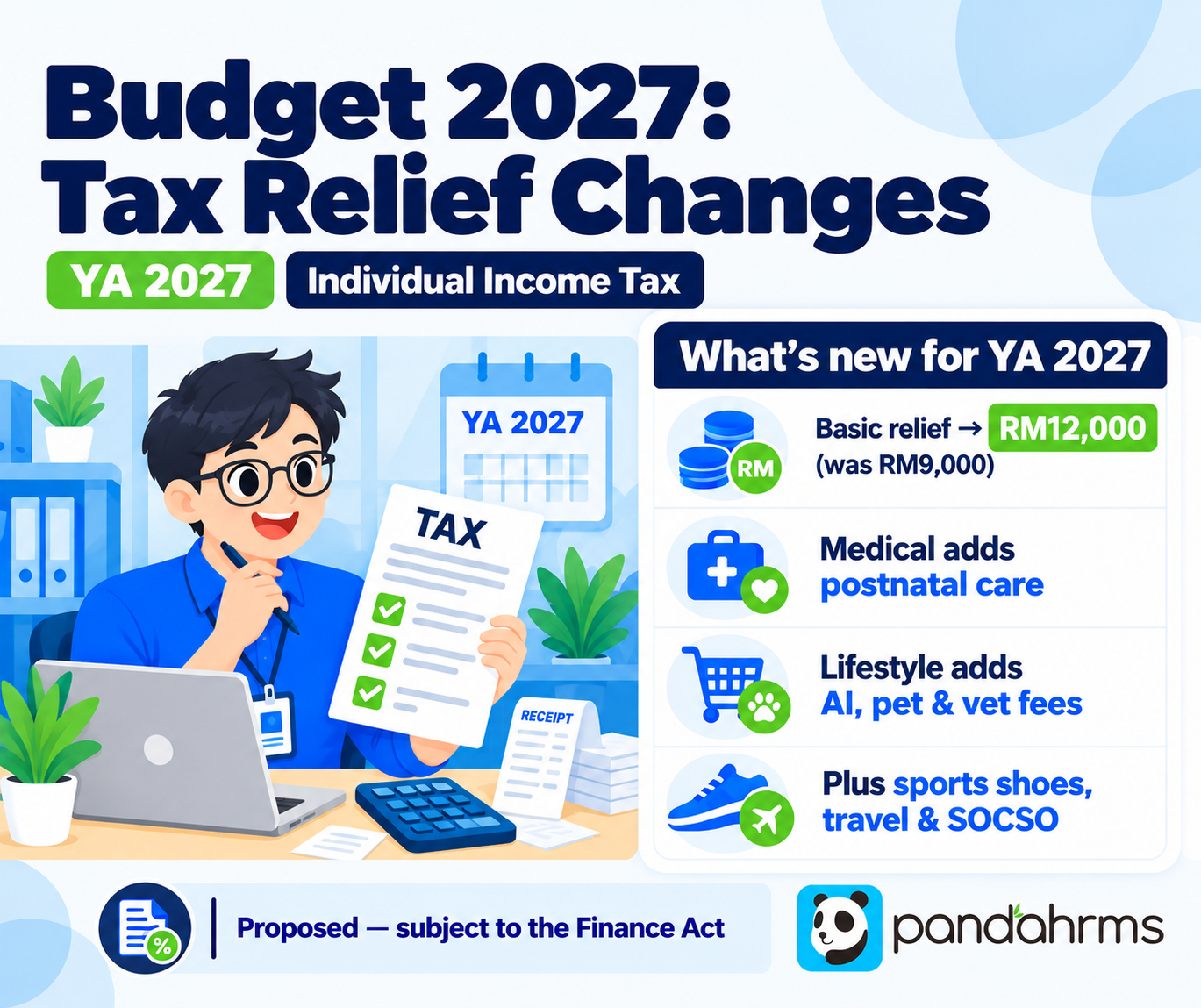
Tax Reliefs Malaysians Can Claim (2026)
Tax relief reduces chargeable income and lowers overall tax payable.
Common categories include:
-
Individual relief
-
Spouse and child relief
-
Lifestyle purchases
-
Medical expenses
-
Education fees
-
Approved donations
Relief limits are updated periodically in the national budget. Employers should avoid advising employees beyond official guidelines and instead direct them to LHDN references.
EPF & Life Insurance Tax Relief (High-Impact Section)
EPF-related reliefs are among the most frequently claimed deductions.
Relief Limits:
-
EPF contributions: Up to RM4,000
-
Life insurance or takaful premiums: Up to RM3,000
-
Combined maximum relief: RM7,000
Additional Notes:
-
Pensionable public servants may claim eligible life insurance and voluntary EPF contributions
-
i-Lindung insurance plans may qualify, subject to LHDN approval
-
EPF dividends are fully tax-exempt and do not need to be declared
Accurate payroll records directly support correct EPF reporting and relief calculation.

Common Income Tax Filing Mistakes (HR Risk Areas)
Mistakes during filing can lead to penalties or audit exposure.
Common issues include:
-
Failure to declare all income sources
-
EA Form inaccuracies
-
Incorrect PCB reconciliation
-
Overclaiming tax relief
-
Claiming without valid receipts
-
Late submission
-
Poor document retention practices
Employers reduce risk by ensuring payroll data integrity and timely statutory documentation.
Why Income Tax Compliance Matters for HR & Employers
Income tax filing may be an individual obligation, but employer accuracy directly affects outcomes.
Strong payroll governance ensures:
-
Accurate EA Forms
-
Correct PCB deductions
-
Reduced employee disputes
-
Lower audit exposure
-
Improved regulatory compliance
-
Higher employee trust
When payroll data, statutory deductions, and MyTax records align, organisations reduce compliance risk significantly.
Strengthening Tax Season Readiness Through Structured HR Systems
Manual payroll processes increase the likelihood of EA Form discrepancies, incorrect PCB deductions, and reconciliation issues during tax season.
Many Malaysian employers now centralise:
-
Payroll calculations
-
PCB automation
-
EPF & statutory reporting
-
EA Form generation
-
Employee data management
With an integrated HR and payroll system, tax documentation remains consistent, traceable, and audit-ready — reducing stress during income tax season.
Frequently Asked Questions (FAQ)
1. Who must file income tax in Malaysia?
Individuals earning above the taxable threshold or registered with LHDN.
2. How do I file income tax for the first time?
Register for a TIN via e-Daftar and file through MyTax e-Filing.
3. What documents are required for e-Filing?
EA Form, EPF statement, insurance records, and receipts for tax relief.
4. How much EPF contribution is tax-deductible?
Up to RM4,000, with a combined EPF and life insurance relief of RM7,000.
5. What happens if income tax is filed late?
Late filing may result in penalties imposed by LHDN.