
Confused About CP500? LHDN Clarifies Why Salary-Only Taxpayers Received It — and What to Do Next
In December 2025, many salaried employees in Malaysia were surprised — and alarmed — to receive a CP500 Instalment Tax Payment Notice, despite earning salary income only.
Following widespread confusion and public feedback, LHDN (LHDNM / HASiL) has officially clarified the issue. The key takeaway is clear:
👉 CP500 was issued based on taxpayers’ own income declarations — not system error.
This article explains:
-
What CP500 actually is
-
Why salary-only individuals received it
-
What employers and HR should know
-
What affected taxpayers must do immediately
What Is CP500?
CP500 is an instalment tax payment notice issued under Section 107B of the Income Tax Act 1967.
It applies only to individuals who earn both:
-
Employment income (salary), and
-
Non-employment income
Examples of Non-Employment Income
-
Business or freelance income
-
Rental income
-
Dividends
-
Interest
-
Royalties
-
Pension or annuity
-
Other gains or profits
✅ Important:
Individuals who earn salary income only should NOT receive CP500.
Why Did Salary-Only Taxpayers Receive CP500?
According to LHDN’s official clarification, the issue occurred due to incorrect income classification during tax filing.
What Went Wrong?
LHDN found that many taxpayers:
-
Accidentally reported salary income under non-employment income sections, such as:
-
Dividend
-
Interest
-
Rental
-
Royalties
-
Pension / annuity
-
Other income
-
⚠️ Once any non-employment income is declared, the LHDN system will automatically generate CP500 — even if the taxpayer is actually salary-only.
This means:
-
CP500 issuance was system-driven
-
Based entirely on data submitted in the Income Tax Return Form (BNCP)
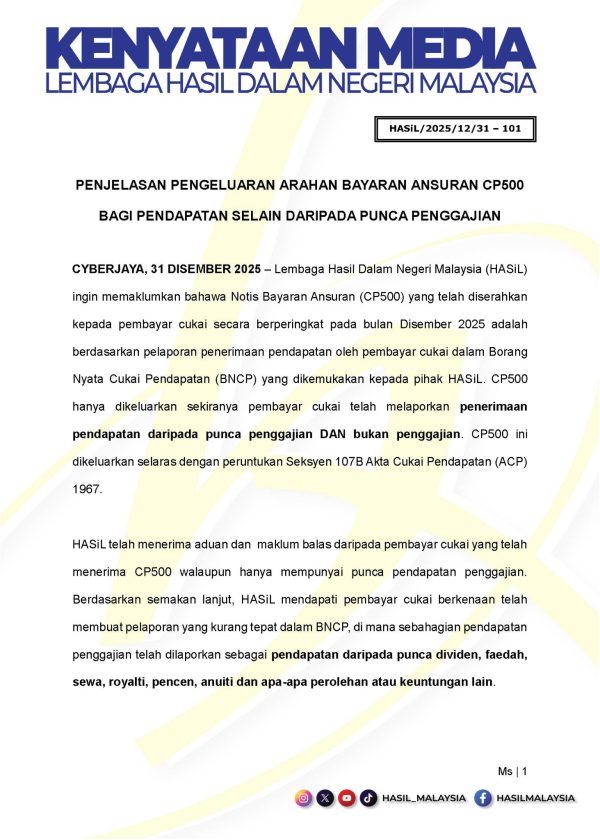
Official LHDN Clarification (31 December 2025)
LHDN has confirmed that:
-
CP500 is issued only when non-salary income is reported
-
Salary-only individuals should not be subject to CP500
-
Incorrect income classification can trigger unnecessary CP500 notices
-
Taxpayers may apply for correction if CP500 was wrongly issued
Received CP500 but You Earn Salary Only? Here’s What to Do
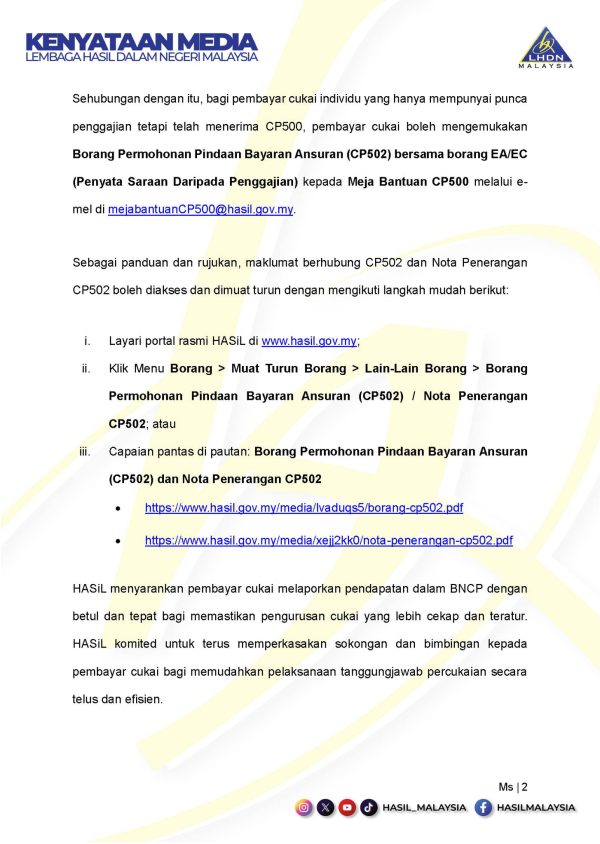
If you or your employee earns salary income only but received CP500, do not panic. LHDN has provided a clear resolution process.
Step-by-Step Action Required
1️⃣ Download & complete Form CP502
(Application for Amendment of Instalment Payments)
🔗 https://www.hasil.gov.my/media/lvaduqs5/borang-cp502.pdf
2️⃣ Attach supporting documents
-
Form EA / EC (Statement of Remuneration from Employment)
3️⃣ Email both documents to LHDN
📧 mejabantuanCP500@hasil.gov.my
LHDN will review and amend the instalment notice accordingly.
Key Reminder from LHDN (For All Taxpayers)
✔️ Always report income accurately
✔️ Salary income must be declared under employment income only
✔️ Non-salary income should be declared only if it truly applies
Correct classification helps avoid:
-
Unnecessary CP500 issuance
-
Extra administrative work
-
Confusion and compliance stress
What Employers & HR Teams Should Take Note Of
Although CP500 is an individual tax matter, employers and HR teams play a critical role in preventing confusion:
-
Ensure EA / EC forms are accurate and issued on time
-
Educate employees on proper income classification
-
Remind staff that salary should never be declared as dividend, interest, or “other income”
-
Encourage early tax review before submission
Clear payroll records and proper guidance help reduce downstream tax issues for employees.
Final Thoughts
The recent CP500 confusion highlights one key lesson:
👉 Tax accuracy starts with correct income classification.
CP500 is not meant for salary-only individuals — but incorrect reporting can trigger it automatically.
For employers, HR teams, and payroll administrators, ensuring accurate records and clear communication with employees is essential to prevent unnecessary tax complications.