Introduction: EPF Compliance Is a Legal Responsibility — Not Optional
Managing payroll in Malaysia goes beyond paying salaries. Employers are legally required to comply with statutory obligations, including contributions to the Employees Provident Fund (EPF).
Failure to meet EPF requirements can result in:
- Financial penalties
- Legal action
- Reputational damage
- Employee dissatisfaction
For HR and payroll teams, understanding EPF employer responsibilities is critical to ensure compliance, accuracy, and operational stability.
This guide outlines everything employers need to know about EPF obligations in Malaysia for 2026.
What Are EPF Employer Responsibilities?
EPF employer responsibilities refer to the legal obligations imposed on employers to ensure proper retirement contributions for employees.
These responsibilities include:
- Registering the company and employees with EPF
- Deducting employee contributions accurately
- Contributing the employer’s share
- Submitting payments on time
- Maintaining complete and accurate records
- Complying with EPF regulations and audits
These obligations ensure employees receive their retirement savings while protecting employers from compliance risks.
Quick Summary: EPF Employer Responsibilities
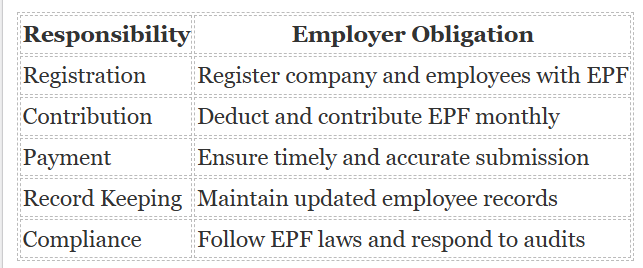
Employer Registration with EPF
Before making any contributions, employers must complete EPF registration.
Registering as an Employer
Employers are required to:
- Register their business with EPF
- Obtain an employer EPF number
- Ensure all company details are accurate and updated
Registering Employees
Employers must:
- Register all eligible employees
- Ensure employee information is complete and accurate
Failure to register employees may lead to compliance breaches and penalties.
EPF Contribution Responsibilities
Mandatory Monthly Contributions
Employers must:
- Deduct employee EPF contributions from monthly salary
- Add the employer’s contribution portion
- Submit total contributions every month
Late or incorrect contributions can result in enforcement action.
Contribution Rates (General Reference)
EPF contributions typically include:
- Employee contribution (based on statutory rate)
- Employer contribution (based on wage threshold and category)
Employers must always refer to the latest EPF contribution table to ensure accuracy.
Optional Contributions (Employer Strategy)
Employers may also:
- Contribute above the statutory minimum
- Provide enhanced benefits to improve employee retention
- Support long-term financial planning through additional contributions
i-Topup Contributions
Employers can facilitate voluntary contributions such as:
- Additional employee savings (i-Topup)
- Retirement planning support initiatives
EPF Payment Deadlines and Compliance
Monthly Deadline
EPF contributions must be submitted:
By the 15th of the following month
If the deadline falls on a public holiday, payment must be made earlier or on the next working day (based on EPF guidelines).
Penalties for Late Payment
Failure to submit EPF contributions on time may result in:
- Dividend-based interest charges
- Additional penalties imposed by EPF
- Legal action under the EPF Act 1991
Persistent non-compliance may escalate into enforcement proceedings.
EPF for Foreign Employees
For non-Malaysian employees:
- EPF contributions are generally optional
- Employers must follow EPF guidelines if contributions are provided
It is recommended to clearly define contribution terms within employment contracts.
Record Keeping and Compliance Requirements
Maintain Accurate Records
Employers must:
- Keep detailed salary records
- Maintain contribution schedules
- Update employee information regularly
- Ensure data accuracy at all times
Compliance with EPF Regulations
Employers are required to:
- Follow all EPF rules and updates
- Respond to audits or inspections
- Avoid underpayment or incorrect submissions
Poor record management is one of the most common causes of compliance failure.
Compliance Risks and Enforcement
Failure to comply with EPF requirements may result in:
- Financial penalties
- Legal action
- Business operational restrictions
Serious Cases
In severe non-compliance scenarios, authorities may impose:
- Travel restrictions
- Court action against company directors
This highlights the importance of strict payroll compliance.
Common EPF Mistakes Employers Must Avoid
Employers frequently encounter compliance issues due to:
- Late EPF submissions
- Incorrect salary or contribution calculations
- Failure to register employees
- Incomplete or outdated records
- Manual payroll errors
Even minor mistakes, when repeated, can lead to significant penalties.
Why EPF Compliance Matters for Employers
Effective EPF management provides multiple business benefits:
1. Legal Protection
Ensures compliance with Malaysian employment laws
2. Employee Trust
Demonstrates reliability and financial responsibility
3. Operational Efficiency
Reduces payroll errors and administrative burden
4. Employer Branding
Builds a trustworthy and compliant organisation
Why Payroll Systems Are Critical for EPF Compliance
Manual payroll processes increase the risk of:
- Calculation errors
- Missed deadlines
- Inconsistent reporting
A structured payroll system helps:
- Automate EPF calculations
- Ensure timely submissions
- Maintain audit-ready records
- Reduce compliance risks
How Pandahrms Supports EPF Compliance
Pandahrms All-in-One HR System enables employers to:
- Automate EPF contribution calculations
- Ensure accurate monthly deductions
- Generate submission-ready payroll reports
- Maintain centralised employee records
- Reduce manual errors and compliance risks
This is especially valuable for:
- SMEs scaling operations
- Companies with large workforces
- Businesses managing complex payroll structures
FAQs: EPF Employer Responsibilities Malaysia
1. What are EPF employer responsibilities?
Employers must register employees, contribute monthly, maintain records, and comply with EPF regulations.
2. Is EPF contribution mandatory?
Yes, for eligible Malaysian employees under EPF regulations.
3. What happens if EPF is not paid?
Employers may face penalties, interest charges, or legal action.
4. Can employers contribute more than required?
Yes, additional contributions can be provided as employee benefits.
5. Are foreign employees required to contribute?
Generally optional, depending on employment terms and EPF guidelines.
Conclusion: EPF Compliance Requires Accuracy and Consistency
EPF employer responsibilities are a fundamental part of payroll compliance in Malaysia.
To remain compliant, employers must:
- Ensure accurate contributions
- Meet monthly submission deadlines
- Maintain proper documentation
- Follow regulatory requirements
Failure to comply can result in financial and legal consequences.
Simplify EPF Compliance with Pandahrms
Managing EPF manually increases the risk of errors and non-compliance.
Pandahrms helps organisations:
- Automate payroll and statutory contributions
- Improve accuracy and efficiency
- Reduce compliance risks
- Maintain audit-ready records
Book a 35-minute demo with Pandahrms to streamline your payroll and compliance processes.