Plan Your Holidays, Don’t Miss Your Business Renewal: 2026 Compliance Reminder for Employers in Malaysia
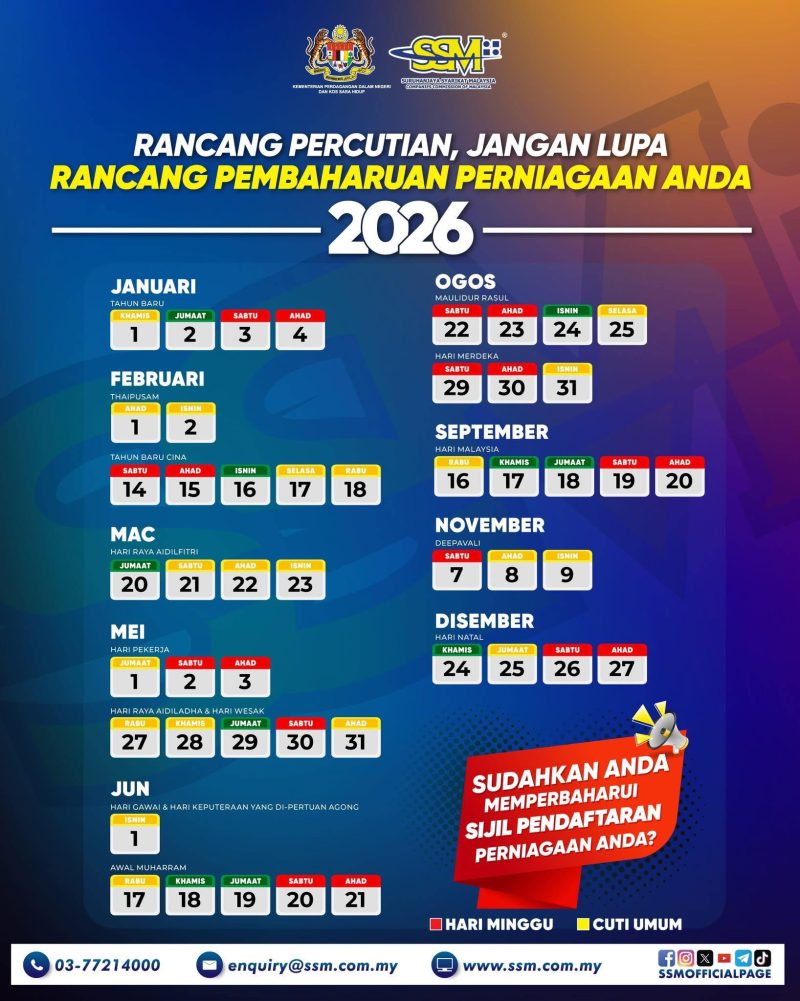
As employers begin mapping out annual leave, public holidays, and long festive breaks for 2026, there is one critical task that must not be overlooked: business registration renewal.
The Companies Commission of Malaysia (SSM) has consistently highlighted that missed renewal deadlines are one of the most common compliance issues faced by business owners—especially during periods of extended public holidays when government offices may be closed and processing timelines slow down.
For Malaysian employers, holiday planning and compliance planning must go hand in hand. Failing to renew on time can expose businesses to penalties, operational disruption, and unnecessary legal risk.
Why Business Renewals Are Often Missed During Public Holidays
Long festive periods such as Chinese New Year, Hari Raya, Deepavali, and year-end breaks create a high-risk window for compliance lapses.
Common reasons include:
-
Management teams on leave
-
Reduced administrative staffing
-
Government counters and online processing delays
-
Assumptions that renewals can be done “after the holidays”
Unfortunately, statutory deadlines do not pause for vacations.
SSM’s Key Compliance Reminder for Employers
The Companies Commission of Malaysia (SSM) reminds business owners that:
-
Business Registration Certificates must be renewed on time
-
Public holidays are a frequent cause of missed renewal deadlines
-
Late renewals may result in penalties or enforcement action
-
Employers are strongly encouraged to renew early, especially before extended festive breaks
In simple terms:
If your renewal date falls near a public holiday, do not wait.
What Happens If You Miss Your Business Registration Renewal?
Failing to renew your business registration on time can lead to:
-
Financial penalties
-
Temporary invalid business status
-
Compliance issues during audits or inspections
-
Complications with banks, suppliers, or government agencies
-
Disruption to employment-related processes
For employers, this can quickly escalate from an administrative oversight into a business risk.
Why 2026 Planning Matters for Employers
The 2026 public holiday calendar is a valuable planning tool—not just for workforce scheduling, but also for:
-
Identifying high-risk compliance periods
-
Scheduling renewals ahead of long breaks
-
Ensuring business operations remain uninterrupted
-
Avoiding last-minute submissions and stress
Smart employers treat statutory renewals as part of their annual compliance calendar, not an afterthought.
Employer Compliance Checklist: Stay Ahead in 2026
To reduce risk and stay compliant, employers should:
✔️ Review business registration expiry dates early
✔️ Renew before major festive periods
✔️ Assign clear internal responsibility for renewals
✔️ Avoid submitting renewals during peak holiday seasons
✔️ Align business renewal timelines with HR and payroll planning
Proactive planning protects both your business operations and your employer credibility.
Important Reminder for Employers
“Have you renewed your Business Registration Certificate?”
While planning a vacation is important, ensuring that your business remains valid, compliant, and uninterrupted is just as critical. Early planning helps employers avoid unnecessary risks, last-minute stress, and potential non-compliance.
For a smooth and compliant 2026, employers should align holiday planning with business renewal timelines, ensuring all registrations and statutory obligations are managed proactively.