Every year during Malaysia’s tax season, many employees ask the same questions:
“Who needs to file Form BE?”
“Do I need to submit Form BE to LHDN?”
Although employers provide Form EA, the responsibility to declare annual income to the Inland Revenue Board of Malaysia still lies with the individual taxpayer.
Under Malaysia’s Self-Assessment Tax System, individuals must report their own income through Form BE.
This guide explains:
-
What Form BE is
-
Who needs to file it
-
The tax filing deadline in Malaysia
-
The difference between Form BE and Form EA
-
How to submit Form BE through e-Filing
What Is Form BE?
Form BE is an income tax return used by individual taxpayers who earn income from employment and other non-business sources.
It is commonly used by salaried employees in Malaysia.
Income reported in Form BE may include:
-
Salary and wages
-
Bonuses
-
Allowances
-
Benefits-in-kind
-
Rental income
-
Other taxable income sources
Most of this information is obtained from the Form EA issued by the employer.
Who Needs to File Form BE?
Form BE must be filed by individuals who meet the following conditions:
✔ Malaysian citizens or tax residents
✔ Individuals earning employment income
✔ Individuals who do not operate a business
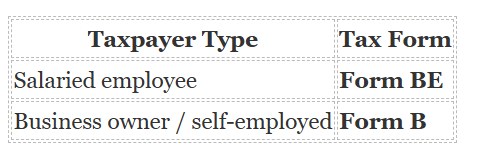
If a person runs a business or is self-employed, they must file Form B instead of Form BE.
In simple terms:
Form BE Submission Deadline
Each year, the Inland Revenue Board of Malaysia sets a deadline for individual tax filing.
Typically:
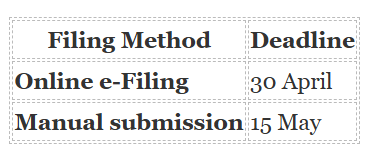
Most taxpayers are encouraged to use e-Filing via the MyTax portal, as it is faster and easier.
Failing to submit Form BE before the deadline may result in:
❌ Late filing penalties
❌ Additional tax charges
❌ Potential tax audit risk
Difference Between Form BE and Form EA
Many employees confuse Form BE with Form EA.
While both relate to employee income, they serve different purposes.
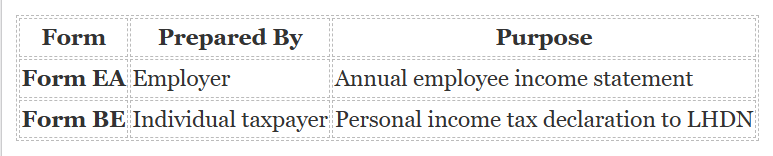
Employers must issue Form EA to employees before the end of February each year.
Employees then use the information in Form EA to complete their Form BE during e-Filing.
How to File Form BE via e-Filing
Today, individual tax filing can be completed online through the MyTax portal.
Below are the basic steps to submit Form BE.
1. Register a MyTax Account
Ensure you have an e-Filing account on the MyTax portal.
This account allows you to submit all personal tax forms online.
2. Prepare Supporting Documents
Before filling in Form BE, prepare the following:
-
Form EA provided by your employer
-
Tax relief receipts (insurance, medical, education, etc.)
-
Details of any additional income
Having these documents ready helps ensure accurate tax reporting.
3. Enter Your Income Details
Key information required includes:
-
Annual salary
-
Bonuses and allowances
-
PCB (Monthly Tax Deduction)
-
Eligible tax relief claims
Most of this information can be directly referred from Form EA.
4. Review Your Information
Before submission, ensure the details are:
✔ Accurate
✔ Complete
✔ Supported by proper documentation
Errors in income reporting may result in future tax review or adjustment.
5. Submit the Form and Pay Tax (If Required)
Once everything is verified:
-
Submit Form BE through e-Filing
-
Pay any remaining tax balance if applicable
If the Monthly Tax Deduction (PCB) throughout the year is sufficient, the taxpayer may not need to make additional payments.
Why Employers Must Ensure Form EA Accuracy
Although Form BE is filed by employees, employers play a critical role in preparing accurate Form EA statements.
Errors in Form EA may lead to:
-
Incorrect employee income reporting
-
Mistakes in Form BE submission
-
Potential tax compliance issues
Therefore, employers should ensure their payroll system calculates salary, benefits, and PCB accurately.
How HRMS Software Supports Payroll Compliance
Managing payroll records manually can increase the risk of errors and compliance issues.
A structured HR and payroll system helps businesses:
✔ Maintain organised employee payroll records
✔ Generate accurate payroll reports
✔ Prepare Form EA efficiently each year
✔ Reduce errors in PCB calculations
With Pandahrms, employers can manage payroll, leave, claims, and employee records within one integrated HR system.
This helps businesses streamline HR operations while supporting compliance with Malaysia’s employment and tax regulations.
Conclusion
Form BE is an important income tax return for individuals earning employment income in Malaysia.
By understanding who needs to file Form BE, the filing deadlines, and how the e-Filing process works, taxpayers can ensure compliance with LHDN requirements.
For employers, preparing accurate Form EA statements and maintaining organised payroll records is essential to help employees complete their tax filing smoothly.
Using a structured HR and payroll system like Pandahrms can help companies manage employee data more efficiently while reducing payroll and compliance risks.