Introduction: RM1,700 Minimum Wage — Are You Fully Compliant?
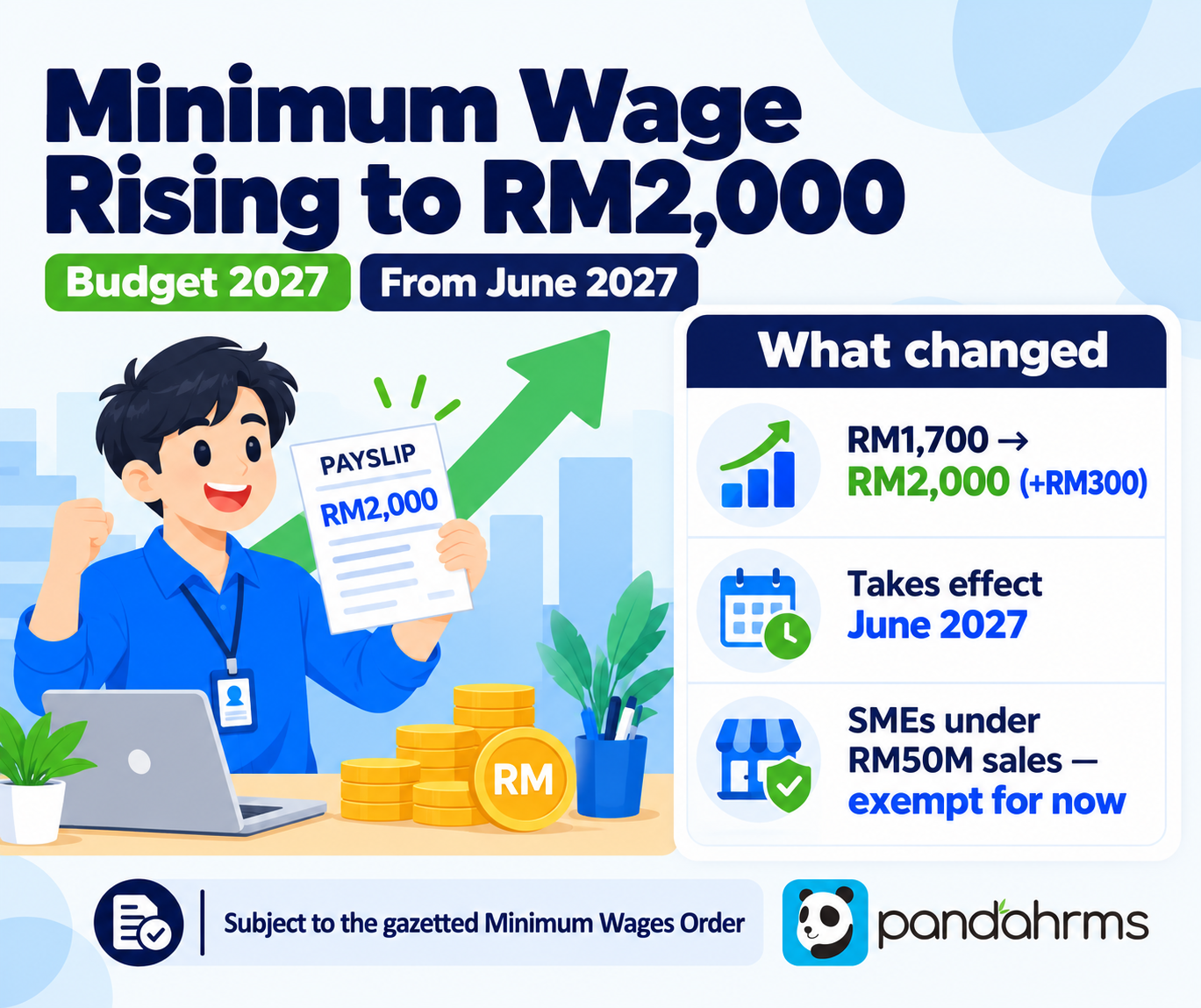
Malaysia’s minimum wage has been revised to RM1,700, and as of 2026, enforcement is now strict and universal across all sectors.
This is no longer a guideline. It is a mandatory legal requirement.
Despite this, many employers are still making critical payroll mistakes, such as:
- Including allowances as part of basic salary
- Miscalculating hourly wage rates
- Overlooking updated working hour limits
These errors can lead to:
- Regulatory non-compliance
- Payroll disputes with employees
- Financial penalties and reputational risk
This guide explains everything Malaysian employers need to know to ensure full compliance with minimum wage laws in 2026.
Quick Summary: Malaysia Minimum Wage 2026
- Minimum wage: RM1,700 per month
- Applicability: All employers (no exemptions)
- Hourly rate: Minimum RM8.72 per hour
- Allowances: Cannot be included in minimum wage
- Working hours: Maximum 45 hours per week
What Is the Minimum Wage in Malaysia (2026)?
The statutory minimum wage in Malaysia is RM1,700 per month.
This applies to:
- Full-time employees
- Part-time and hourly workers (converted to hourly equivalent)
- All industries and company sizes
The previous exemption or grace period for smaller employers has been removed. All employers are now required to comply.
Does the RM1,700 Minimum Wage Include Allowances?
No. The RM1,700 minimum wage applies strictly to basic salary only.
Payments That Cannot Be Included:
- Travel allowance
- Meal allowance
- Attendance allowance
- Any form of additional benefits or incentives
Example of Non-Compliant Salary Structure
- Basic salary: RM1,400
- Allowances: RM300
- Total: RM1,700
This is non-compliant, as the basic salary is below RM1,700.
Example of Compliant Salary Structure
- Basic salary: RM1,700
- Allowances: RM300
- Total: RM2,000
This meets legal requirements.
Minimum Wage for Hourly Employees (2026)
For employees paid on an hourly basis, the minimum wage translates to:
RM8.72 per hour
How the Hourly Rate Is Derived
The calculation is based on:
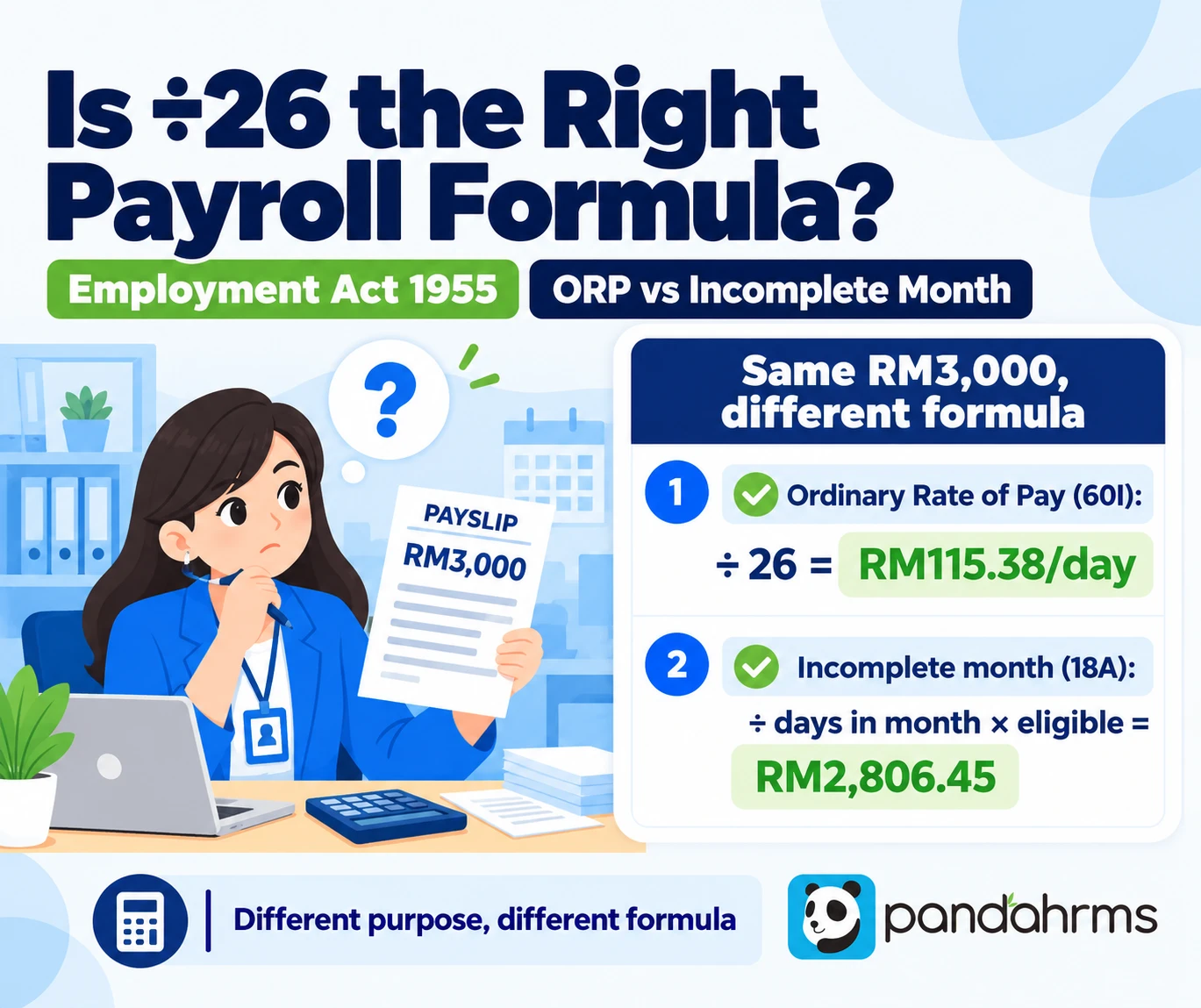
- Monthly wage ÷ 26 working days ÷ 7.5–8 hours per day
This applies to:
- Part-time employees
- Shift workers
- Retail and F&B staff
- Manufacturing workers
Employers must ensure that all hourly rates meet or exceed RM8.72.
Working Hours Limit Under Malaysian Law
The maximum working hours remain:
45 hours per week
Why This Matters for Employers
- Overtime calculations must be based on the 45-hour threshold
- Shift schedules must be reviewed and adjusted
- Payroll formulas may require updates
Failure to align with this limit may result in incorrect overtime payments and compliance breaches.
Key Compliance Risk Areas for Employers
1. Allowance-Based Salary Structures
Employers who structure pay as:
- Lower basic salary
- Higher allowances
are now non-compliant under minimum wage regulations.
2. Incorrect Hourly Rate Calculations
If the effective hourly rate falls below RM8.72:
- The employer is in breach of minimum wage law
3. Overtime Miscalculation
Using outdated working hour thresholds can result in:
- Underpayment of overtime
- Legal exposure
4. Outdated Payroll Systems
Legacy payroll setups may:
- Fail to reflect RM1,700 threshold
- Produce inaccurate salary reports
- Misclassify pay components
Penalties for Non-Compliance
Failure to comply with minimum wage regulations may result in:
- Fines imposed by authorities
- Legal proceedings
- Employee complaints and disputes
- Reputational damage to the business
Employers are expected to maintain continuous compliance, not just periodic adjustments.
Practical HR Actions for 2026
To ensure compliance, HR and payroll teams should take the following steps:
1. Audit Payroll Structure
- Review all employee salary components
- Ensure basic salary is at least RM1,700
2. Review Allowance Policies
- Clearly separate allowances from basic pay
- Ensure correct classification
3. Validate Hourly Rates
- Confirm all hourly workers meet RM8.72 minimum
4. Update Employment Contracts
- Reflect revised salary structures
- Ensure legal clarity
5. Recalculate Overtime Logic
- Align payroll calculations with 45-hour weekly limit
Why Payroll Systems Matter More in 2026
Manual payroll processing significantly increases the risk of:
- Incorrect salary structuring
- Non-compliance with wage laws
- Reporting inaccuracies
A reliable payroll system enables:
- Accurate wage calculations
- Proper separation of salary components
- Consistent compliance with Malaysian labour laws
How Pandahrms Supports Minimum Wage Compliance
Pandahrms is designed to help employers:
- Ensure basic salary meets statutory minimum requirements
- Separate allowances correctly from core wages
- Automate payroll calculations with compliance logic
- Manage multiple employee types and pay structures
- Maintain accurate, audit-ready payroll records
This is particularly critical for businesses with:
- Large workforce sizes
- Shift-based operations
- Complex payroll structures
FAQs: Malaysia Minimum Wage 2026
1. What is the minimum wage in Malaysia for 2026?
RM1,700 per month.
2. Does minimum wage include allowances?
No. It applies strictly to basic salary only.
3. What is the hourly minimum wage?
RM8.72 per hour.
4. Does this apply to all employers?
Yes. There are no exemptions in 2026.
5. What is the maximum working hours per week?
45 hours.
6. What happens if I pay below RM1,700?
You may face legal penalties, fines, and compliance risks.
7. Do part-time employees qualify?
Yes, based on the hourly wage equivalent.
Conclusion: Compliance Starts with Payroll Accuracy
The implementation of the RM1,700 minimum wage represents a significant regulatory shift in Malaysia.
Employers must:
- Ensure correct salary structures
- Update payroll systems
- Strengthen compliance processes
Failure to do so exposes businesses to financial, legal, and reputational risks.
Ensure Compliance with Pandahrms
Managing payroll compliance manually is increasingly complex.
Pandahrms helps employers:
- Maintain accurate payroll structures
- Ensure compliance with minimum wage regulations
- Reduce administrative workload
Schedule a personalised demo to see how Pandahrms can support your payroll compliance in 2026.