Introduction: Why Attendance Data Alone Cannot Measure Productivity
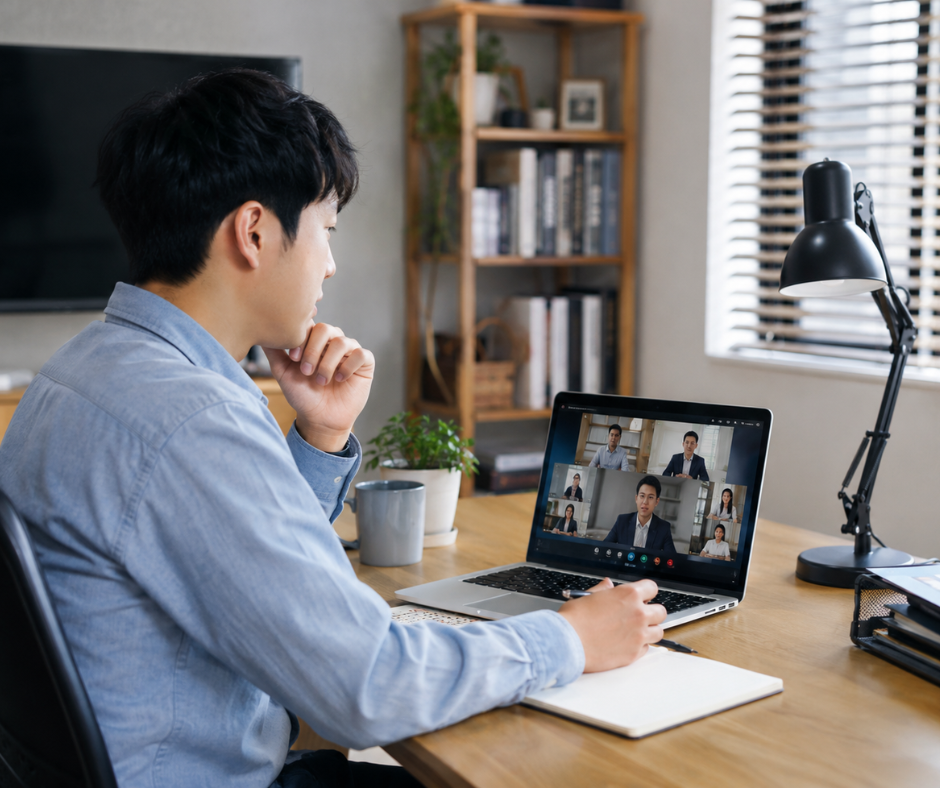
Since remote and hybrid work became common in Malaysia, many companies have started relying heavily on attendance systems to monitor employees working from home (WFH).
Employees clock in through:
- Mobile attendance apps
- Face recognition verification
- GPS location tracking
- Web browser check-ins
At first glance, this seems like enough. HR can see:
- When employees clocked in
- Where they clocked in from
- When they clocked out
But there is one major issue:
Attendance data does not prove productivity.
And this is where many organisations misunderstand the role of attendance systems in a modern WFH environment.
The Problem With WFH Attendance Tracking
The Device That Stayed at the Door
In traditional office environments, attendance was straightforward.
Employees arrived at the office, used a biometric or face recognition device, and the system recorded:
- Identity
- Timestamp
- Physical location
Because employees were physically present in the workplace, companies naturally assumed work was happening.
But with WFH, attendance moved to smartphones and remote clock-ins.
An employee may:
- Clock in at 9:02 AM from home
- Pass face verification
- Enable GPS validation
- Clock out at 5:58 PM
The attendance system records everything correctly.
Yet between those two timestamps, the system has no visibility into:
- Actual productivity
- Task completion
- Work quality
- Employee engagement
The employee may have worked efficiently all day.
Or may have been away for several hours.
From an attendance perspective, both records look identical.
The Hidden Truth: This Gap Always Existed
Here is the uncomfortable reality:
This visibility gap did not start with WFH.
Even in physical offices, attendance systems never truly measured productivity.
An employee could:
- Arrive at 9:00 AM
- Leave at 6:00 PM
- Spend hours on personal matters, long breaks, or distractions
The attendance system would still show a “perfect attendance” record.
Because attendance systems were never designed to measure output.
They were designed to measure:
- Presence
- Working hours
- Shift adherence
- Leave records
- Overtime eligibility
That is all.
Why Companies Suddenly Distrust Attendance Data
Remote Work Removed Physical Visibility
In the office, managers naturally relied on:
- Physical presence
- Team interaction
- Meetings
- Social accountability
Managers could casually observe whether employees were engaged.
WFH removed those visibility layers.
As a result, many employers started expecting attendance systems to answer a completely different question:
“Is this employee actually working?”
This is the wrong expectation.
Attendance Systems Cannot Solve Trust Issues
An attendance system is similar to a door lock.
A door lock can confirm:
- Someone entered the house
- When they entered
- When they left
But it cannot prove:
- Whether homework was completed
- Whether work was productive
- Whether meaningful results were delivered
Attendance systems work the same way.
They confirm:
- Clock-in time
- Clock-out time
- Attendance location
- Formal availability
But they cannot measure:
- Focus
- Creativity
- Work quality
- Deliverables
- Accountability
The Rise of “Shadow Management Systems”
Because attendance data alone feels insufficient, many companies create unofficial tracking methods such as:
- WhatsApp check-ins
- Slack status monitoring
- Manual spreadsheets
- Frequent manager follow-ups
- “Online presence” tracking
Over time:
- HR maintains the official attendance system for payroll purposes
- Managers rely on separate informal processes to judge performance
This creates:
- Inconsistent management practices
- Poor documentation
- Dependency on individual managers
- Lack of transparency
Eventually, the “real process” exists outside the HR system.
The Real Question Companies Should Ask
The goal should not be:
“Is this employee online all day?”
The better question is:
“Is this employee delivering results?”
That is a performance management question — not an attendance question.
Successful hybrid and WFH companies focus on:
- Deliverables
- Deadlines
- Communication responsiveness
- Work quality
- Team collaboration
- KPI achievement
Not just clock-in timestamps.
What Attendance Systems Are Actually Built For
Attendance systems still play a critical role in HR operations.
They are essential for:
- Payroll calculation
- Overtime tracking
- Leave deduction
- Shift scheduling
- Statutory compliance
- Attendance audit trails
In Malaysia, this is increasingly important as Flexible Work Arrangements (FWA) continue to grow.
The Employment Act amendments under Sections 60P and 60Q formalised employees’ rights to request flexible work arrangements, while KESUMA’s FWA Guidelines further accelerated hybrid work adoption.
As more organisations adopt remote work models, companies need attendance systems that provide:
- Accurate attendance records
- GPS verification
- Shift management
- OT approvals
- Multi-location support
- Payroll integration
But these systems should support operations — not replace management trust.
Why HR Needs Both Attendance Tracking and Performance Management
A healthy WFH strategy requires two separate systems working together:
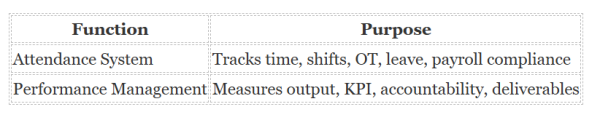
When companies confuse the two, they create:
- Micromanagement culture
- Employee distrust
- Excessive monitoring
- Poor morale
The Future of WFH Is Outcome-Based Management
The companies succeeding with WFH today are not the ones with the strictest attendance monitoring.
They are the ones that:
- Set clear expectations
- Define measurable outcomes
- Build accountability frameworks
- Use HR technology correctly
- Focus on results instead of screen time
Attendance data should support operations — not become a replacement for leadership.
Conclusion: Stop Expecting Attendance Systems to Measure Trust
Attendance systems were never designed to measure productivity, trust, or employee commitment.
Their purpose is to:
- Provide reliable attendance records
- Support payroll accuracy
- Maintain compliance
- Standardise workforce operations
The trust problem in WFH environments cannot be solved through stricter clocking technology.
It is solved through:
- Clear communication
- Performance management
- Leadership accountability
- Outcome-based evaluation
Because at the end of the day:
Employees should be measured by what they deliver — not just by when they clock in.
How Pandahrms Supports Modern Hybrid Workforces
With Pandahrms, businesses can:
- Track attendance across office, hybrid, and remote teams
- Manage GPS and mobile clock-ins
- Automate payroll, OT, leave, EPF, SOCSO, and PCB calculations
- Monitor workforce attendance trends through real-time analytics
- Standardise HR processes across multiple locations
Build a smarter HR operation with accurate attendance tracking while maintaining flexibility for modern work environments.
Sources
Ministry of Human Resources Malaysia (KESUMA). (2024). Flexible Work Arrangement (FWA) Guidelines.
Employment Act 1955 (Amendments relating to Flexible Work Arrangements, Sections 60P & 60Q).
The Edge Malaysia. (2026). Malaysia’s Growing Adoption of Hybrid and Flexible Work Models.