

The announcement was made by Prime Minister Anwar Ibrahim during the national Labour Day celebration, where he highlighted concerns about the declining participation of women in the workforce after maternity years.
For employers and HR teams, this proposed initiative could eventually impact:
- Leave management policies
- Payroll and EIS administration
- Workforce planning
- HR compliance processes
Here is what Malaysian employers should know so far.
What Is the Proposed Post-Maternity Leave Allowance?
Under the proposed initiative, eligible women employees may receive a financial allowance for an additional leave period after completing the current statutory maternity leave entitlement.
Proposed Benefit Structure
According to the announcement:
- Additional leave support: Up to 30 days
- After the existing 98-day maternity leave period
- Benefit payment: 80% of assumed monthly wages
- Payment method: One-off financial assistance under the Employment Insurance System (EIS)
The initiative is expected to benefit more than 132,000 women employees in Malaysia.
At the time of writing, further implementation guidelines and operational details have not yet been officially released.
Why Is the Government Introducing This Initiative?
The government highlighted a significant decline in female labour force participation after maternity years.
According to the data shared:
- Female workforce participation for ages 25–29: 78.9%
- Female workforce participation for ages 35–39: 68.6%
Maternity and caregiving responsibilities are believed to be among the major contributing factors.
The proposed allowance is intended to provide additional financial support to women employees transitioning back into the workforce after childbirth.
Why This Matters for Employers and HR Teams
Although the programme has not been fully implemented yet, the announcement signals a broader shift towards stronger employee welfare and family-supportive workplace policies in Malaysia.
For employers, this may eventually affect several HR and payroll areas.
1. Leave Policy Management
Companies may need to review:
- Existing maternity leave structures
- Extended leave arrangements
- Return-to-work procedures
- Employee handbook policies
Employers managing leave manually may face greater administrative complexity once new rules are formalised.
2. Payroll & EIS Compliance
Because the proposed benefit falls under the Employment Insurance System (EIS), payroll teams may eventually need to align:
- EIS contribution records
- Employee leave tracking
- Payroll calculations
- Statutory reporting requirements
As with EPF, SOCSO, and PCB updates, any future EIS changes may require system and process adjustments.
3. Workforce Planning & Staffing
Extended maternity-related leave periods can affect:
- Shift scheduling
- Team coverage
- Temporary staffing needs
- Operational continuity planning
This is especially relevant for industries with shift-based operations or limited workforce flexibility.
Potential HR Challenges Employers Should Prepare For
Even before official implementation details are released, HR teams should begin reviewing internal readiness.
Common Areas Employers May Need to Review
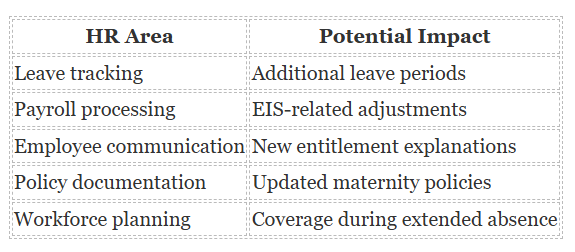
Forward-looking preparation reduces last-minute compliance issues later.
The Bigger HR & Workforce Trend in Malaysia
This proposal reflects a wider workforce trend in Malaysia:
Increasing Focus On:
- Women workforce retention
- Employee wellbeing
- Family-friendly HR policies
- Flexible workforce support
- Better work-life balance initiatives
For employers, HR compliance today is no longer limited to statutory payroll processing alone.
It increasingly affects:
- Employee retention
- Employer branding
- Workforce stability
- Talent attraction
Companies with stronger HR structures are generally better positioned to adapt to evolving employment policies.
What Smart Employers Are Doing Now
Many HR teams are already preparing by reviewing:
- Leave management workflows
- Payroll compliance processes
- Employee documentation systems
- HR policy standardisation
- Digital HR systems for statutory updates
As employment regulations become more dynamic, relying entirely on manual HR administration becomes increasingly difficult to sustain accurately.
How HR Systems Can Help Employers Manage Future Compliance Changes
When new statutory policies or leave structures are introduced, employers often face challenges involving:
- Manual leave calculations
- Payroll adjustment errors
- Inconsistent employee records
- Delayed HR updates
A more structured HR system helps employers centralise:
- Employee leave records
- Payroll administration
- EIS and statutory tracking
- HR policy management
- Employee communication workflows
This allows HR teams to respond more efficiently when new compliance requirements are introduced.
Final Thoughts
The proposed post-maternity leave allowance under EIS may become a significant workforce support initiative in Malaysia.
While full operational details are still pending, employers should not wait until implementation begins before reviewing their internal HR readiness.
Early preparation helps businesses:
- Reduce future compliance risk
- Improve workforce planning
- Support employee wellbeing more effectively
- Adapt more smoothly to policy changes
As Malaysia continues strengthening employee protection and workforce participation initiatives, HR and payroll readiness will become increasingly important for employers across all industries.
Frequently Asked Questions (FAQ)
1. What is the proposed post-maternity leave allowance in Malaysia?
It is a proposed financial assistance programme under EIS that may provide eligible women employees with support for up to 30 additional leave days after maternity leave.
2. How much is the proposed allowance?
The proposed benefit is 80% of the employee’s assumed monthly wages, paid as a one-off allowance.
3. Is the allowance already implemented?
At the moment, the government has announced the proposal, but full implementation details and official guidelines are still pending.
4. Will employers need to update HR policies?
Potentially yes. Employers may eventually need to review maternity leave policies, payroll workflows, and EIS-related procedures.
5. Why is this important for HR and payroll teams?
Because future implementation may affect leave tracking, payroll calculations, EIS administration, and employee communication processes.

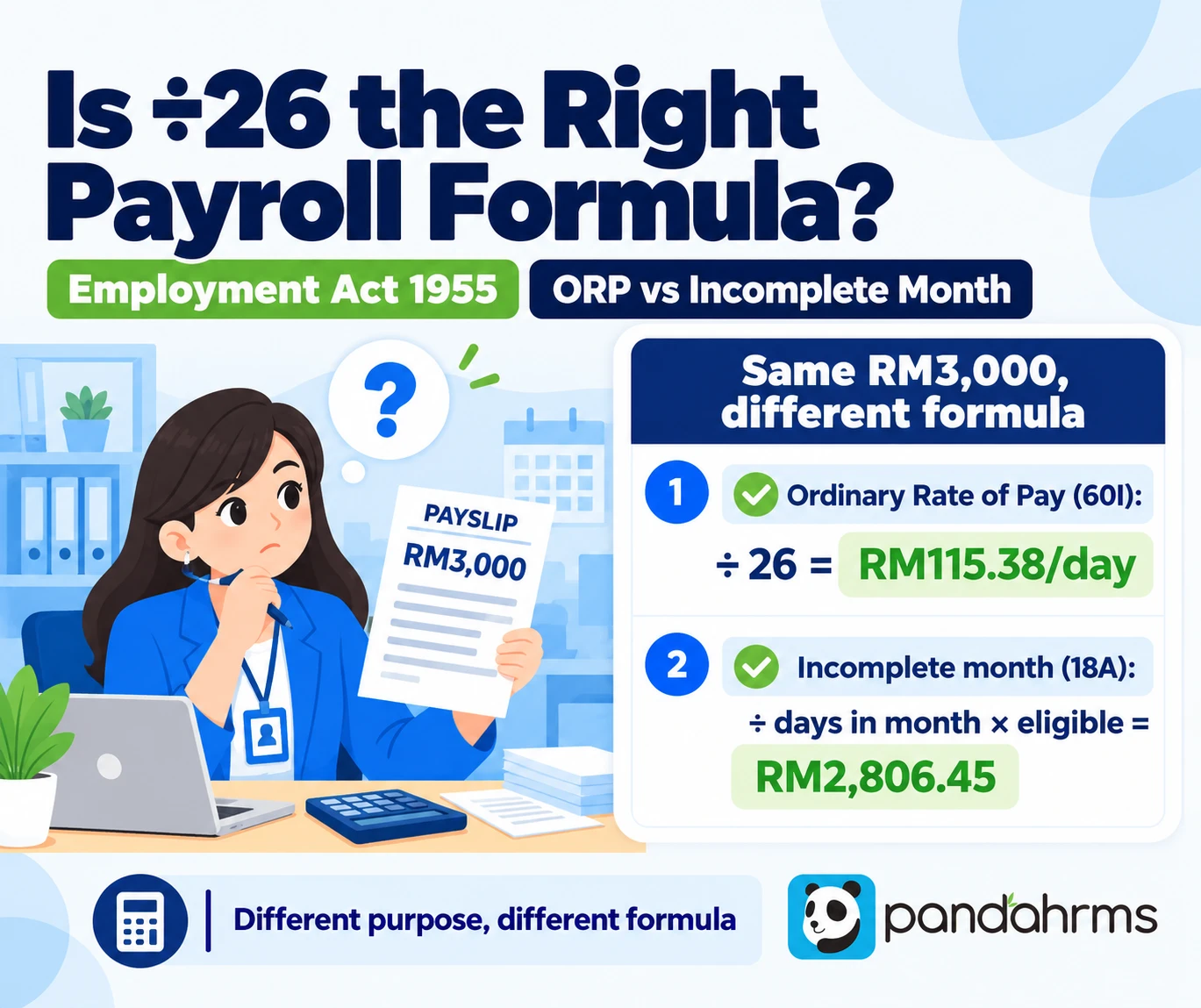
Ask a few HR people how to work out a [...]
-
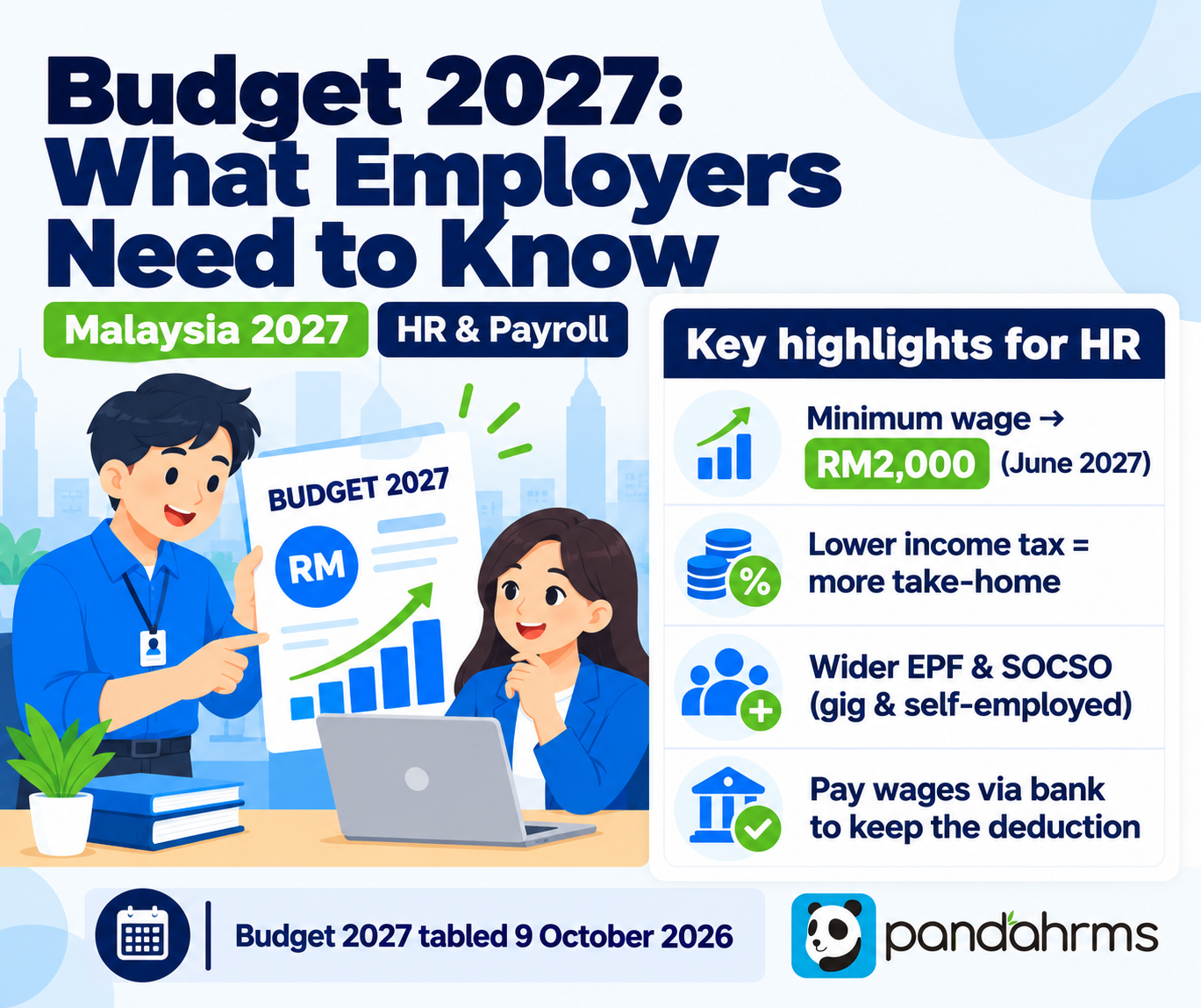
Malaysia’s Budget 2027 — a record RM459.8 billion, tabled on [...]
-
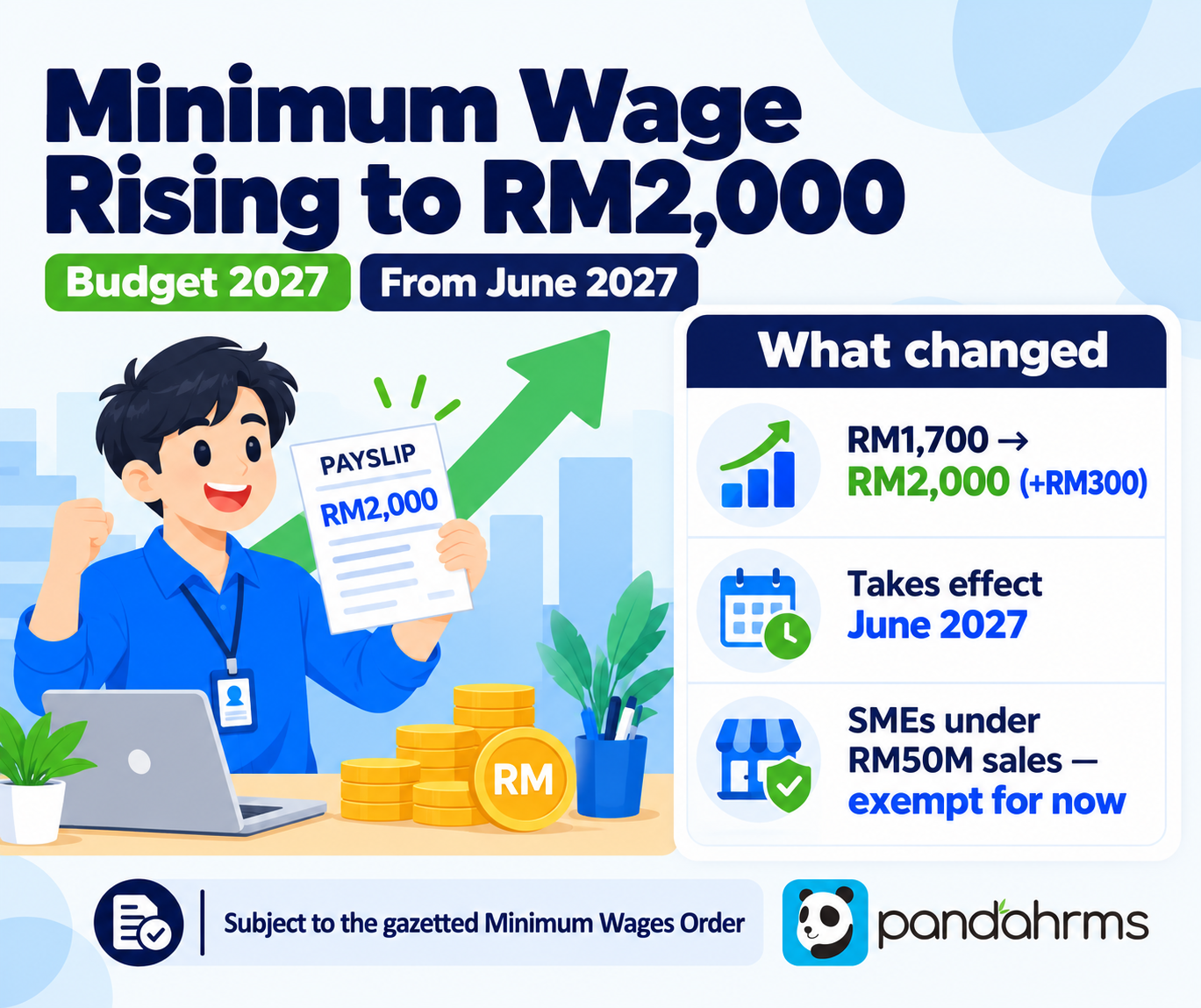
In Budget 2027, the government announced that Malaysia’s minimum wage [...]
-
Ask a few HR people how to work out a [...]
-
Malaysia’s Budget 2027 — a record RM459.8 billion, tabled on [...]
