Malaysia’s tax system is moving toward a more digital future — and employers, HR teams, and payroll departments should start preparing now.
In May 2026, the Inland Revenue Board (LHDN) announced that taxpayers are encouraged to request e-Invoices for expenses related to personal tax relief claims. The initiative supports a pilot project that may allow selected tax relief information to be automatically pre-filled into individual income tax return forms for the Year of Assessment (YA) 2026.
While this may appear to target individual taxpayers at first glance, the long-term implications go much further.
For businesses, HR departments, and payroll teams, this signals a larger transformation in how employee tax records, payroll data, reimbursements, and compliance documentation may eventually be managed in Malaysia.
What Did LHDN Announce?
According to LHDN, Malaysians should begin requesting e-Invoices for transactions linked to tax relief claims.
The goal is to support a future pre-filled tax filing system using verified e-Invoice transaction data.
Potential categories that may eventually be auto-filled include:
- Personal computers
- Smartphones
- Lifestyle expenses
- Insurance premiums
- Childcare fees
- Other approved tax relief categories
This pilot initiative is expected to support YA 2026 tax filing.
Why This Matters Beyond Individual Tax Filing
At first glance, this appears to be a consumer-focused tax update.
However, for employers and HR professionals, the announcement reflects something much bigger:
Malaysia is accelerating toward a fully digital tax and payroll ecosystem.
This affects:
- Payroll documentation
- Employee claims and reimbursements
- Benefits administration
- Record management
- Compliance reporting
- Tax audit preparation
As tax systems become increasingly integrated with digital transaction records, employers may eventually need stronger alignment between payroll systems and finance workflows.
How the e-Invoice Tax Relief System Works
Step 1: Buyer Requests an e-Invoice
When making a purchase, the taxpayer provides:
- MyKad number
- Tax Identification Number (TIN)
This allows the transaction to be linked directly to the taxpayer.
Step 2: Seller Issues e-Invoice Through MyInvois
The seller submits the transaction to the MyInvois platform for validation by LHDN.
Once validated, the e-Invoice becomes part of the taxpayer’s digital tax records.
Step 3: Transaction Data Stored Digitally
The e-Invoice can then be viewed through the MyInvois Portal.
This creates a centralised digital record for future tax reference and verification.
Step 4: Future Auto-Filled Tax Relief Claims
Under the YA 2026 pilot project, selected relief claims may eventually appear automatically inside income tax return forms.
This reduces:
- Manual data entry
- Missing receipts
- Filing errors
- Documentation disputes
How This Could Affect Payroll and HR Operations
Although the current focus is on individual tax relief claims, HR and payroll teams should pay attention to the broader compliance direction.
1. Employee Reimbursement Records May Become More Important
Companies often process claims involving:
- Mobile phones
- Internet expenses
- Laptops
- Training expenses
- Childcare benefits
- Insurance-related benefits
As e-Invoice usage expands, documentation standards may become stricter and more traceable.
HR teams may eventually need clearer digital audit trails for employee reimbursements and taxable benefits.
2. Payroll Documentation Expectations May Increase
As tax systems become more digitised, authorities may expect:
- Better payroll accuracy
- Cleaner employee records
- Faster document retrieval
- Stronger data consistency
Manual spreadsheets and fragmented documentation may become riskier over time.
3. Digital Audit Readiness Will Become More Critical
Malaysia’s e-Invoicing rollout is part of a larger push toward tax transparency and automation.
Businesses with weak record-keeping processes may face greater difficulty during audits or compliance reviews.
This is especially important for:
- Payroll records
- Allowance tracking
- Employee benefits
- Reimbursement documentation
- Tax deductions
Which Businesses Are Already Required to Use e-Invoices?
Malaysia’s e-Invoice implementation is happening in phases based on annual revenue.
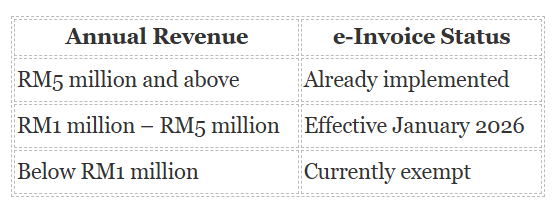
This means many medium and large employers are already operating within the e-Invoice ecosystem.
What Employees Should Start Doing Now
Employees who plan to claim tax relief should begin requesting e-Invoices where possible.
To receive an e-Invoice, employees typically need to provide:
- MyKad number
- TIN information
Since March 2026, MyKad numbers are generally used as taxpayers’ TIN identifiers.
Employees should also:
- Keep backup receipts
- Review transactions through MyInvois
- Ensure details are accurate before filing taxes
Common Employer Challenges During Digital Tax Transformation
Many businesses are still heavily dependent on:
- Manual claims processing
- Paper receipts
- Excel-based payroll records
- Decentralised HR documentation
As tax reporting becomes increasingly digital, these workflows may create operational inefficiencies and compliance risks.
Common issues include:
- Missing supporting documents
- Inconsistent employee records
- Delayed payroll reconciliation
- Duplicate claims
- Weak audit trails
Why Payroll and HR Software Matter More in 2026
As Malaysia modernises tax administration, businesses need stronger integration between HR, payroll, and compliance processes.
An integrated HR and payroll system helps businesses:
- Centralise employee records
- Improve payroll accuracy
- Store digital payroll documentation
- Track claims and reimbursements
- Maintain compliance records
- Reduce manual errors
For growing companies, automation is becoming increasingly important as compliance requirements evolve.
HR Best Practices for Employers
To prepare for future tax digitalisation, employers should:
Review Payroll Documentation Processes
Ensure employee payroll records are complete and properly stored.
Improve Claims and Reimbursement Tracking
Maintain consistent documentation standards for employee claims.
Train HR and Payroll Teams
Ensure teams understand evolving tax and e-Invoice requirements.
Reduce Dependency on Manual Processes
Manual systems increase the risk of payroll and documentation errors.
Strengthen Digital Record Management
Centralised HR systems improve compliance visibility and audit readiness.
FAQs
What is the LHDN e-Invoice tax relief initiative?
It is a pilot initiative where selected tax relief information may eventually be pre-filled into tax return forms using e-Invoice data.
Does this affect employers?
Indirectly, yes. The initiative reflects broader tax digitalisation trends that may affect payroll documentation, employee claims, and compliance processes.
Is e-Invoicing mandatory for all businesses?
Not yet. Implementation currently depends on annual business revenue thresholds.
What should employees do now?
Employees should request e-Invoices for eligible tax relief expenses and ensure their identification details are accurate.
Will paper receipts still be valid?
Yes. Businesses currently exempt from e-Invoice implementation may still issue normal receipts.
Conclusion
LHDN’s push for e-Invoice-based tax relief claims is more than just a tax filing convenience initiative.
It reflects Malaysia’s broader shift toward:
- Digital tax administration
- Automated compliance systems
- Integrated financial reporting
- Better audit visibility
For HR and payroll teams, this signals the growing importance of:
- Accurate payroll records
- Digital documentation
- Automated workflows
- Centralised employee data
Businesses that modernise their HR and payroll operations early will be better prepared for Malaysia’s next phase of tax and compliance digitalisation.
How Pandahrms Helps Businesses Stay Organised
Pandahrms helps employers manage:
- Payroll processing
- Employee records
- Claims and reimbursements
- Leave and attendance
- HR documentation
- Compliance workflows
As payroll and tax systems continue evolving in Malaysia, having a structured HR system becomes increasingly important for operational efficiency and compliance readiness.
References
Source: Malay Mail. (2026, May 9). LHDN: Start collecting your e-invoices for your tax relief claims. https://www.malaymail.com/news/malaysia/2026/05/09/lhdn-start-collecting-your-e-invoices-for-your-tax-relief-claims/219379