Losing a job is never easy — and in today’s fast-changing economy, retrenchments, restructuring, and business closures have become increasingly common. During such transitions, most employees worry about a single pressing question:
“How will I support myself while looking for a new job?”
To protect Malaysian workers during this vulnerable period, PERKESO introduced the Employment Insurance System (EIS) — a nationwide safety net that provides temporary financial support and job-seeking assistance to eligible individuals who experience involuntary loss of employment.
This guide breaks down what EIS is, who qualifies, how benefits work, and what employers must do to stay compliant. It also explains how a modern HR system like Pandahrms helps ensure accurate contributions and smooth offboarding processes.
What Is the Employment Insurance System (EIS)?
EIS is a social security scheme administered by PERKESO (SOCSO), designed to help workers who lose their jobs unexpectedly. Both employer and employee contribute a small monthly percentage to the EIS fund.
EIS has two main objectives:
-
Provide temporary financial assistance (Job Search Allowance) to individuals who are retrenched or lose their jobs involuntarily.
-
Support re-employment through job matching, career counseling, and training under the MyFutureJobs platform.
Who Is Eligible for EIS?
EIS is not for all unemployment cases — only for involuntary loss of employment.
Eligibility Requirements
To qualify, an individual must be:
-
A Malaysian citizen or permanent resident
-
Actively contributing to EIS through monthly salary deductions
-
Able to prove a Loss of Employment (LOE) as defined by PERKESO
What Counts as Involuntary Loss of Employment?
EIS covers:
-
Retrenchment / redundancy
-
Mutual or voluntary separation schemes (VSS/MSS)
-
Company closure (bankruptcy or shutdown)
-
Constructive dismissal
-
Business affected by natural disasters
What Is Not Covered?
You are not eligible if you:
-
Resigned voluntarily
-
Were dismissed for misconduct
-
Reached mandatory/optional retirement age
-
Reached the end of a fixed-term contract
EIS Benefits: What Financial Support Can You Receive?
1. Job Search Allowance (JSA)
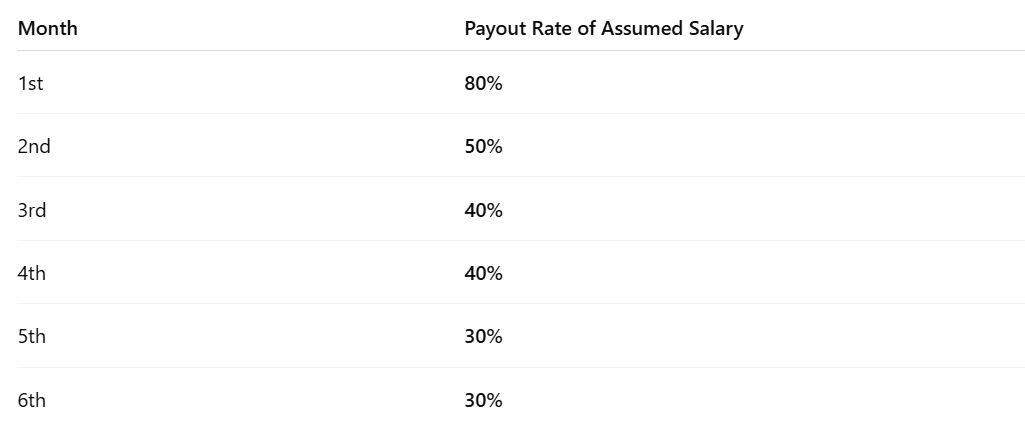
The JSA is the main financial assistance under EIS. Payments are made monthly for up to 6 months.
2. Early Re-employment Allowance (ERA)
If you secure a new job while still receiving JSA, PERKESO pays a one-time allowance equal to 25% of your remaining JSA entitlement.
3. Additional Support
-
Training Allowance – for upskilling courses
-
Reduced Income Allowance (RIA) – for individuals who lose one of multiple jobs
How to Apply for EIS (Step-by-Step)
Timing is crucial — applications must be submitted within 60 days of your Loss of Employment date.
Step 1: Prepare Your Documents
You will need:
-
NRIC copy
-
Official termination or VSS/MSS letter
-
Bank details
-
Last 6 months’ payslips
Step 2: Submit Your Application
You may apply:
-
Online through PERKESO’s official portal
-
In person at the nearest PERKESO office
Step 3: Participate in Re-employment Activities
To continue receiving benefits, you must:
-
Register with MyFutureJobs
-
Actively apply for jobs
-
Attend interviews, training, or career counseling when required
Employer Responsibilities Under EIS
Employers play an essential role in ensuring employees can claim their benefits smoothly.
1. Accurate and Timely EIS Contributions
Employers must ensure monthly EIS deductions are:
-
Calculated correctly
-
Paid to PERKESO on time
2. Provide a Detailed Termination Letter
A termination letter must clearly state:
-
The reason for job loss
-
Effective termination date
This is crucial for the employee’s EIS approval.
How Pandahrms Helps Employers Stay Fully Compliant
Manual payroll processing increases the risk of errors — especially with statutory contributions like EIS, SOCSO, and EPF.
Pandahrms simplifies this by automating the entire process.
With Pandahrms, HR teams can:
-
Auto-calculate all statutory contributions (EIS, SOCSO, EPF, PCB)
-
Generate compliant payslips and contribution reports
-
Ensure on-time submissions for every payroll cycle
-
Maintain accurate employee records, including exits and offboarding
-
Reduce human error and avoid penalties
-
Support employees during retrenchment with clear documentation
A reliable HRMS ensures your company remains compliant — and that your employees are protected when they need it most.
Conclusion: EIS Is a Critical Safety Net for Malaysian Workers
The Employment Insurance System plays a vital role in supporting workers through retrenchment or unexpected job loss.
For employees
EIS ensures temporary financial support and job-seeking assistance — but it’s important to apply within 60 days.
For employers
Accurate contributions, proper documentation, and a structured offboarding process are essential for compliance.
By using an HRMS like Pandahrms, companies can automate statutory deductions, stay compliant, and ensure every employee receives the protection they are entitled to.
Frequently Asked Questions (FAQ)
1. How long does EIS approval take?
Typically 7–14 working days, depending on document completeness.
2. Are EIS benefits taxable?
No. EIS payments are exempt from income tax.
3. What happens if I apply after 60 days?
PERKESO may reject your application. Always apply promptly.
4. Can contract staff claim EIS?
No. The expiry or non-renewal of a fixed-term contract is not considered Loss of Employment.