During Hari Raya Haji, many businesses across Malaysia continue operating as usual — especially in retail, F&B, logistics, hospitality, healthcare, and customer service industries.
But every festive season, one HR and payroll question repeatedly causes confusion:
“Can employers require employees to work during Raya Haji — and how should salary be calculated?”
Incorrect public holiday calculations can lead to:
- Payroll disputes
- Employee dissatisfaction
- Underpayment complaints
- Compliance risks under the Employment Act 1955
For employers and HR teams, understanding public holiday pay rules is essential to avoid costly payroll mistakes during festive operations.
This guide explains how Hari Raya Haji public holiday rules work in Malaysia for 2026, including employee rights, overtime rates, replacement leave, and HR best practices.
When Is Hari Raya Haji 2026 in Malaysia?
Hari Raya Aidiladha 2026 is expected to fall on:
Wednesday, 27 May 2026
The official date may still vary depending on the moon sighting announcement in Malaysia.
Several states may also receive additional holidays during the Raya Haji period, especially:
- Kedah
- Kelantan
- Terengganu
- Perlis
Some states may also observe Hari Arafah holidays before Raya Haji.
Because public holiday arrangements differ by state, HR teams should verify holiday schedules carefully before processing payroll and leave arrangements.
Is Raya Haji a Public Holiday in Malaysia?
Yes.
Hari Raya Haji (Hari Raya Aidiladha) is an official gazetted public holiday in Malaysia.
Under the Employment Act 1955, eligible employees are entitled to paid public holidays.
This means:
- Employees who do not work are generally entitled to paid leave
- Employees required to work may be entitled to additional compensation
- Public holiday rules differ from normal working day and rest day rules
For employers operating during festive seasons, proper payroll handling becomes especially important.
Can Employers Require Employees to Work During Raya Haji?
Yes.
Employers may require employees to work during a public holiday depending on operational requirements.
This commonly happens in industries such as:
Retail & Shopping Malls
Festive shopping periods often increase customer traffic.
Restaurants & F&B
Many businesses experience higher demand during Raya holidays.
Logistics & Warehousing
Supply chains and deliveries often continue operating during festive periods.
Essential Services
Hospitals, transportation, security, and utilities may operate continuously.
However, if employees work during a public holiday, employers must comply with public holiday compensation rules under Malaysian labour law.
Public Holiday Pay Rules in Malaysia
Public holiday pay depends on whether the employee works or does not work during the holiday.
Scenario 1: Employee Does NOT Work on Raya Haji
If an eligible employee is not required to work during Hari Raya Haji:
- The employee is generally entitled to paid public holiday leave
- No salary deduction should be made
- Monthly-paid employees continue receiving their normal salary
For monthly-paid employees, public holiday entitlement is already included within their monthly salary structure.
Scenario 2: Employee Works on Raya Haji
If an employee is required to work on a public holiday:
- Additional payment obligations apply
- Overtime rules may apply separately
Under public holiday pay rules, employees working on a public holiday are generally entitled to additional wages according to the Employment Act provisions and company policy.
Example: Public Holiday Pay Calculation
Employee monthly salary: RM2,600
Step 1: Calculate Daily Rate
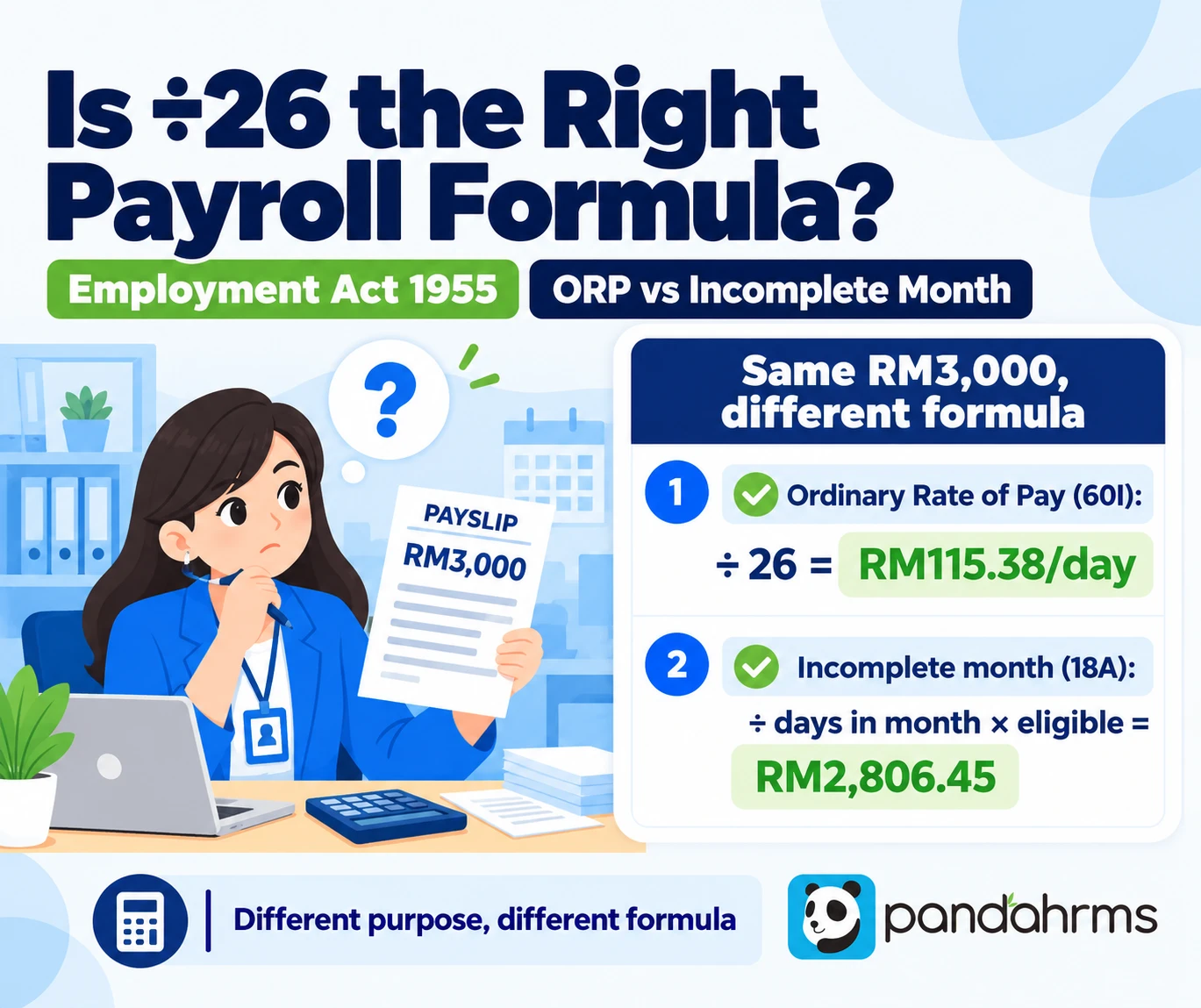
RM2,600 ÷ 26 = RM100 daily wage
Step 2: Public Holiday Work Pay
If employee works during the public holiday:
Public Holiday Pay = 2 × Daily Wage
RM100 × 2 = RM200
This covers the public holiday work entitlement.
Overtime on Public Holiday
If employees work beyond normal working hours during Raya Haji:
Additional overtime payment may apply.
Example
Hourly Rate:
RM100 ÷ 8 = RM12.50
If employee works 2 overtime hours:
OT Pay = RM12.50 × 3 × 2
Total OT = RM75
Total Payment
Public Holiday Pay = RM200
OT Pay = RM75
Total = RM275
This is one of the most misunderstood payroll areas during festive seasons.
Common Employer Mistakes During Raya Haji
Many payroll disputes happen because employers misunderstand public holiday rules.
Common mistakes include:
Paying Incorrect Public Holiday Rates
Some employers confuse:
- Rest day rules
- Public holiday rules
- Overtime rules
Each uses different calculations.
Incorrect Overtime Multipliers
Public holiday overtime calculations are often misapplied during festive operations.
Incorrect calculations may result in underpayment complaints.
Poor Attendance Tracking
Without proper attendance records, employers may struggle to prove:
- Actual working hours
- Overtime approval
- Shift schedules
- Replacement leave arrangements
Last-Minute Workforce Planning
Festive periods often create manpower shortages.
Without proper planning, HR teams may face:
- Scheduling conflicts
- Payroll errors
- Employee dissatisfaction
What If Raya Haji Falls on a Rest Day?
If a public holiday falls on an employee’s rest day or non-working day:
Employers may need to provide:
- Replacement leave
OR - Alternative holiday arrangements
This depends on employment terms and applicable labour rules.
HR teams should communicate these arrangements clearly before the festive period begins.
HR Best Practices During Raya Haji Season
Festive periods increase payroll complexity significantly.
To reduce compliance risk, employers should:
Plan Work Schedules Early
Avoid last-minute shift changes and staffing confusion.
Communicate Holiday Policies Clearly
Employees should understand:
- Public holiday entitlement
- Overtime rules
- Replacement leave policy
- Shift expectations
Track Attendance Properly
Accurate attendance records are critical during festive operations.
Audit Payroll Before Processing
Public holiday payroll errors commonly happen because calculations are rushed.
A payroll review before salary processing helps reduce disputes and compliance issues.
Why Manual Payroll Calculations Become Risky During Festive Seasons
During Raya periods, payroll becomes more complicated because employers may need to manage:
- Different state holidays
- Public holiday overtime
- Replacement leave
- Shift rotations
- Multiple attendance scenarios
Manual calculations increase the risk of:
- Human error
- Underpayment
- Wrong overtime calculations
- Payroll disputes
This becomes even harder for businesses with multiple outlets or shift workers.
How Pandahrms Helps Employers Manage Public Holiday Payroll
Pandahrms helps Malaysian employers simplify festive payroll management by automating key HR and payroll processes.
With Pandahrms, employers can:
- Automatically calculate public holiday pay
- Apply overtime rates accurately
- Track employee attendance in real time
- Manage festive shift schedules
- Reduce payroll compliance risks
- Centralise leave and payroll records in one system
This helps HR teams avoid manual payroll mistakes during busy festive periods like Hari Raya Haji.
FAQs
Is Hari Raya Haji a public holiday in Malaysia?
Yes. Hari Raya Aidiladha is an official public holiday in Malaysia.
Can employers ask employees to work during Raya Haji?
Yes, depending on operational requirements and company policy.
Do employees get extra pay for working on public holidays?
Eligible employees may receive additional payment according to public holiday pay rules and overtime provisions.
Is overtime different during public holidays?
Yes. Public holiday overtime rates differ from normal overtime calculations.
Which states receive extra Raya Haji holidays?
States such as Kedah, Kelantan, Terengganu, and Perlis may receive additional holidays.
Conclusion
Hari Raya Haji is not only a festive season — it is also a high-risk payroll period for many Malaysian employers.
Misunderstanding public holiday rules can lead to:
- Payroll disputes
- Compliance issues
- Employee dissatisfaction
- Costly underpayment mistakes
For HR teams and employers, proper planning is essential.
Understanding public holiday pay rules, overtime calculations, replacement leave arrangements, and attendance tracking helps businesses stay compliant while maintaining smooth operations during festive periods.
As workforce management becomes more complex, many businesses are now moving toward automated HR and payroll systems to reduce manual errors and improve compliance accuracy.
Simplify Raya Haji Payroll with Pandahrms
Still calculating public holiday pay manually?
Pandahrms helps employers automate payroll calculations, overtime rates, attendance tracking, and festive workforce scheduling — all within one integrated HR system.
Book a 35-minute demo with Pandahrms to see how your business can simplify payroll compliance during public holidays and festive seasons.