HRD Corp has officially introduced major changes to levy-based training grant applications in Malaysia — and many HR teams are still underestimating how serious these changes are.
Starting 15 June 2026, employers applying for HRD Corp claimable training grants will face:
- Stricter approval timelines
- Locked training schedules
- No amendment flexibility
- Faster application expiry risks
For companies relying on HRD levy claims to train employees, these changes could directly impact:
- Workforce planning
- Training schedules
- HR administration workload
- Claim approval success rates
- Compliance risk
This is no longer just an “HR admin process.”
It is becoming a compliance-driven operational workflow that requires better planning, documentation, and coordination between HR, payroll, training providers, and management teams.
What Changed in HRD Corp Grant Applications in 2026?
Under HRD Corp Employer’s Circular No. 2/2026, several major procedural changes will take effect from 15 June 2026.
The updated rules affect levy-based schemes including:
- HRD Corp Claimable Courses (HCC)
- Skim Bantuan Latihan (SBL)
- Skim Latihan Bersama (SLB)
- Future Workers Training (FWT)
These changes apply to both employers and training providers.
The 3 Biggest HRD Corp Grant Changes Employers Must Understand
1. Training Must Start 14 Days After Approval
Previously, some employers scheduled training almost immediately after receiving grant approval.
That flexibility is now gone.
Under the new rules:
- Training can only begin at least 14 calendar days after approval
- Training must start within 90 days after approval
Example
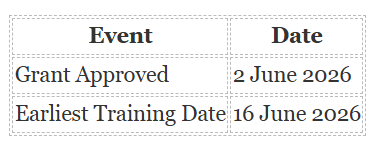
This means companies can no longer submit last-minute applications and expect immediate training execution.
HR teams now need to plan training calendars much earlier.
2. Approved Grants Are Now Locked
This is one of the biggest operational changes.
Once a grant is approved:
❌ No amendments
❌ No date changes
❌ No venue changes
❌ No trainer modifications
❌ No appeals
If changes are needed:
➡ The employer must cancel the approved grant and submit a brand-new application.
For HR teams managing multiple training sessions, this creates major administrative risk if schedules are poorly planned.
3. Only One Query Is Allowed
Under the revised process:
- HRD Corp only allows one query per application
- Employers must respond within 5 calendar days
- Failure to respond causes the application to expire automatically
This means incomplete submissions can now easily lead to rejected or expired claims.
Why This Matters to HR & Employers
Many employers think HRD grant applications are “just paperwork.”
But these new rules show that HRD Corp is moving toward:
- Stricter compliance enforcement
- More structured workforce development governance
- Reduced administrative flexibility
- Higher documentation expectations
For HR teams, this creates several operational challenges.
Common Risks Employers May Face
Without proper planning, employers may encounter:
Last-Minute Grant Rejections
Training dates may become invalid if approvals arrive too late.
Wasted HRD Levy Utilisation
Poor planning may result in:
- Unclaimable training costs
- Expired applications
- Missed training schedules
Administrative Bottlenecks
Manual HR processes increase the risk of:
- Missed deadlines
- Incomplete submissions
- Poor documentation tracking
- Approval delays
Compliance Issues During Audits
Training claims now require tighter alignment between:
- Approved grant details
- Attendance records
- Training dates
- Supporting documentation
Any mismatch may trigger rejection or verification issues later.
How HR Teams Should Prepare Before 15 June 2026
1. Plan Training Calendars Earlier
Companies should now finalise:
- Training dates
- Trainers
- Venues
- Participant lists
Much earlier than before.
A good practice is submitting applications 3–4 weeks before training.
2. Improve Internal HR Coordination
HR, department heads, finance teams, and training providers must now coordinate more closely.
This reduces risks of:
- Last-minute changes
- Incorrect submissions
- Delayed approvals
3. Standardise Documentation
Employers should ensure:
- Employee attendance records are accurate
- Training records are properly stored
- Approval documents are centralised
- Supporting files are audit-ready
4. Avoid Manual Tracking
Spreadsheet-based HR workflows increase the chance of:
- Human error
- Missed approval windows
- Lost records
- Duplicate submissions
As compliance requirements become stricter, many employers are moving toward integrated HR systems for better visibility and tracking.
How This Links to Payroll & HR Operations
Although HRD grants are training-related, they increasingly affect broader HR operations.
HR teams now need stronger visibility over:
- Employee attendance
- Training participation
- Leave scheduling
- Payroll coordination
- Employee records
- Audit documentation
This is where integrated HR systems become more important.
How Pandahrms Helps HR Teams Stay Organised
As compliance processes become more structured, HR teams need better operational control.
Pandahrms helps employers simplify HR administration through:
✔ Employee attendance tracking
✔ Centralised employee records
✔ Leave & scheduling management
✔ Payroll integration
✔ Digital HR documentation
✔ Audit-ready reporting workflows
Instead of juggling spreadsheets, emails, and manual reminders, HR teams can manage workforce operations more systematically.
HRD Corp Grant Planning Checklist for Employers
Before submitting your next grant application, ensure you:
✔ Finalise training dates early
✔ Submit applications well before deadlines
✔ Verify all course information carefully
✔ Respond to HRD queries within 5 days
✔ Align attendance records properly
✔ Store approval documents securely
✔ Coordinate HR and training schedules earlier
FAQs
1. When do the new HRD Corp grant rules start?
The new rules take effect on 15 June 2026.
2. Can employers still modify approved grants?
No. Approved grants are now locked and cannot be amended.
3. What happens if training dates change?
The employer must cancel the existing application and submit a new one.
4. How many queries are allowed?
Only one query per application is permitted.
5. How long do employers have to respond to queries?
Employers must respond within 5 calendar days.
Conclusion: HRD Grant Compliance Is Becoming More Strict in Malaysia
The new HRD Corp rules signal a major shift toward stricter training grant governance in Malaysia.
For employers, this means:
- Earlier planning
- Better HR coordination
- Stronger documentation
- More structured workflows
Companies still relying heavily on manual HR administration may struggle to keep up with growing compliance expectations.
Simplify HR Operations with Pandahrms
As HR compliance becomes more complex, managing everything manually becomes riskier.
Pandahrms helps businesses streamline:
- HR administration
- Payroll workflows
- Attendance management
- Employee records
- Workforce documentation
Talk to Pandahrms today to simplify your HR operations and stay better prepared for Malaysia’s evolving compliance landscape.