SDSVDP 2026 Deadline Extended! How Malaysian Businesses Can Avoid Stamp Duty Penalties Before 31 December
Good news for Malaysian businesses.
If your company has signed agreements, contracts, tenancy documents, financing arrangements or other legal instruments over the past few years, you now have more time to review them and avoid unnecessary stamp duty penalties.
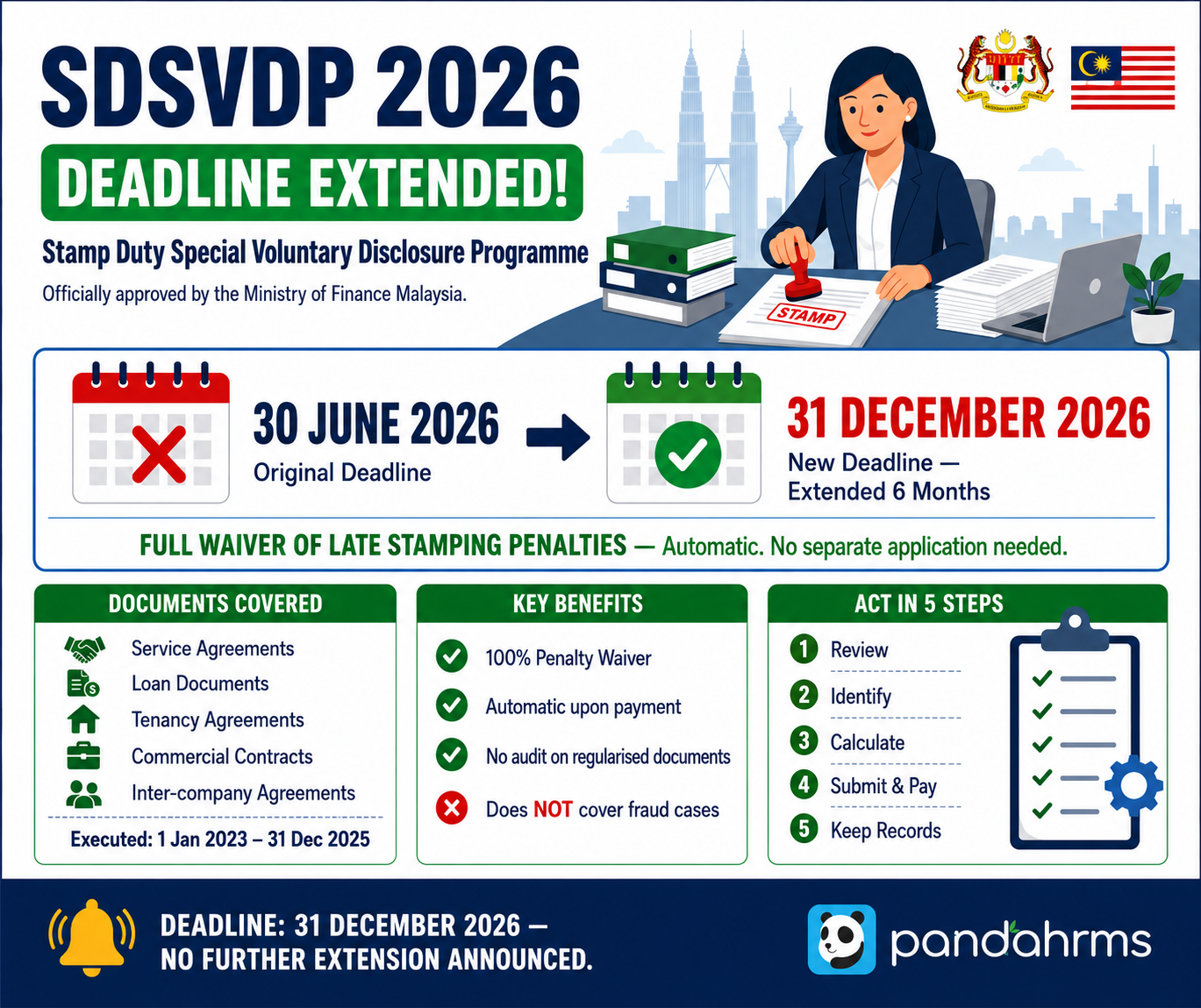
The Ministry of Finance (MOF) has officially extended the Stamp Duty Special Voluntary Disclosure Programme (SDSVDP) 2026, also known as PKPS Duti Setem 2026, from 30 June 2026 to 31 December 2026.
Although this extension gives businesses an additional six months, it should not be treated as a reason to delay action. Instead, it is an opportunity for employers, finance teams and business owners to review historical documents, correct any stamp duty compliance issues and enjoy a 100% waiver of late stamping penalties, provided they meet the programme’s requirements before the new deadline.
If your business has not started reviewing its agreements, now is the best time to begin.
In this guide, we’ll explain what SDSVDP 2026 is, which documents are covered, who is eligible, and what Malaysian businesses should do before 31 December 2026.
What Is SDSVDP 2026?
The Stamp Duty Special Voluntary Disclosure Programme (SDSVDP) 2026 is a special compliance initiative introduced by the Malaysian government to encourage businesses and taxpayers to voluntarily regularise eligible documents that were either not stamped or stamped late.
Under normal circumstances, documents that are chargeable with stamp duty must be stamped within the prescribed time under the Stamp Act 1949. Failure to do so may result in late stamping penalties.
Through SDSVDP 2026, businesses are given a limited opportunity to submit eligible documents, pay the applicable stamp duty, and receive a full waiver of late stamping penalties.
The programme is designed to improve voluntary compliance while helping businesses resolve historical stamp duty issues without incurring additional penalty costs.
What Has Changed?
The biggest update is the extension of the programme deadline.
| Previous Deadline | New Deadline |
|---|---|
| 30 June 2026 | 31 December 2026 |
This means businesses now have until 31 December 2026 to complete the voluntary disclosure process and enjoy the penalty waiver.
However, businesses should avoid waiting until the last minute.
Reviewing several years’ worth of agreements, identifying documents requiring stamp duty and calculating the correct amount payable can take considerable time, especially for companies with large volumes of contracts.
Starting early also reduces the risk of missing the deadline due to administrative delays.
Which Documents Are Covered?
Generally, SDSVDP 2026 applies to eligible chargeable instruments executed between:
1 January 2023 and 31 December 2025
Examples may include:
- Commercial agreements
- Service agreements
- Loan agreements
- Financing documents
- Tenancy agreements
- Shareholders’ agreements
- Inter-company agreements
- Business contracts
- Other chargeable instruments under the Stamp Act 1949
The programme generally covers documents that:
- were never stamped; or
- were stamped after the prescribed period.
Businesses should review all agreements executed during the eligibility period to determine whether any documents require regularisation.
What Are the Benefits of Joining SDSVDP 2026?
The biggest advantage is simple:
You may avoid paying late stamping penalties.
Businesses that submit eligible documents and pay the applicable stamp duty before 31 December 2026 can enjoy a 100% waiver of late stamping penalties, subject to the programme’s terms and conditions.
In addition, documents successfully regularised under the programme are generally not subject to stamp duty audit under the SDSVDP framework.
For many companies, this provides valuable peace of mind and reduces future compliance risks.
Why Businesses Shouldn’t Ignore This Extension
Many companies assume stamp duty is only relevant when buying property.
In reality, stamp duty also applies to many business documents signed every day.
Examples include:
- Employment-related agreements
- Commercial contracts
- Financing arrangements
- Shareholder documents
- Leasing agreements
- Inter-company transactions
Because these documents are often handled by different departments, some may have been overlooked or submitted late.
The SDSVDP extension provides an opportunity to identify these gaps before they become compliance issues.
Waiting until after the programme ends could mean paying penalties that could have been avoided entirely.
What Happens If You Miss the 31 December 2026 Deadline?
Businesses that fail to regularise eligible documents before 31 December 2026 will no longer enjoy the automatic penalty waiver offered under SDSVDP.
Instead, the normal late stamping penalty provisions under the Stamp Act 1949 may apply.
In addition, businesses may lose the audit protection available under the voluntary disclosure programme.
Although other voluntary disclosure mechanisms may still exist, they do not provide the same automatic benefits available under SDSVDP 2026.
For this reason, businesses should treat 31 December 2026 as a firm compliance deadline rather than assuming another extension will be announced.
What Should Malaysian Businesses Do Now?
If your company has not yet reviewed its historical agreements, consider taking the following steps:
Step 1: Review Your Documents
Gather all agreements and chargeable instruments executed between 1 January 2023 and 31 December 2025.
Step 2: Identify Documents That May Require Stamp Duty
Check whether any agreements:
- were never stamped; or
- were stamped after the prescribed period.
Step 3: Determine the Applicable Stamp Duty
Calculate the correct stamp duty payable for each eligible document based on the applicable legislation.
If necessary, seek professional advice to ensure the correct amount is determined.
Step 4: Complete Stamping Before 31 December 2026
To enjoy the penalty waiver, eligible documents must be submitted and the applicable stamp duty paid before the programme closes.
Step 5: Keep Proper Records
Retain copies of all stamped documents for future reference and compliance purposes.
Good record management will also make future audits much easier to manage.
Why Early Action Matters
Although six months may sound like plenty of time, businesses often underestimate how long document reviews can take.
A company that has signed hundreds of agreements over the past three years may need weeks or even months to identify which documents require attention.
Leaving everything until December increases the risk of administrative delays, incomplete reviews or missed deadlines.
The earlier your business starts, the smoother the process will be.
Final Thoughts
The extension of SDSVDP 2026 is good news for Malaysian businesses, but it should be viewed as a second chance rather than extra time to postpone compliance.
If your business has agreements executed between 1 January 2023 and 31 December 2025, now is the ideal time to review them, identify any stamp duty issues and regularise eligible documents before 31 December 2026.
Taking action today could help your company avoid unnecessary penalties, strengthen compliance and reduce future audit risks.
For employers, finance teams and business owners, staying ahead of statutory requirements is always easier than correcting problems after a deadline has passed.
Frequently Asked Questions (FAQs)
1. What is SDSVDP 2026?
SDSVDP 2026 (Stamp Duty Special Voluntary Disclosure Programme) is a government initiative that allows eligible businesses and taxpayers to voluntarily regularise unstamped or late-stamped documents while enjoying a full waiver of late stamping penalties, subject to the programme’s terms.
2. Has the SDSVDP 2026 deadline been extended?
Yes. The Ministry of Finance has extended the programme deadline from 30 June 2026 to 31 December 2026.
3. Which documents are eligible under SDSVDP 2026?
Generally, eligible chargeable instruments executed between 1 January 2023 and 31 December 2025 that were not stamped or stamped late may qualify under the programme, subject to the applicable rules.
4. What is the main benefit of SDSVDP 2026?
Eligible businesses can receive a 100% waiver of late stamping penalties after submitting eligible documents and paying the applicable stamp duty before the programme deadline.
5. What happens if I miss the deadline?
After 31 December 2026, the automatic penalty waiver under SDSVDP will no longer apply, and normal late stamping penalties under the Stamp Act 1949 may become payable.
6. Will there be another extension?
At the time of writing, no further extension has been announced. Businesses should work towards the current deadline of 31 December 2026.
Disclaimer
This article is intended for general informational purposes only and should not be regarded as legal or tax advice. Eligibility for the Stamp Duty Special Voluntary Disclosure Programme (SDSVDP) 2026 depends on the applicable laws, programme guidelines and individual circumstances. Businesses are encouraged to refer to the latest official announcements issued by the Ministry of Finance (MOF), the Inland Revenue Board of Malaysia (LHDN), or consult a qualified tax or legal adviser before making any decisions.
Sources
- Ministry of Finance Malaysia (MOF). Extension of the Stamp Duty Special Voluntary Disclosure Programme (SDSVDP) 2026.
- Inland Revenue Board of Malaysia (LHDN). Stamp Duty Special Voluntary Disclosure Programme (PKPS Duti Setem 2026).
- Stamp Act 1949 (Act 378), Malaysia.