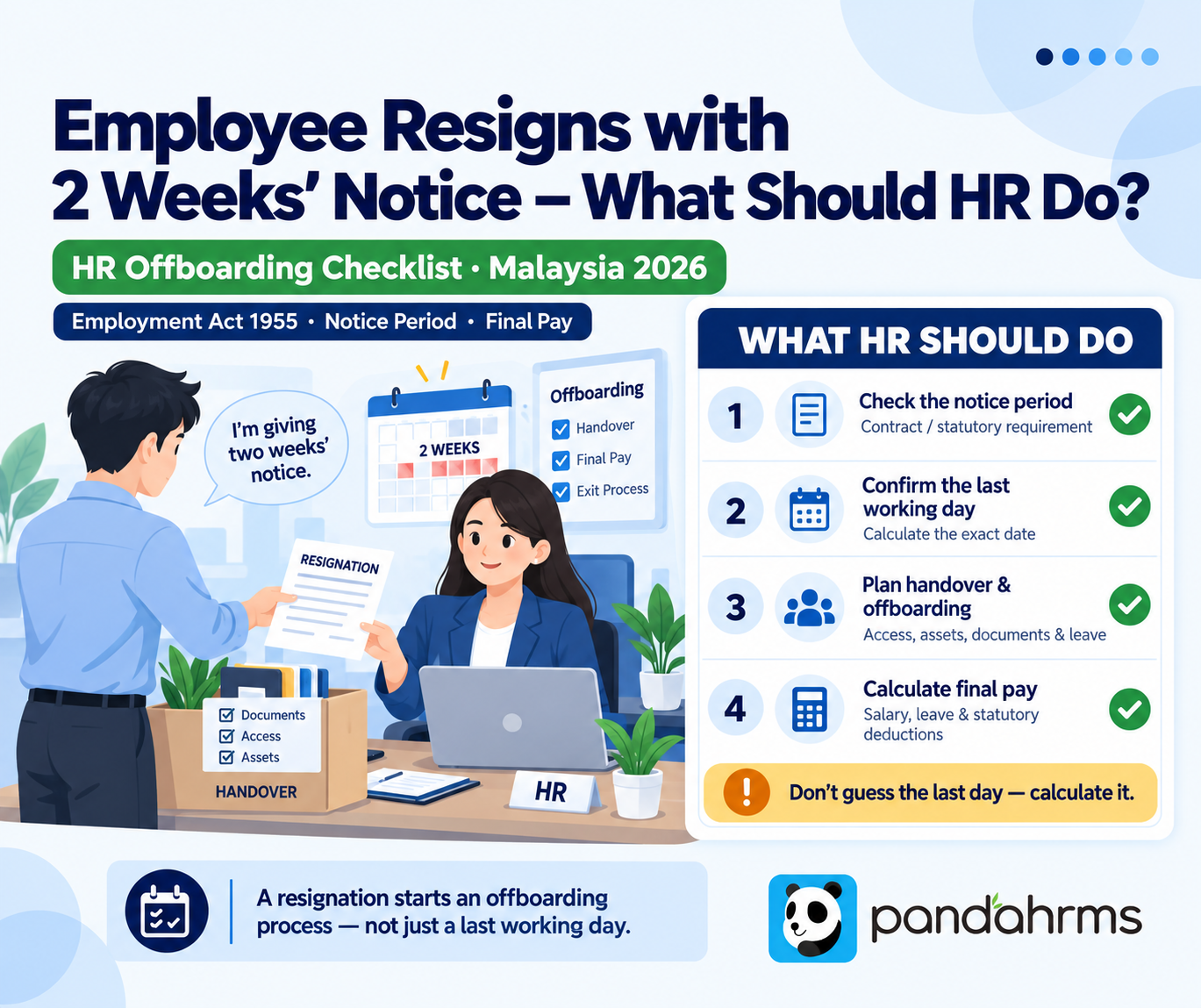
An employee walks into the HR office and says:
“I’m giving two weeks’ notice.”
What should HR do next?
A two-week resignation does not automatically mean the employee is leaving improperly. The first step is to check the employee’s employment contract, notice period and last working day.
Here is a simple guide for Malaysian employers.
What Is a 2-Week Resignation Notice?
A two-week resignation means an employee gives notice that they intend to end their employment after two weeks.
Whether two weeks is sufficient depends mainly on the employment contract.
Under Section 12 of Malaysia’s Employment Act 1955, where the contract does not provide a written notice period, the minimum notice is:
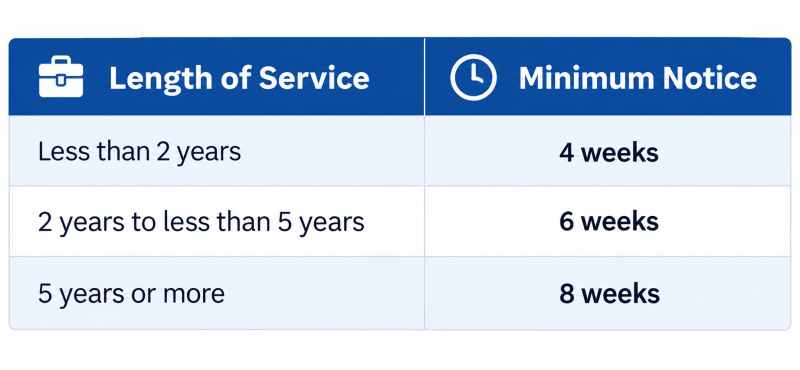
The Act also allows either party to waive the right to notice. A contract may therefore provide a different notice period, provided it complies with applicable requirements.
So, Can an Employee Give Only 2 Weeks’ Notice?
Yes, depending on the employment terms.
For example, two weeks may apply where:
- The employee’s contract states a 2-week notice period.
- A shorter notice period applies during probation.
- The employer agrees to accept a shorter notice period.
- The employee pays the applicable amount in lieu of the unserved notice.
Always check the signed employment contract before deciding whether the notice is sufficient.
What Should HR Do When an Employee Resigns?
HR should handle the resignation in a clear and documented process.
1. Check the Contract
Confirm:
- Required notice period
- Resignation date
- Last working day
- Probation or permanent employment status
- Any specific company requirements for resignation
Do not assume that every employee has the same notice period.
2. Acknowledge the Resignation
Provide written confirmation of the resignation and confirm the employee’s last working day.
This helps both the company and employee avoid confusion later.
3. Start the Handover
Two weeks can pass quickly.
HR and the manager should identify:
- Outstanding work
- Important files and documents
- Ongoing projects
- Customers or suppliers requiring follow-up
- System access and company assets
- Person responsible for taking over the work
For key positions, start the handover immediately instead of waiting until the final few days.
Can the Employee Leave Before the Notice Ends?
This depends on how the early release is handled.
Under Section 13 of the Employment Act 1955, either party may terminate the contract without waiting for the full notice period by paying an indemnity equivalent to the wages that would have accrued during the required notice or remaining notice period.
Therefore, HR should clearly document whether the employee:
Serves the full notice → employment ends on the normal last working day.
Uses an agreed arrangement involving leave → document the approved arrangement and revised last working day.
Leaves early and pays in lieu of the remaining notice → calculate and document the applicable amount.
Avoid making assumptions or deductions without checking whether they are legally permitted and supported by the contract.
What Should Be Included in the Final Pay?
Before the employee leaves, HR should review the final payroll.
Depending on the employee’s circumstances, this may include:
- Salary up to the last working day
- Overtime or other approved payments
- Eligible unused annual leave payments
- Lawful deductions
- Payment relating to unserved notice, where applicable
- Relevant statutory payroll processing
For a normal termination under Section 12, wages earned but not yet paid are generally due no later than the day the contract terminates.
Employers should also ensure the employee’s statutory payroll records and contributions are updated correctly.
Can HR Reject a 2-Week Resignation?
HR should not simply reject a resignation without first checking the contractual notice requirement.
For example:
Contract says 2 weeks
→ The employee can generally serve the stated notice.
Contract says 4 weeks, but employee gives 2 weeks
→ HR should review the remaining notice obligation and discuss the appropriate arrangement, including payment in lieu where applicable.
The Employment Act provides that the notice period is the same for employer and employee and allows notice rights to be waived.
The practical approach is to resolve the notice issue in writing rather than simply telling the employee they cannot resign.
How Pandahrms Helps HR Manage Employee Resignation
Resignation becomes harder to manage when HR has to track everything manually.
Pandahrms helps HR keep employee information, payroll records, leave balances and employment details in one system, making it easier to manage the employee’s final payroll and offboarding process.
With better HR records, companies can reduce missed steps and keep a clearer audit trail when employees leave.
Final Thoughts
A two-week resignation does not have to become an HR headache.
The key is to check the contract, confirm the last working day, manage the handover and complete the final payroll accurately.
For Malaysian employers, having a clear resignation and offboarding process helps reduce payroll errors, operational disruption and unnecessary disputes.
Frequently Asked Questions
Is 2 weeks’ notice legal in Malaysia?
It can be, depending on the employment contract or an agreed arrangement between the employer and employee. Where no written notice period is provided, Section 12 of the Employment Act 1955 sets minimum notice periods based on length of service.
Can an employee resign immediately?
An employee may leave without serving the full notice where the applicable requirements for termination without notice are met, including payment in lieu of the applicable notice period.
Can an employer deduct salary for insufficient notice?
Section 24 of the Employment Act permits certain deductions, including deductions for indemnity due from an employee under Section 13(1). Employers should ensure any deduction is lawful and properly calculated.
Must HR conduct an exit interview?
An exit interview is a useful HR practice, but the main priority is to complete the employee’s resignation, handover, final payroll and record updates properly.