

Double Pay vs Triple Pay: Why Malaysian Employers Keep Getting Public Holiday Payroll Wrong
“Double pay enough already?”
“Public holiday means triple pay right?”
Every festive season, HR teams and employers across Malaysia argue over the same payroll issue:
👉 How much should employees actually be paid for working on a public holiday?
The confusion usually happens because employers mix up:
- Public holiday pay
- Rest day pay
- Overtime pay
- Replacement holidays
And when payroll calculations are wrong, it can lead to:
❌ Employee disputes
❌ Underpayment complaints
❌ Labour Office investigations
❌ Payroll compliance risks
Under the Employment Act 1955, Malaysian public holiday payroll rules are very specific — especially when employees work during gazetted public holidays.
This guide explains:
✔ Difference between double pay vs triple pay
✔ Public holiday overtime rules
✔ Rest day vs public holiday calculations
✔ Replacement holiday rules
✔ Real payroll examples employers can follow
What the Employment Act Actually Says
Under Section 60D of the Employment Act 1955:
If an employee works on a gazetted public holiday, the employee is entitled to:
- Public holiday pay they are already entitled to
PLUS - An additional two days’ wages at the ordinary rate of pay
This is why employers commonly call it:
✅ “Triple Pay”
However, legally, it is not simply a flat “3x salary” formula.
The calculation actually combines:
- Existing paid holiday entitlement
PLUS - Additional public holiday payment
PLUS - Overtime payment (if applicable)
This is where many payroll mistakes happen.
Who Is Covered Under Public Holiday Pay Rules?
Generally, employees covered under the Employment Act 1955 include:
- Employees earning RM4,000 and below
- Manual labour workers regardless of salary
- Employees specifically protected under the Act
However, many Malaysian companies extend public holiday benefits to all employees as part of company policy and HR best practices.
First Thing HR Must Understand: Ordinary Rate of Pay (ORP)
Public holiday payroll calculations usually begin with the:
Ordinary Rate of Pay (ORP)
Formula:
Monthly Salary ÷ 26Example:
Monthly salary = RM3,000
RM3,000 ÷ 26 = RM115.38So:
- Daily Rate (ORP) = RM115.38
- Hourly Rate = RM115.38 ÷ 8 = RM14.42
These figures are then used to calculate:
- Public holiday pay
- Rest day pay
- Overtime pay
Scenario 1: Employee Works on a Public Holiday (Normal Working Day)
This is the most common “triple pay” situation.
Example:
- Monthly salary = RM3,000
- Public holiday falls on a Tuesday
- Employee is required to work
Step 1 — Public Holiday Pay Already Included
For monthly-paid employees:
The paid public holiday is already included in the monthly salary.
1x ORP = RM115.38Step 2 — Additional Public Holiday Payment
The law requires:
2 additional days’ wagesCalculation:
RM115.38 × 2 = RM230.76Total Pay for the Day
RM115.38 + RM230.76 = RM346.14✅ Total = 3× ordinary daily rate
This is why employers commonly refer to it as:
✅ Triple Pay
Scenario 2: Employee Works Overtime on a Public Holiday
This is the part many employers miss.
If employees work beyond normal working hours during a public holiday:
✅ Overtime must be paid separately
Public Holiday OT Rate
Minimum:
3× hourly rateExample
Employee works:
- 8 normal hours
- PLUS 2 overtime hours
Hourly rate:
RM14.42OT Calculation:
RM14.42 × 3 × 2 hours
= RM86.52
Total Public Holiday Earnings
Public holiday pay:
RM346.14PLUS OT:
RM86.52Final Total
RM432.66Scenario 3: Working on a Rest Day (Not a Public Holiday)
This is NOT the same as public holiday pay.
Under Section 60:
Rest day pay depends on:
- Number of hours worked
- Employee pay structure
Monthly-Rated Employees
If employee works:
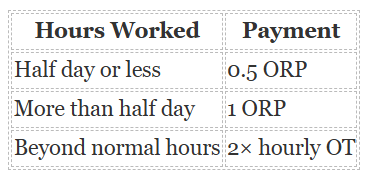
Example
Employee works full day on Sunday (rest day):
Additional pay:
1 × ORP = RM115.38If OT = 2 hours:
RM14.42 × 2 × 2
= RM57.68
Total additional pay:
RM173.06Scenario 4: Public Holiday Falls on a Rest Day
This is where HR confusion becomes very common.
Example:
- Public holiday falls on Saturday
- Saturday is employee’s rest day
Many employers wrongly apply:
❌ Rest day rules only
But under the Employment Act:
✅ Public holiday rules still apply
Meaning:
✔ Employee receives replacement holiday
✔ Public holiday rates still apply if employee works
✔ OT still follows public holiday OT rules
Difference Between Normal Day, Rest Day & Public Holiday
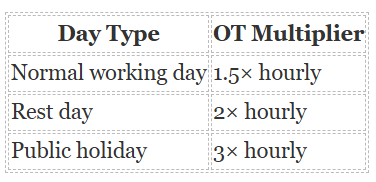
This is one of the biggest payroll areas employers misunderstand.
5 Most Common Payroll Mistakes Employers Make
1. Using “Double Pay” for Public Holiday Work
Public holiday work is NOT ordinary double pay.
For monthly-rated employees:
✅ It effectively becomes 3× total compensation.
2. Using Salary ÷ 30 Instead of ÷ 26
The Employment Act calculation uses:
Monthly Salary ÷ 26Using ÷30 can underpay employees.
3. Ignoring Public Holiday OT Rules
Public holiday overtime:
✅ 3× hourly rate
Not standard OT.
4. Treating Public Holiday as Rest Day
Public holiday rules override rest day treatment.
5. Poor Attendance Tracking
Without accurate clock-in records:
- OT disputes happen easily
- Payroll calculations become risky
- Compliance becomes difficult
What Employers Should Include in HR Policies
To reduce payroll disputes, employers should clearly define:
✔ Public holiday policies
✔ Replacement holiday rules
✔ Rest day schedules
✔ Overtime approval process
✔ Payroll calculation method
✔ Shift arrangements during festive seasons
Clear HR documentation helps avoid future legal disputes.
Why Public Holiday Payroll Mistakes Still Happen
Most Malaysian payroll issues come from:
❌ Manual Excel calculations
❌ Wrong OT multipliers
❌ No attendance integration
❌ Confusing shift schedules
❌ Last-minute holiday planning
This becomes even riskier during:
- Hari Raya
- Chinese New Year
- Deepavali
- Labour Day
- Christmas
- State public holidays
How Pandahrms Helps Employers Stay Compliant
Pandahrms helps HR teams automate complex payroll calculations including:
✔ Public holiday pay
✔ Triple pay calculations
✔ Rest day OT
✔ Replacement holidays
✔ Shift attendance tracking
✔ Payroll compliance reporting
Instead of manually checking formulas every festive season, HR teams can process payroll more accurately and reduce compliance risks.
FAQs
Is public holiday pay always triple pay?
Not exactly.
For monthly-rated employees working on a public holiday, the total compensation commonly equals 3× daily wages.
Is overtime during public holidays different?
Yes.
Public holiday overtime is typically:
✅ 3× hourly rate
If a public holiday falls on a rest day, what happens?
The next working day usually becomes the replacement public holiday.
Can employers replace public holiday pay with leave?
Replacement leave does not automatically remove statutory payment obligations.
Employers must comply with Employment Act requirements.
What is the difference between rest day and public holiday?
They are legally different day types with different payroll calculations and OT multipliers.
Final Thoughts: Public Holiday Payroll Is a Major HR Compliance Area
The biggest payroll mistake Malaysian employers make is oversimplifying public holiday pay.
The rules are not simply:
❌ “Double pay”
❌ “Triple pay”
The real calculation depends on:
- Day type
- Work hours
- Overtime
- Rest day arrangements
- Employee category
For HR teams, accurate payroll processing is no longer optional — especially during festive seasons where disputes become more common.
Simplify Public Holiday Payroll with Pandahrms
Still calculating public holiday pay manually?
That’s where most payroll mistakes happen.
Pandahrms helps employers:
✔ Calculate public holiday pay automatically
✔ Apply correct OT multipliers
✔ Track attendance accurately
✔ Reduce payroll compliance risk
✔ Manage replacement holidays properly
Book a 35-minute demo with Pandahrms to streamline your payroll, attendance tracking, overtime calculations, and statutory compliance processes in one centralized HR system.

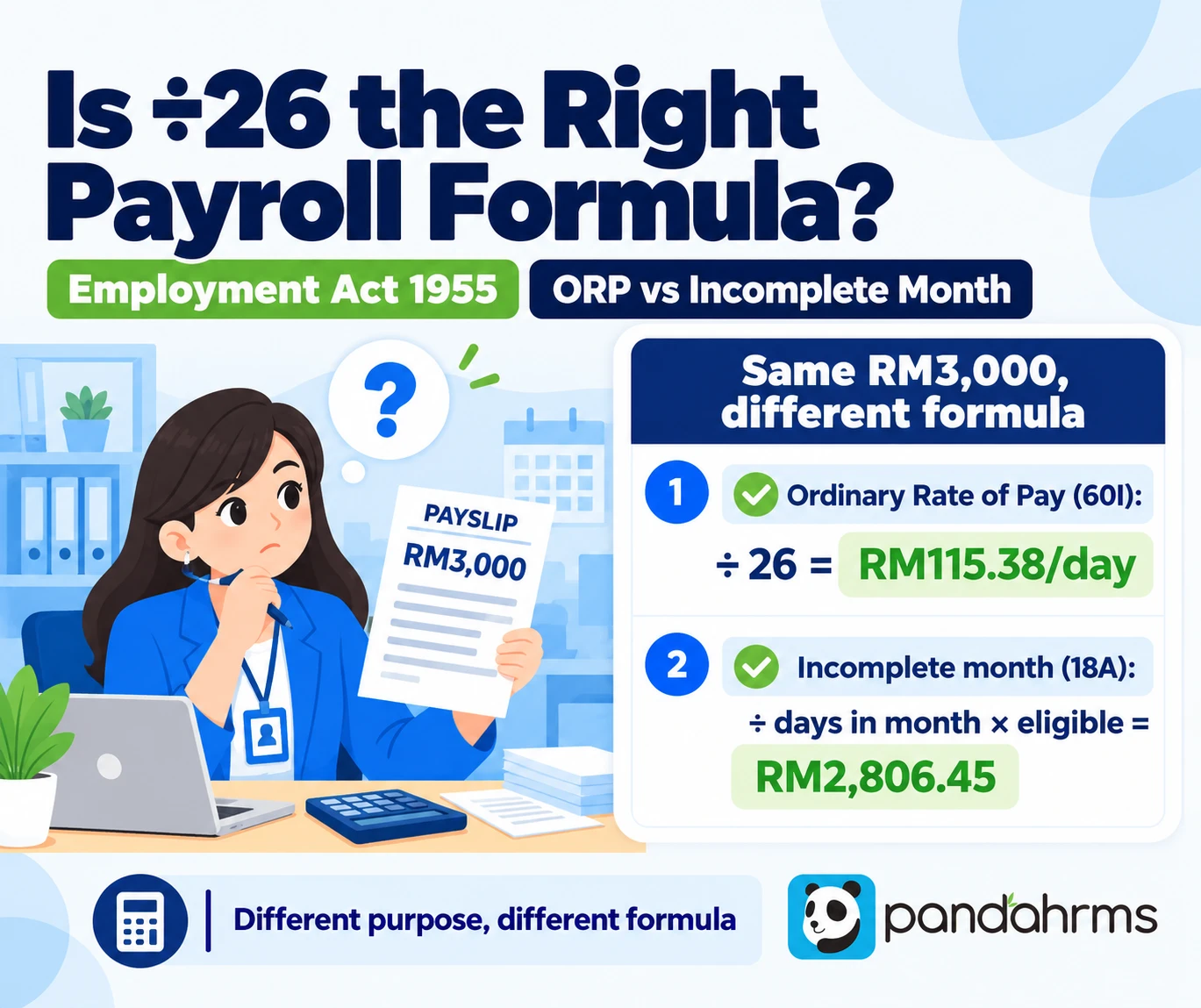
Ask a few HR people how to work out a [...]
-
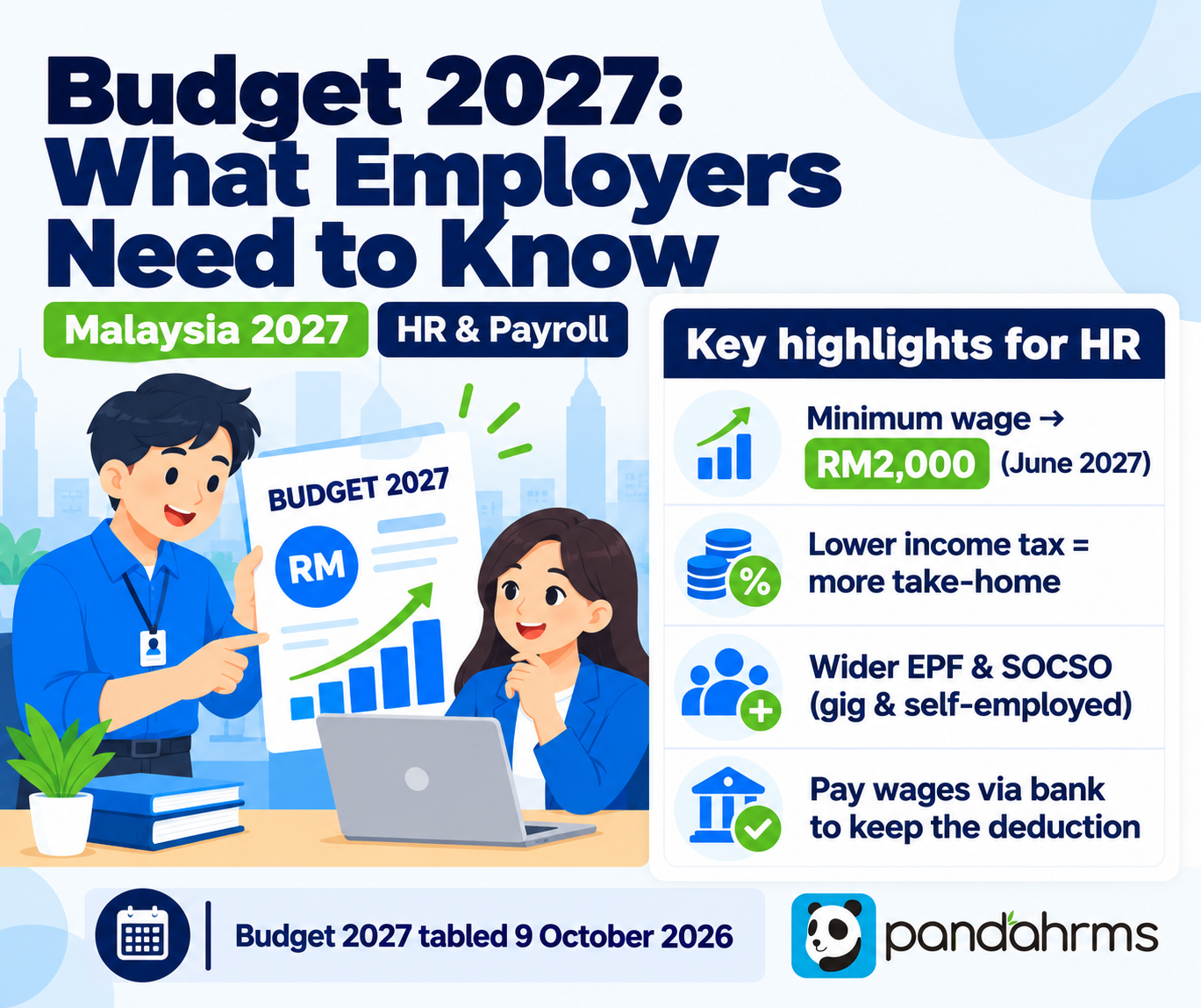
Malaysia’s Budget 2027 — a record RM459.8 billion, tabled on [...]
-
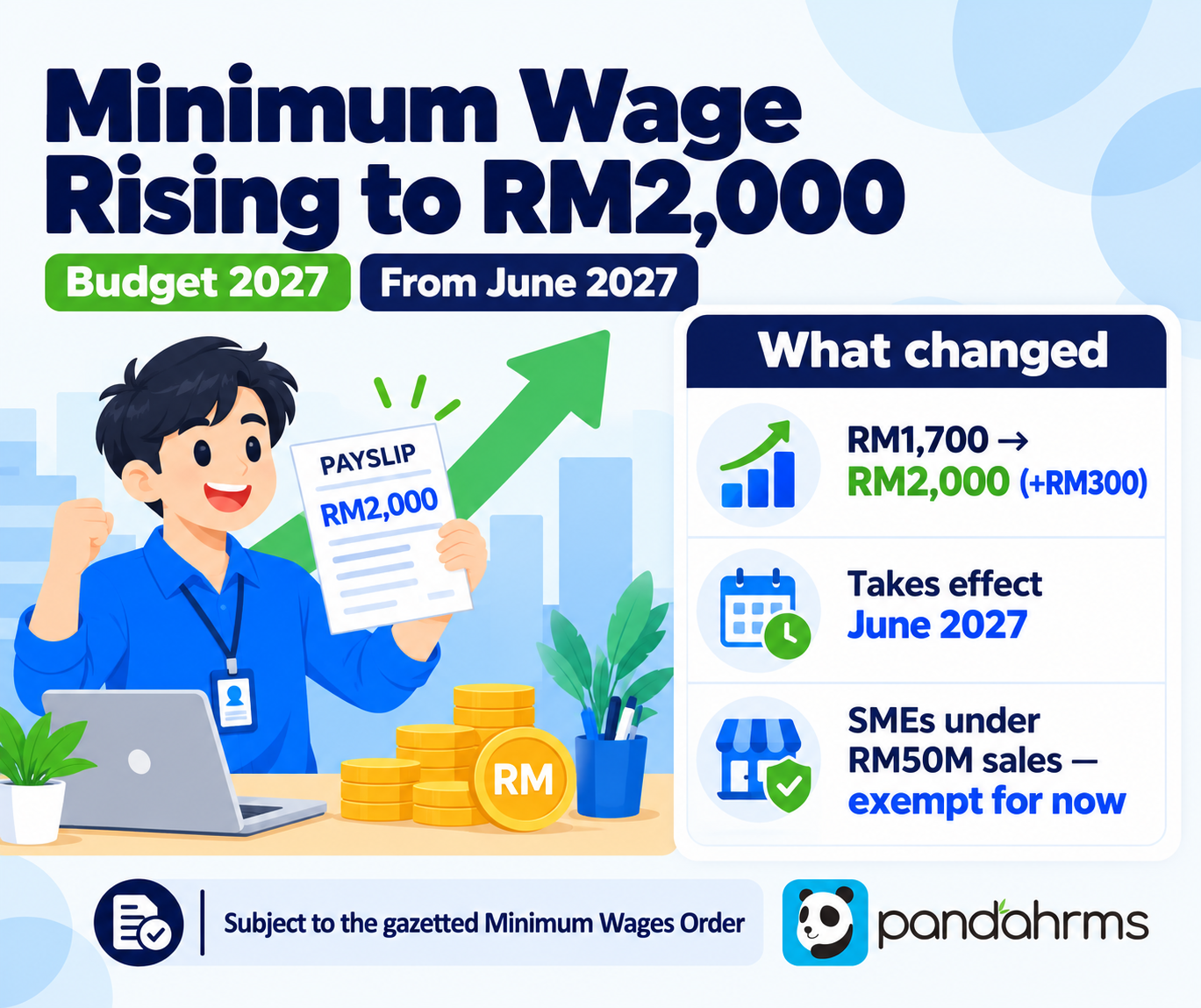
In Budget 2027, the government announced that Malaysia’s minimum wage [...]
-
Ask a few HR people how to work out a [...]
-
Malaysia’s Budget 2027 — a record RM459.8 billion, tabled on [...]
