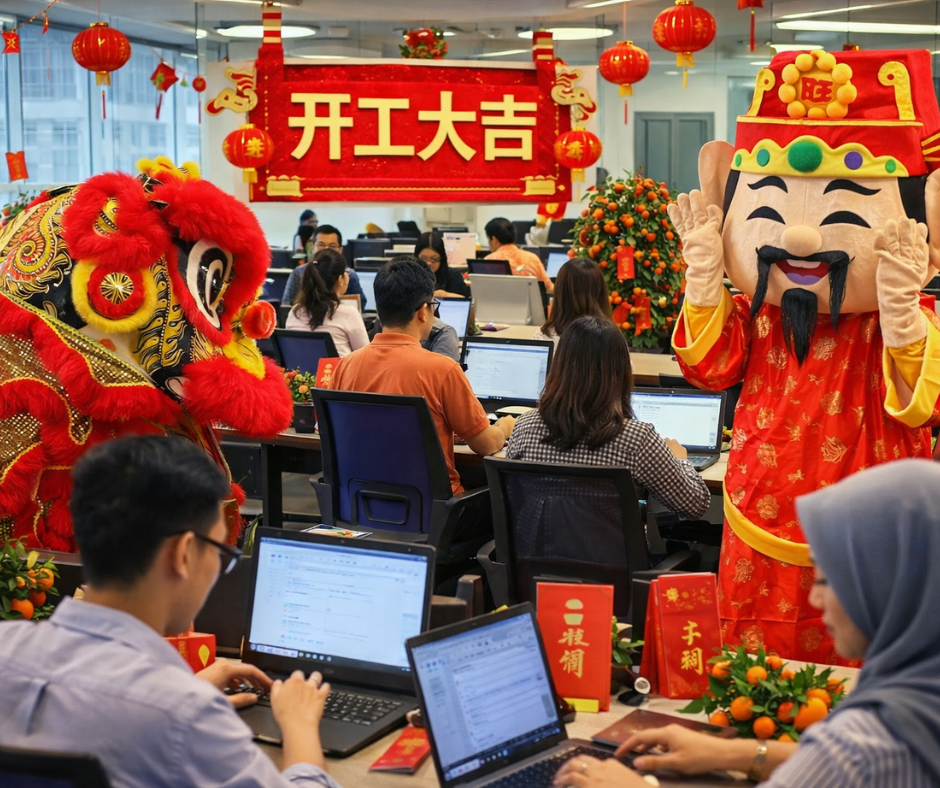
As Chinese New Year approaches, many Malaysian employers choose an auspicious date to resume business operations. While the first and second day of Chinese New Year are gazetted Public Holidays, some companies decide to remain closed on Day 3 and Day 4, even though these are non-public holidays.
This raises a critical and highly trending HR compliance question in Malaysia:
If the company decides not to open on Day 3 and Day 4, can employers deduct employees’ Annual Leave?According to the Department of Labour (Jabatan Tenaga Kerja, JTK), the answer is clear and firm: 🚫 No. Employers are NOT allowed to do so. This article explains the legal position, payroll implications, and the correct, compliant ways employers should manage Chinese New Year shutdowns—from an HR and risk-management perspective.
Who Decides the Leave, Who Bears the Cost
The Department of Labour has clarified an important legal principle:When a company closes during non-public holidays, it is an employer’s business decision—not an employee’s request for leave.In this situation:
- Employees are not absent from work by choice
- Employees did not apply for Annual Leave
- Employees are willing to work but the workplace is closed
Forced Annual Leave Deduction = Illegal
If an employer deducts Annual Leave without employees’ prior knowledge or consent, it may be considered a violation of Malaysian labour law. Common high-risk scenarios include:- Deducting Annual Leave automatically in the HR system
- Informing employees only after payroll is processed
- Assuming silence equals consent
- Orders to restore deducted Annual Leave
- Back payment of wages
- Legal liability and penalties
How Should Wages Be Calculated During Chinese New Year?
This is one of the most common payroll mistakes made by employers.Public Holidays: Day 1 & Day 2 of Chinese New Year
- Employees do not work: Normal paid public holiday
- Employees required to work:
- ✔ Employers must pay 3 times the ordinary rate of pay
Non-Public Holidays: Day 3 & Day 4
If the company decides not to operate:- ❌ No salary deduction is allowed
- ❌ No Annual Leave deduction is allowed
How Can Employers Manage a Long Chinese New Year Break Legally?
If employers wish to implement a company-wide shutdown and count certain days as Annual Leave, compliance risks vary depending on the approach used.Option 1: Advance Notice with Written Consent (⚠️ Medium Risk)
Some employers issue a notice in advance and require employees to sign their agreement. However, recent Department of Labour cases show that:- Even with signatures
- If employees are found to have no real choice
- Or fear negative consequences for refusing
✅ Option 2 (Safest & Recommended): Voluntary Annual Leave Application
This is the lowest-risk and most legally accepted approach. Best practice steps:- Announce the Chinese New Year closure schedule clearly
- Specify which dates are public holidays and which are non-public holidays
- Allow employees to decide whether to apply for Annual Leave
- Employees submit Annual Leave applications voluntarily
- Management approves and records the applications
HR Compliance Advice: Prevent CNY from Becoming a Complaint Season
Chinese New Year is traditionally a peak period for labour complaints in Malaysia due to leave and wage disputes. To reduce risk, employers should: ✔ Plan business closure dates early ✔ Avoid automatic or blanket Annual Leave deductions ✔ Ensure all Annual Leave has clear employee application recordsWhy Proper HR Records Matter More Than Explanations
Many labour disputes arise not from bad intentions, but from:- Poor documentation
- Lack of employee consent records
- Inconsistent leave practices
- Employees submit Annual Leave requests online
- All approvals are time-stamped and traceable
- HR records are audit-ready and defensible
Final Takeaway for Employers
One sentence every employer should remember:If the company closes, it is an employer’s decision. Annual Leave must always be the employee’s choice.Chinese New Year should be a season of celebration—not a trigger for labour disputes. By respecting employee rights, planning ahead, and maintaining proper HR documentation, employers can enjoy a smooth and compliant festive period.