Hiring someone is exciting — but a handshake and a WhatsApp “you’re hired” is where a lot of Malaysian employers get into trouble later. A clear offer letter and a proper employment contract protect both sides: they set expectations, prove what was agreed, and keep you compliant with the law. Here’s exactly what the two documents are, what the Employment Act 1955 requires, and the clauses every contract should contain.
Offer Letter vs Employment Contract — What’s the Difference?
People use the terms interchangeably, but they’re two stages:
- Offer letter — the document that formally offers the job, usually with the key headline terms (position, salary, start date) and a deadline to accept. It signals intent to hire.
- Employment contract (or letter of appointment) — the full, binding agreement setting out all the terms and conditions of employment. This is what governs the working relationship.
In practice, many employers combine the two: a detailed offer letter that, once signed, becomes the employment contract. Whichever format you use, the terms must be in writing and signed by both parties.
Is a Written Contract Required by Law?
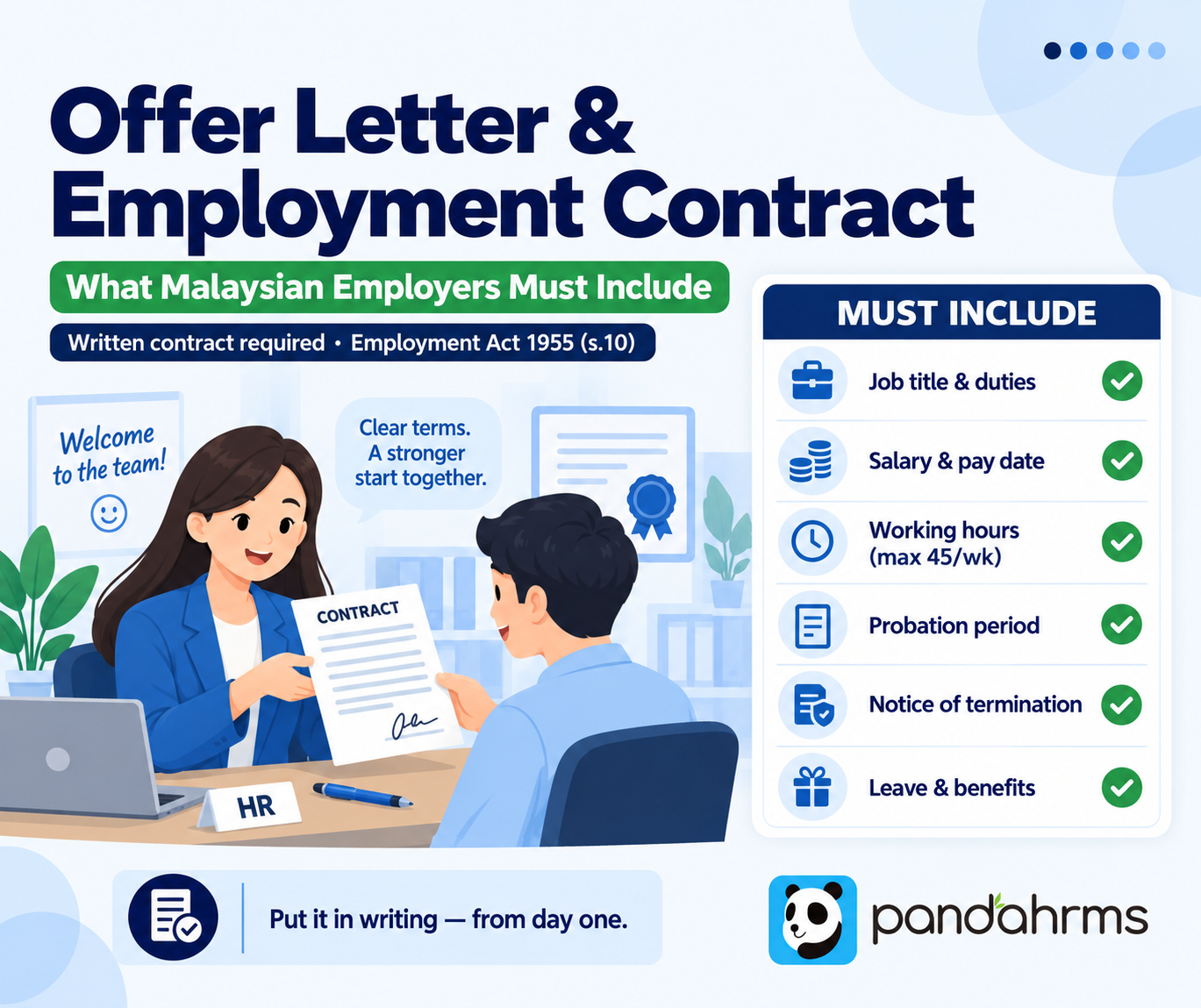
Yes. Under Section 10 of the Employment Act 1955, any contract of service for a period of more than one month must be in writing. And crucially, Section 10(2) requires every written contract to include a clause on how the contract may be terminated by either party. A verbal-only arrangement for a normal permanent role isn’t just risky — it falls short of the law.
Since the 2022 amendments (effective 1 January 2023), the Employment Act applies to all employees regardless of wage (with limited exceptions on certain provisions), so these requirements apply broadly.
What Every Employment Contract Should Include
| Clause | Why it matters |
|---|---|
| Job title & duties | Defines the role and scope of work; avoids “that’s not my job” disputes. |
| Commencement date | The official start date — the clock for service-based entitlements. |
| Salary & pay date | Basic wage, any fixed allowances, and the payment date (wages are due by the 7th of the following month). |
| Working hours & rest day | Normal hours (not more than 45 hours a week under Section 60A) and the weekly rest day. |
| Probation period | Length of probation and the confirmation process (probationers still have statutory protections). |
| Notice of termination | Required by Section 10(2). If unspecified, statutory minimums apply (see below). |
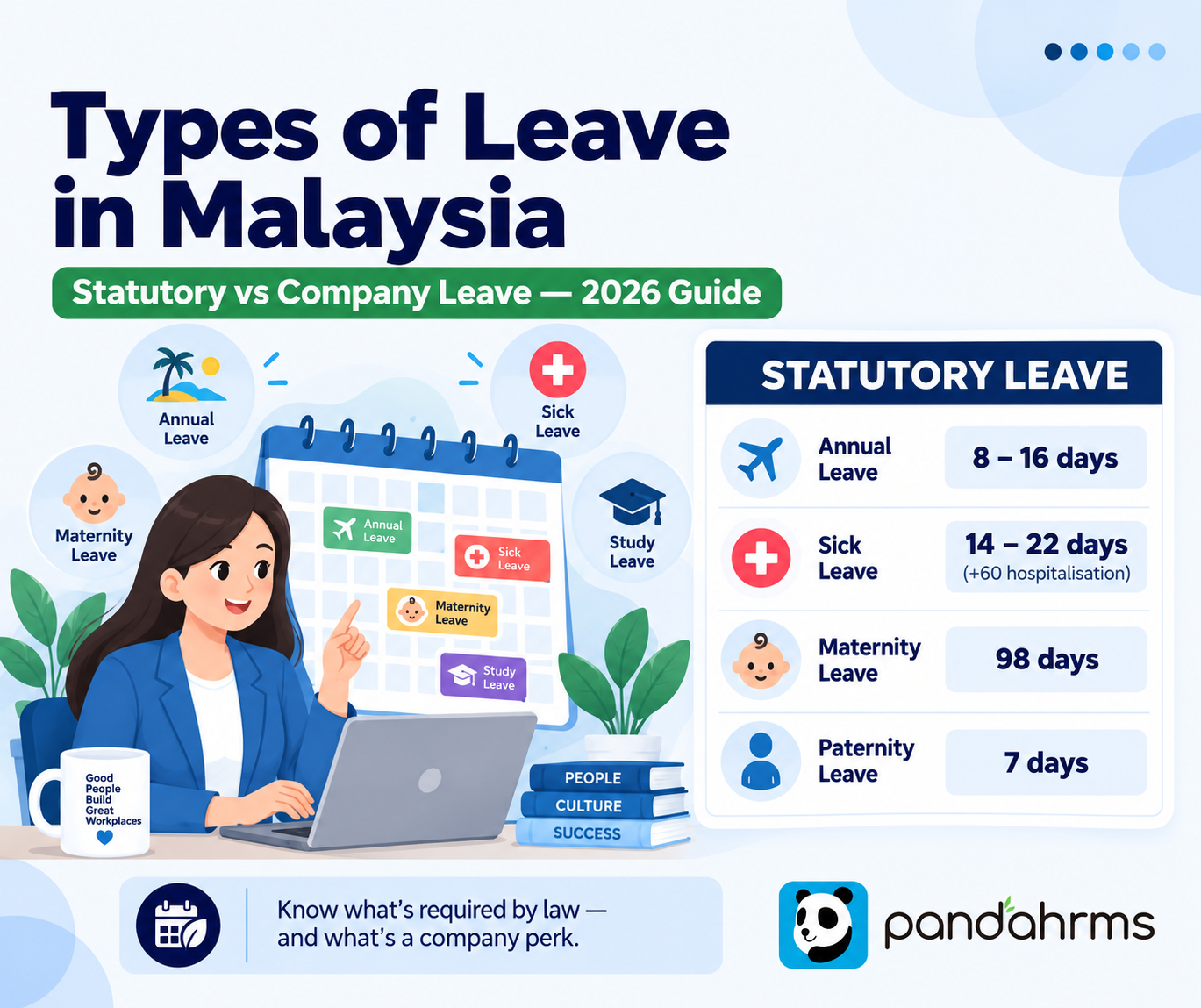
| Leave entitlements | Annual, sick, and other leave — at least the Employment Act minimums. |
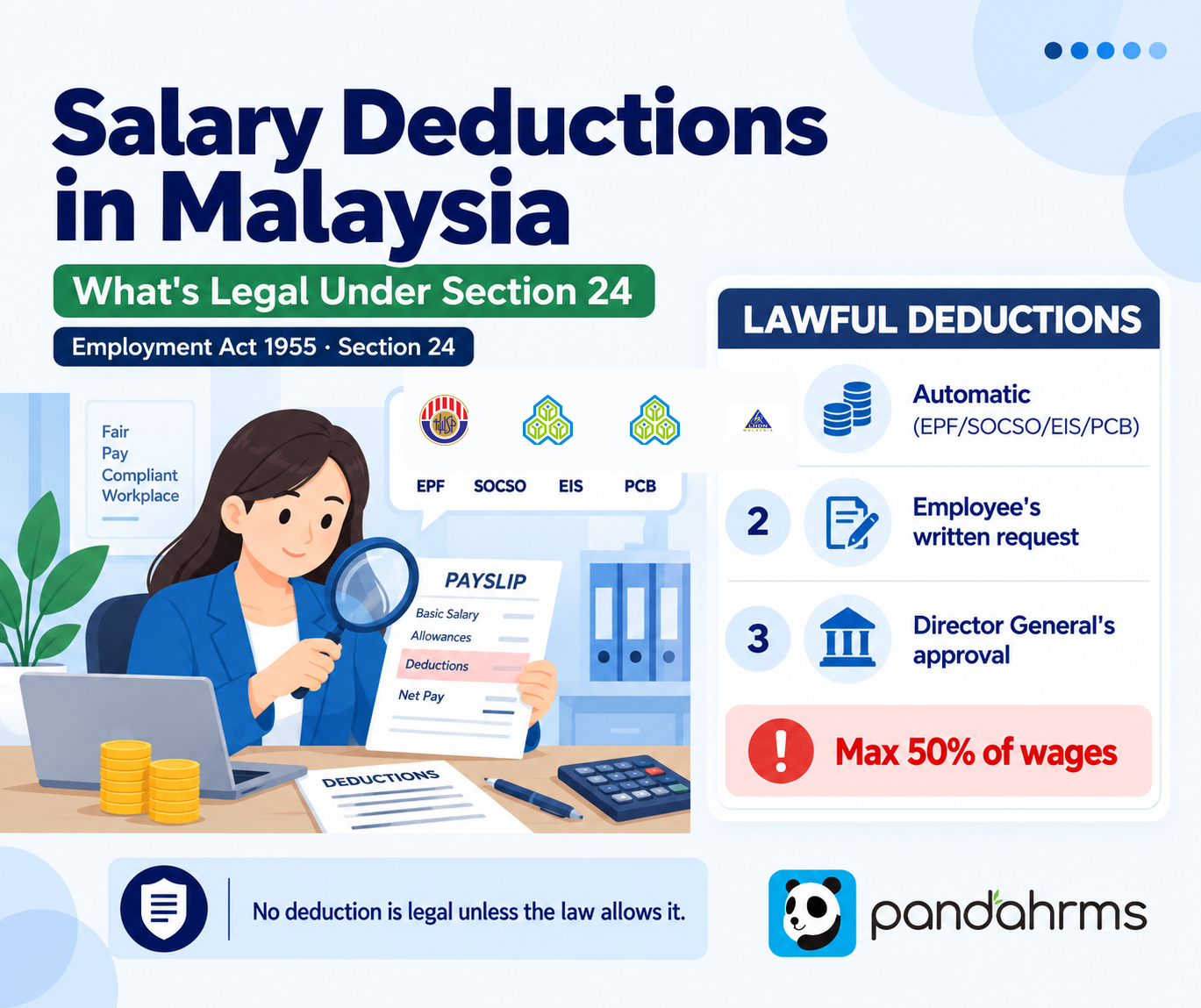
| Benefits & deductions | Medical, bonus (if any), and statutory deductions — EPF, SOCSO, EIS, PCB. |
| Place of work | Location(s), and any mobility or transfer terms. |
| Other clauses | Confidentiality, code of conduct, and reference to the employee handbook/policies. |
Notice Period: The Statutory Minimums
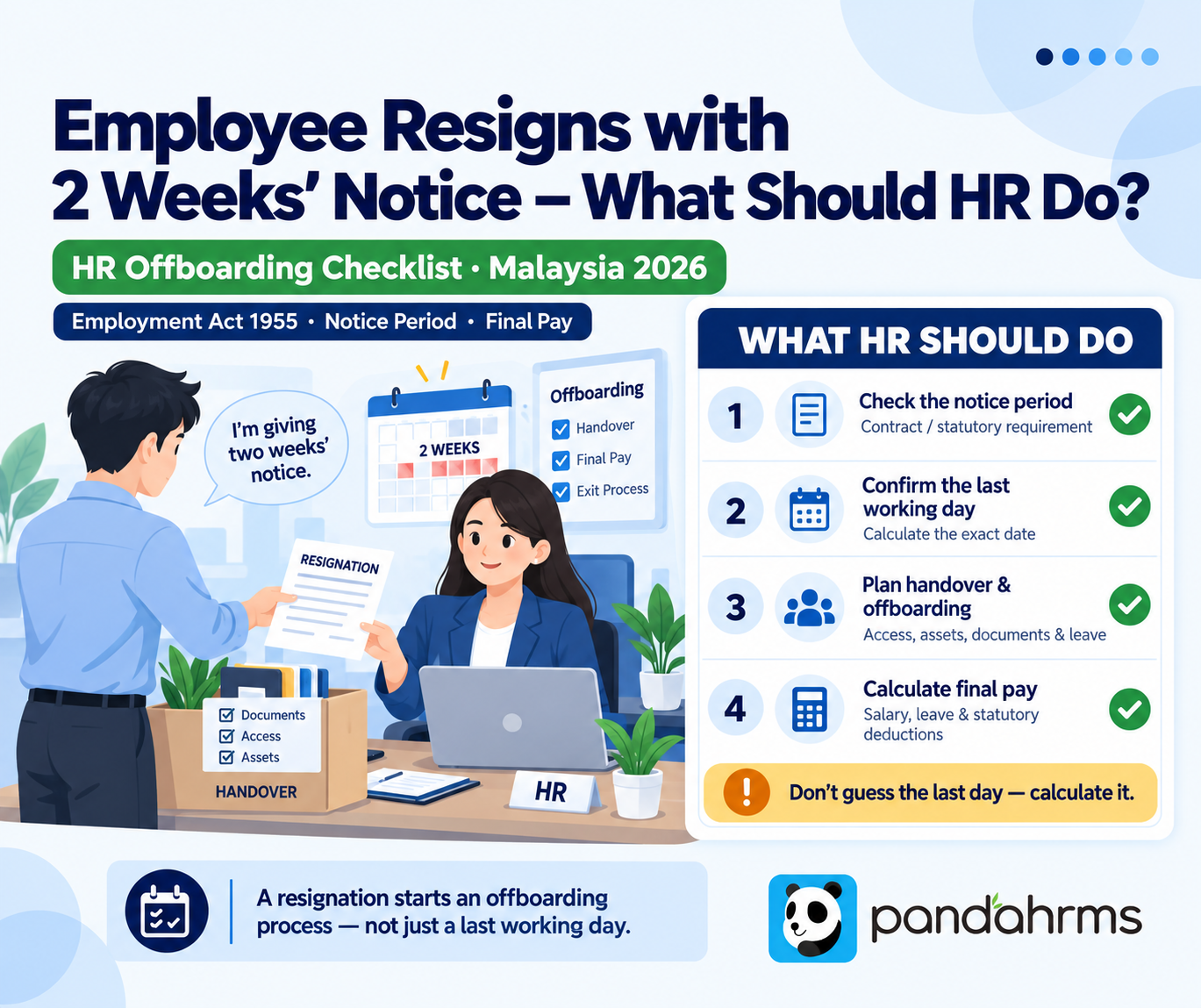
Your contract should state the notice period for termination by either side. If it’s silent, Section 12 sets the minimum notice based on length of service:
- 4 weeks — if employed less than 2 years
- 6 weeks — if employed 2 years to less than 5 years
- 8 weeks — if employed 5 years or more
You can agree a longer notice period in the contract, but not shorter than these minimums.
The Golden Rule: You Can’t Go Below the Employment Act
This is where many contracts quietly break the law. Under Section 7, any term of service that is less favourable to the employee than the Employment Act is void. So a clause offering “5 days annual leave” or “no sick leave” doesn’t hold — the statutory minimum overrides it. Think of the Act as the floor: you can always offer more, never less. For the full breakdown, see our guide on the types of leave in Malaysia.
Don’t Forget to Stamp It
An employment contract is a legally binding agreement, and under the Stamp Act 1949 it must be stamped (a nominal RM10 per original copy) — generally within 30 days of signing. This is a compliance step employers often overlook. For the details, deadlines, and recent changes, see our employment contract stamp duty guide.
Common Mistakes Employers Make
- Verbal-only hiring — no written contract for a role lasting more than a month.
- No termination clause — a direct breach of Section 10(2).
- Terms below the EA minimum — void under Section 7, and a dispute waiting to happen.
- Vague duties or salary — leads to “that’s not what I agreed to” arguments.
- Never signed or stamped — leaves the document weak as evidence.
Where Pandahrms Helps
A good contract is only useful if it’s issued, signed, and safely stored. With Pandahrms, you onboard new hires digitally — issue offer letters and contracts, collect documents, and keep every signed agreement in one secure employee record. Probation dates and confirmation reminders are tracked automatically, statutory contributions (EPF, SOCSO, EIS, PCB) are set up correctly from day one, and the terms in the contract — salary, leave, working hours — flow straight into payroll and leave management. No lost paperwork, no missed confirmations, no manual re-keying.
Final Thoughts
An offer letter and employment contract aren’t just formalities — they’re your first line of protection as an employer. Put everything in writing, include a termination clause, never drop below the Employment Act minimums, get it signed, and stamp it. Do that from the start, and you set the relationship up on solid, compliant footing.
Frequently Asked Questions (FAQs)
- Is a written employment contract compulsory in Malaysia?
Yes. Under Section 10 of the Employment Act 1955, any contract of service for more than one month must be in writing, and it must include a clause on how the contract can be terminated. - What is the difference between an offer letter and an employment contract?
An offer letter formally offers the job with the key terms and a deadline to accept; the employment contract is the full binding agreement covering all terms. A detailed, signed offer letter can serve as the contract. - What must an employment contract include?
Key clauses include job title and duties, start date, salary and pay date, working hours and rest day, probation, notice of termination, leave, benefits and statutory deductions, place of work, and confidentiality — all at or above the Employment Act minimums. - What is the minimum notice period if the contract doesn’t state one?
Under Section 12, the minimum is 4 weeks (less than 2 years’ service), 6 weeks (2 to less than 5 years), and 8 weeks (5 years or more). A contract can set a longer period, but not shorter. - Can an employment contract offer less than the Employment Act provides?
No. Under Section 7, any term less favourable to the employee than the Act is void. The Act sets the minimum — you can offer more, but never less.