Every year-end, two tax forms trip employers up: the EA Form goes to employees, and Form E (with CP8D) goes to LHDN. Miss the Form E deadline and you risk a fine — even if your company had no employees at all. This guide explains what Form E and CP8D are, who must file, the YA 2026 deadline, and how it differs from the EA Form.
What Are Form E and CP8D?
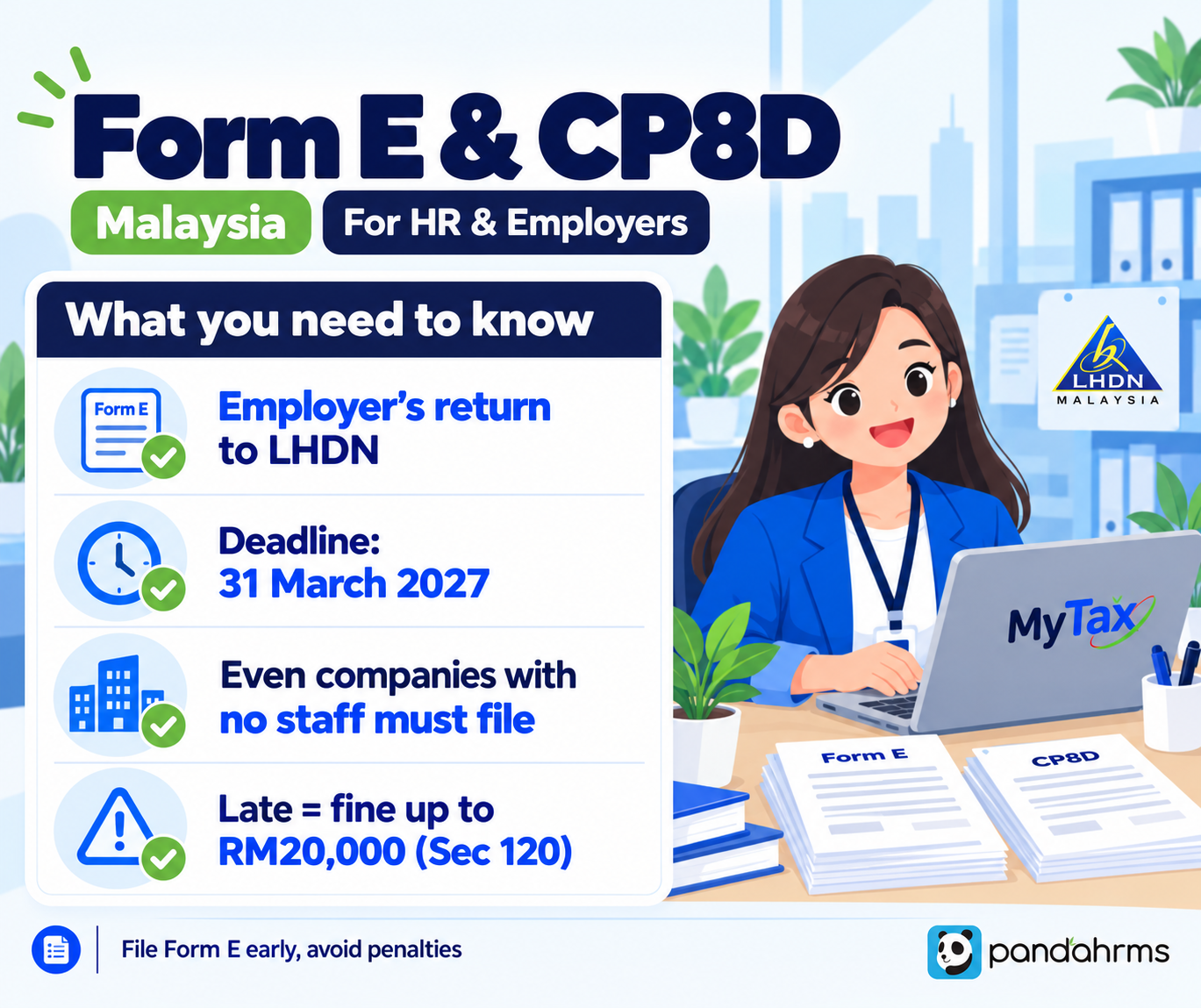
Form E (Borang E / C.P.8) is the employer’s annual return to the Inland Revenue Board (LHDN). It declares the number of employees and the total remuneration paid during the year. CP8D is the statement of employees’ particulars and remuneration — the detailed schedule that must be submitted together with Form E, listing each employee’s income, statutory deductions and tax number.
Form E vs EA Form — What’s the Difference?
They sound similar but serve different purposes and go to different places:
| EA Form (C.P.8A) | Form E + CP8D | |
|---|---|---|
| Given to | Each employee | LHDN (Inland Revenue Board) |
| Purpose | So the employee can file their own tax | The employer’s return of all employees |
| Deadline (YA 2026) | By 28 February 2027 (last day of Feb) | By 31 March 2027 |
| How | Hand to employee, keep a copy | e-Filing via MyTax portal |
For the employee-facing side, see our complete EA Form guide.
Who Must Submit Form E?
Every employer registered with LHDN must submit Form E — including companies (Sdn Bhd) with no employees or that were dormant during the year. For companies, a nil return is still required. Sole proprietors and partnerships with employees must also file. In short: if you have an employer tax file (E number), you file Form E.
Form E Deadline for YA 2026
Form E together with CP8D for the Year of Assessment 2026 must be submitted to LHDN by 31 March 2027. Companies must file online via the MyTax e-Filing portal — paper submission is generally no longer accepted for companies. LHDN may announce a short e-Filing grace period each year, but treat 31 March as the deadline and file early to be safe. (For the full year-end timeline, see our year-end payroll checklist.)
What Goes Into CP8D?
CP8D lists each employee’s details for the year, typically including:
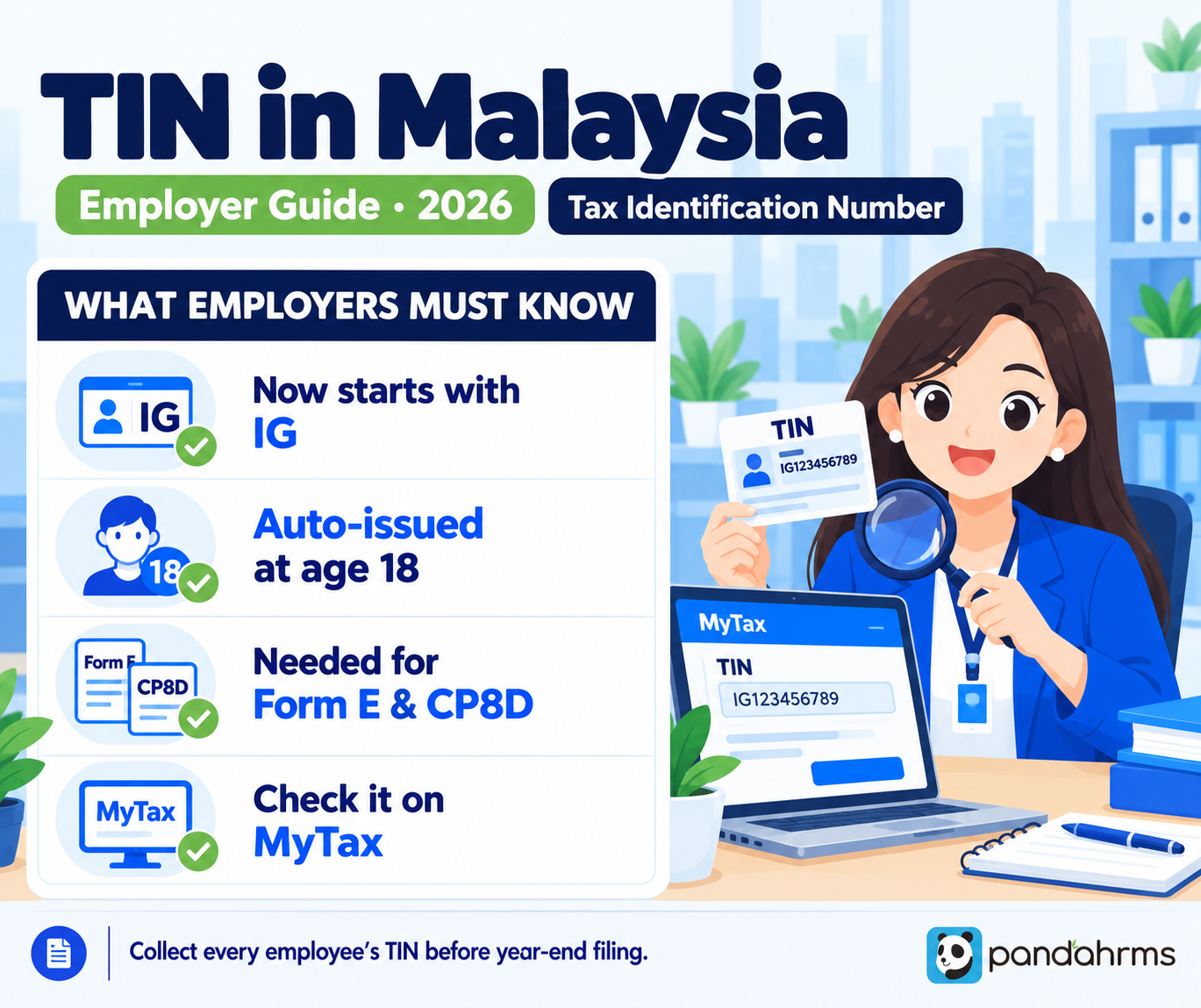
- Full name, identification/passport number and income tax number (TIN);
- Total gross remuneration — salary, allowances, bonus, commissions, benefits-in-kind and perquisites;
- EPF contributions and MTD/PCB deducted during the year;
- Other deductions and claims where applicable.
Because CP8D draws directly from your payroll records, accurate year-to-date figures are essential — reconcile them before you generate the forms.
Penalties for Late or Non-Submission
Failing to furnish Form E on time is an offence under Section 120(1) of the Income Tax Act 1967, which carries a fine of not less than RM200 and not more than RM20,000, or imprisonment for a term not exceeding six months, or both. LHDN can also pursue the company’s directors. The cost of filing late far outweighs the few hours it takes to prepare the return properly.
Year-End Form E Checklist
- Reconcile every employee’s year-to-date remuneration, EPF and PCB.
- Verify each employee’s income tax number (TIN) and identification details.
- Prepare and issue EA Forms to employees by 28 February 2027.
- Generate CP8D from the same reconciled data and submit Form E via MyTax by 31 March 2027.
- Keep copies and the submission acknowledgement for your records.
How Pandahrms Helps
Form E and CP8D are only as accurate as the payroll data behind them. Pandahrms keeps year-to-date remuneration, EPF and PCB reconciled throughout the year, generates the EA Forms for employees and the CP8D data you need for Form E — straight from your payroll, without rebuilding spreadsheets. That turns year-end tax filing into a quick review instead of a scramble.
Frequently Asked Questions (FAQs)
- When is the Form E deadline for YA 2026?
Form E with CP8D must be submitted to LHDN by 31 March 2027, via the MyTax e-Filing portal. - Does a company with no employees still need to file Form E?
Yes. Companies must file Form E even with no employees or if dormant — a nil return is still required. - What is the difference between Form E and the EA Form?
Form E (with CP8D) is the employer’s return submitted to LHDN by 31 March. The EA Form (C.P.8A) is given to each employee by the last day of February so they can file their own taxes. - What is CP8D?
CP8D is the statement of each employee’s particulars and remuneration submitted together with Form E — including income, EPF, PCB and tax number. - What is the penalty for not submitting Form E?
Under Section 120(1) of the Income Tax Act 1967, a fine of RM200 to RM20,000, or imprisonment up to six months, or both.
Source: Income Tax Act 1967 (including Section 83 and Section 120) and LHDN (Inland Revenue Board) guidance on Form E, CP8D and the MyTax e-Filing portal. Deadlines and any e-Filing grace period are set by LHDN each year — confirm current dates on the official LHDN/MyTax site. This article is general information, not tax or legal advice.