A retail worker in Klang recently went viral after resigning over how she was treated for taking medical leave. She’d submitted a valid MC after a health emergency serious enough to need an IV drip — yet instead of concern, she says her manager insulted staff in the group chat and told them “don’t work retail.” Add months of 12-hour solo shifts in a chronically understaffed outlet, and she walked.
It struck a nerve because it’s common. Many Malaysian employees have felt guilty, or been made to feel guilty, for falling sick. But here’s the question every employer and HR manager should be able to answer: is it actually lawful to scold or penalise an employee for taking a legitimate MC? Let’s look at what the law really says.
Can an Employer Scold or Punish an Employee for Taking MC?
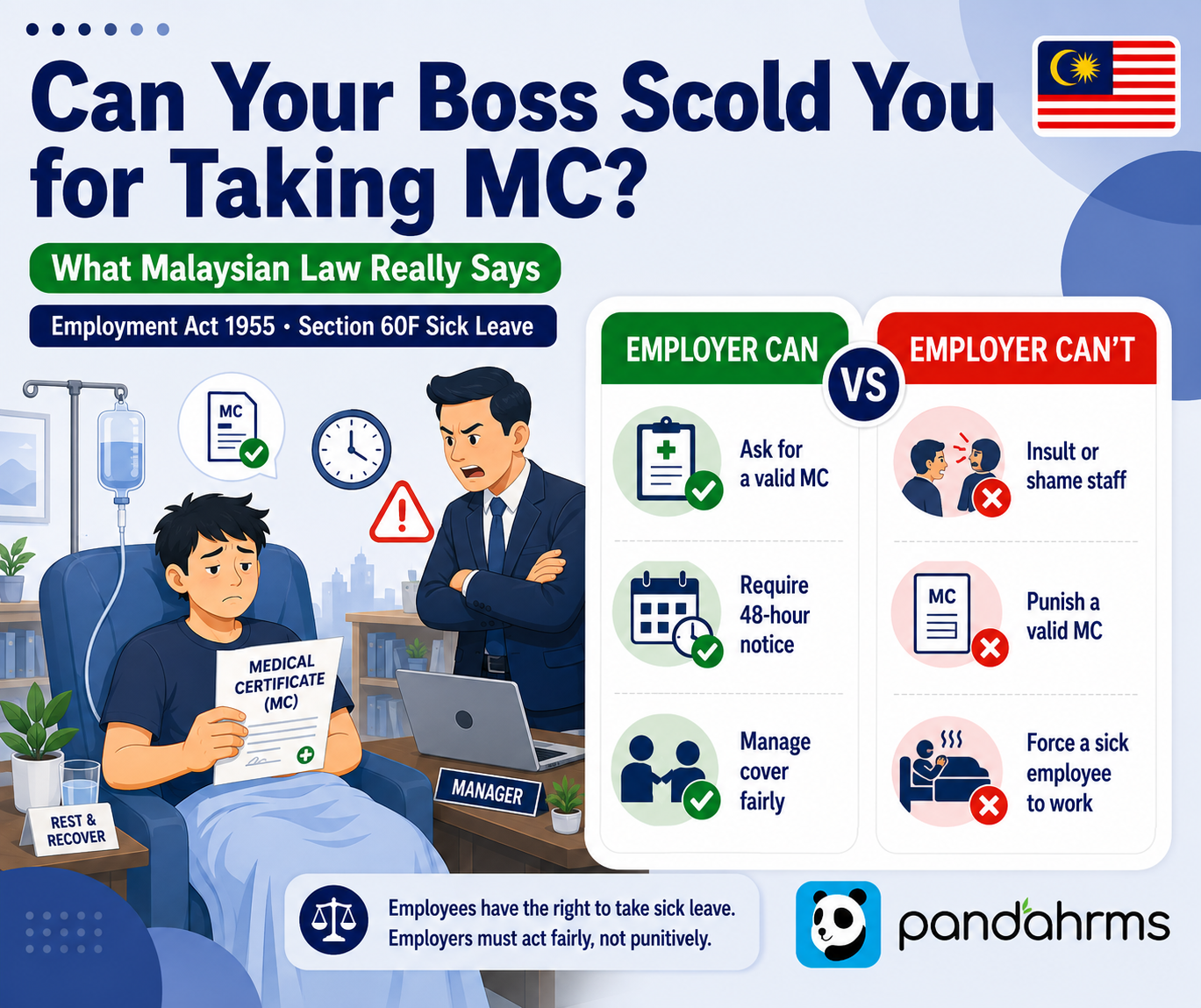
Short answer: No — not for a valid, properly certified MC. A medical certificate issued by a registered medical practitioner is your employee exercising a statutory right, not a favour they’re asking for. There is no provision in Malaysian employment law that lets an employer discipline, dock, insult, or victimise an employee for taking genuine paid sick leave they’re entitled to.
What an employer can do is manage the process — require proper notification, ask for a valid MC, and address a genuine pattern of abuse through fair procedure. Scolding, public humiliation, or retaliation is a different thing entirely, and it carries real legal and reputational risk.
The Law: Sick Leave Rights Under Section 60F
Paid sick leave is governed by Section 60F of the Employment Act 1955. For employees covered by the Act, entitlement to paid outpatient sick leave (where no hospitalisation is necessary) scales with length of service:
| Length of service | Paid sick leave (no hospitalisation) |
|---|---|
| Less than 2 years | 14 days per year |
| 2 to less than 5 years | 18 days per year |
| 5 years or more | 22 days per year |
Where hospitalisation is necessary, employees may be entitled to up to 60 days of paid sick leave per year (inclusive of the outpatient days above). To claim paid sick leave, the illness must be certified by a registered medical practitioner or dental surgeon (or a medical officer), and the employee should inform the employer within 48 hours of the MC being issued.
Once those conditions are met, the sick leave is a right. Punishing someone for using it turns a lawful entitlement into a grievance.
What Employers Can and Can’t Do About MC
| ✅ You CAN | ❌ You CAN’T |
|---|---|
| Require the employee to notify you within 48 hours | Insult, shame, or verbally abuse staff for taking a valid MC |
| Ask for a genuine MC from a registered practitioner | Refuse to accept a valid, properly certified MC |
| Address a proven pattern of MC abuse through fair procedure | Dock pay or “punish” a legitimate certified sick day |
| Plan cover and manage workload around absences | Pressure a sick employee to keep working or come in |
When Does Mistreating Staff Over MC Become Constructive Dismissal?
This is where it gets serious for employers. When an employer’s conduct is serious enough that a reasonable employee feels they have no choice but to resign, the employee can claim constructive dismissal — arguing they were effectively forced out, and the resignation should be treated as a dismissal.
Sustained humiliation, harassment over legitimate sick leave, and unreasonable working conditions can all point to a breach of the fundamental trust between employer and employee. An employee who resigns in those circumstances may bring a representation for reinstatement under Section 20 of the Industrial Relations Act 1967 (generally within 60 days of leaving). If the case succeeds, the employer can be ordered to pay compensation or back wages.
Key point: “She resigned, so it’s not our problem” is a dangerous assumption. If the resignation was driven by the employer’s own conduct, it can still be treated as a dismissal — and the burden shifts to the employer to justify it.
For a fuller breakdown, see our related guide: Forced to Resign or Be Fired? What Malaysian Employers Need to Know About Constructive Dismissal.
The Hidden Cost: Overwork and Understaffing
The MC insult grabbed the headlines, but the deeper failure in this story was operational: one outlet, two staff, and repeated 12-hour solo shifts with staffing requests ignored. Under Section 60A of the Employment Act 1955, normal working hours are capped (generally no more than 45 hours a week, with limits on daily hours and overtime). Routinely running staff on 12-hour solo shifts isn’t just a morale problem — it can breach working-hours rules and drive exactly the kind of burnout, sickness, and resignation this employer ended up with.
What HR and Managers Should Do Instead
- Accept valid MCs without drama. Log it, arrange cover, move on. Concern beats criticism.
- Train managers on tone. A frustrated line manager venting in a group chat can create legal exposure for the whole company.
- Handle suspected abuse properly. If you genuinely suspect MC abuse, address it through a fair, documented process — never public humiliation.
- Fix the root cause. Chronic understaffing and excessive hours create sick leave and resignations. Staffing is cheaper than turnover and disputes.
- Keep clean records. Accurate leave, attendance, and working-hours records protect you if a dispute ever arises.
Where Pandahrms Helps
Most MC disputes come down to two things: how leave is handled and whether the records hold up. With Pandahrms, employees apply for sick leave and upload their MC digitally, HR approves and tracks it in seconds, and every entitlement, balance, and working-hour record sits in one place — so genuine sick leave is respected without friction, and you have clean, defensible records if a grievance ever surfaces. Good process removes the emotion, and protects both sides.
Handle MC professionally, and a sick day stays a sick day — not a resignation letter.
Final Thoughts
No one chooses to fall sick. Treating a valid MC as a betrayal — with insults, pressure, or punishment — doesn’t just damage morale; it exposes the business to constructive-dismissal claims and public backlash, and it drives away the very staff you’re short of. The law is clear: certified sick leave is a right. The smart employer respects it, manages workload fairly, and keeps good records. Do that, and stories like this one never start.
Frequently Asked Questions (FAQs)
- Can my employer scold or punish me for taking a valid MC in Malaysia?
No. If your MC is genuine and certified by a registered medical practitioner, taking paid sick leave is your statutory right under Section 60F of the Employment Act 1955. An employer has no legal basis to insult, penalise, or dock pay for legitimate certified sick leave. - How many days of paid sick leave am I entitled to?
For employees covered by the Employment Act, paid outpatient sick leave is 14 days a year (under 2 years’ service), 18 days (2 to under 5 years), or 22 days (5 years or more) — and up to 60 days a year where hospitalisation is necessary. - Can being mistreated over MC count as constructive dismissal?
It can. If an employer’s conduct — such as sustained harassment over legitimate sick leave — is serious enough to force a reasonable employee to resign, it may amount to constructive dismissal, which can be challenged under Section 20 of the Industrial Relations Act 1967. - What can an employer legally do about MC?
An employer can require notification (usually within 48 hours), ask for a valid MC from a registered practitioner, and address a genuine, proven pattern of abuse through fair procedure — but not through insults, punishment, or refusing a valid MC. - Are 12-hour solo shifts legal in Malaysia?
Working hours are regulated under Section 60A of the Employment Act 1955, which caps normal hours (generally 45 hours a week) and limits daily hours and overtime. Routinely requiring 12-hour solo shifts can breach these limits and should be reviewed.