Few things rattle an employee more than seeing a smaller number on their payslip than they agreed to. With rising business costs and a tighter economy, “the company wants to cut my pay — is that even legal?” has become one of the most common questions Malaysian workers ask. And for employers under financial pressure, it’s tempting to see a pay cut as a quick fix.
Here’s the reality every employer and employee should understand: your salary is a contractual term, not something the company can quietly change whenever it likes. Let’s break down exactly when a salary reduction is legal in Malaysia — and when it crosses the line.
Can an Employer Legally Cut Your Salary in Malaysia?
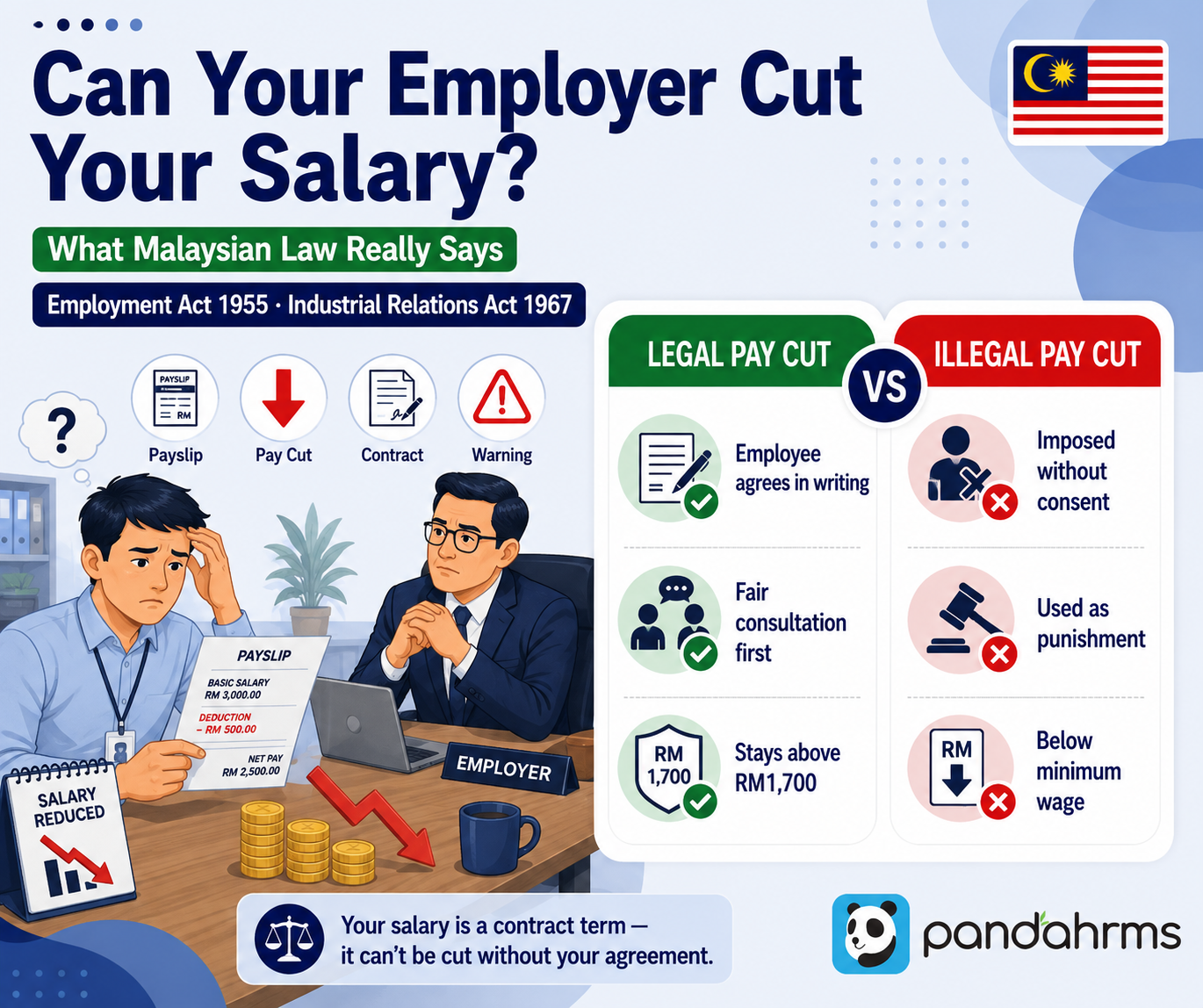
The short answer: not unilaterally. An employer cannot simply reduce your salary on their own decision. Salary is a fundamental term of your employment contract, and changing it requires your agreement. A pay cut imposed without the employee’s consent is a breach of contract — and can expose the employer to a constructive dismissal claim.
A salary reduction is only lawful when it’s done the right way: with genuine, informed consent, or through a proper, fair process. Forcing it through is where employers get into serious trouble.
The Law: Your Salary Is a Contractual Term
When you accept a job, your wage is one of the core terms both sides agreed to. Under Malaysian contract and employment principles, neither party can change a fundamental term unilaterally — it takes mutual agreement. That means an employer who slashes pay without consent has effectively broken the agreement.
Two extra guardrails apply:
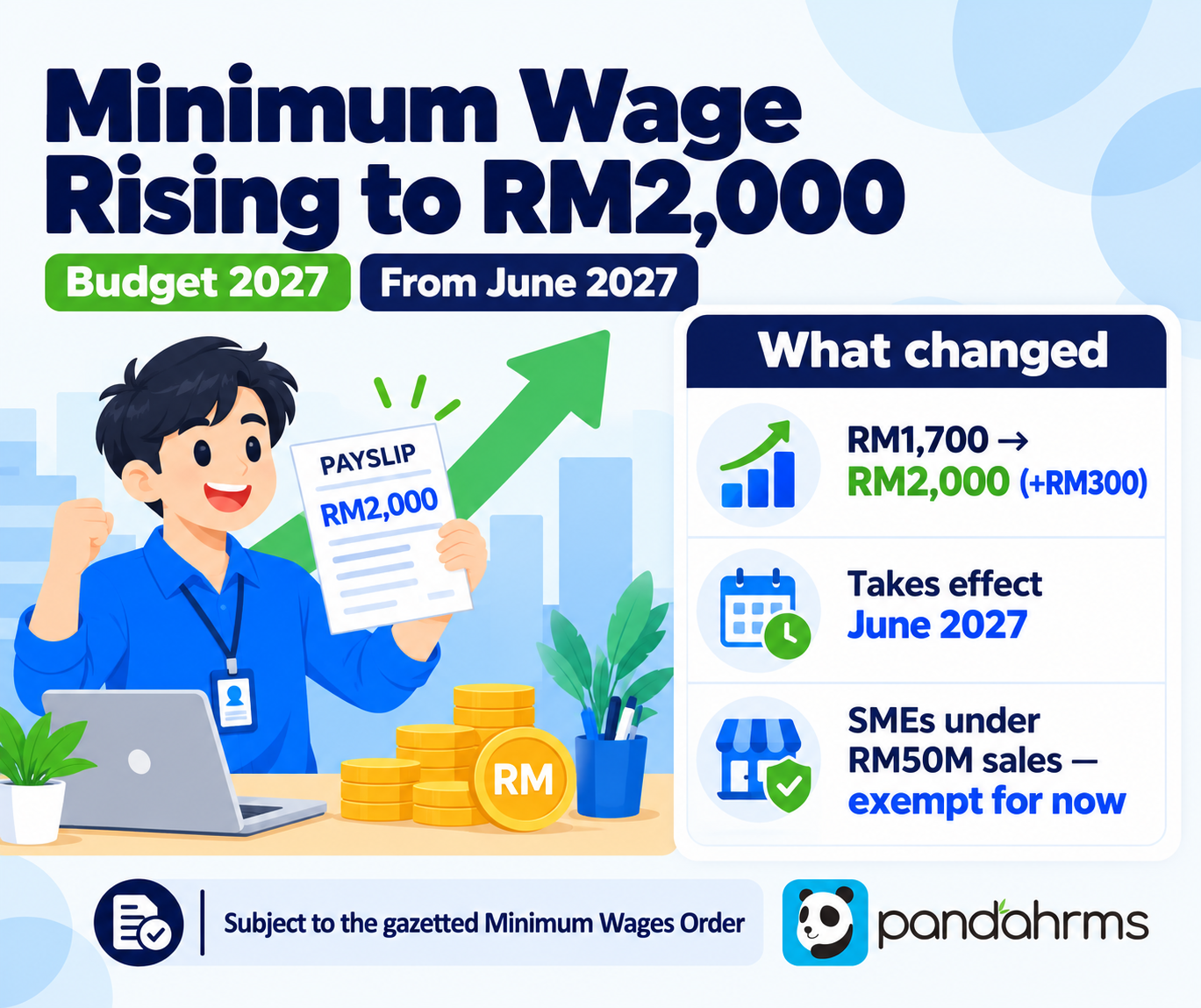
- Minimum wage floor: No salary can be reduced below the national minimum wage of RM1,700 per month.
- A pay cut is not a “deduction”: Lawful salary deductions are narrowly defined under Section 24 of the Employment Act 1955 (e.g. authorised, employee-requested, or legally required amounts). Reducing the agreed wage rate is a different thing entirely — and needs consent.
When CAN an Employer Reduce Salary?
There are legitimate routes — but every one of them depends on agreement and fair process, never a surprise cut:
| Situation | Is it allowed? |
|---|---|
| Employee agrees in writing to a reduced salary | ✅ Yes — with genuine, informed consent |
| Genuine business downturn, offered as an alternative to retrenchment, with consultation | ✅ Yes — if agreed after fair consultation |
| A restructure that changes role/scope, agreed by both sides | ✅ Yes — by mutual agreement |
| Employer imposes a cut without asking | ❌ No — breach of contract |
The common thread: consent and process. Even in a real financial crisis, the lawful path is to consult employees, explain the situation honestly, and secure agreement — ideally in writing — not to impose a cut and hope no one challenges it.
When Is a Pay Cut Illegal?
A salary reduction crosses into unlawful territory when it is:
- Unilateral — imposed without the employee’s agreement.
- Used as punishment — docking pay as an informal “penalty” for a mistake or misconduct, instead of proper disciplinary procedure.
- A disguised push-out — cutting pay so drastically that the employee is forced to resign.
- Below minimum wage — any reduction that takes pay under RM1,700 a month.
Key point: A significant, unilateral pay cut can amount to constructive dismissal. If the reduction is serious enough that a reasonable employee feels forced to resign, they can treat it as a dismissal and claim reinstatement or compensation under Section 20 of the Industrial Relations Act 1967 (generally within 60 days).
For the full picture on that risk, see our guide: Forced to Resign or Be Fired? What Malaysian Employers Need to Know About Constructive Dismissal. And if the issue is late or withheld wages rather than a rate cut, see Late Salary Payment in Malaysia: Can Employers Legally Delay Wages?
Pay Cut vs Deduction vs Unpaid Leave — Don’t Confuse Them
- Pay cut (salary reduction): lowering the agreed wage rate — needs consent.
- Deduction: withholding a specific amount from wages — only lawful under the narrow grounds in Section 24 (e.g. authorised by the employee, or required by law).
- Unpaid leave / no-pay leave: agreed time off without pay — must be by agreement, not imposed as a backdoor pay cut.
Employers sometimes dress up a pay cut as a “deduction” or “compulsory unpaid leave.” If it lowers what the employee actually earns without their genuine agreement, the label doesn’t save it.
What Employers Should Do (the Right Way)
- Be transparent. If the business genuinely can’t sustain current wages, explain the situation honestly and early.
- Consult, don’t dictate. Discuss options — temporary reduction, reduced hours, or restructuring — and seek agreement.
- Get it in writing. Any agreed change to salary should be documented and signed, stating the amount, reason, and duration.
- Stay above minimum wage. Never reduce below RM1,700 a month.
- Treat it as a last resort. A forced cut that triggers a constructive dismissal claim can cost far more than it saves.
What Employees Can Do
- Don’t sign under pressure. You’re entitled to understand the change and consider it.
- Get the details in writing — amount, reason, and how long it applies.
- Know your options. If pay is cut unilaterally, you may raise it with the Department of Labour (JTK), or, where it amounts to constructive dismissal, the Industrial Relations Department — generally within 60 days of leaving.
Where Pandahrms Helps
Pay changes are exactly where disputes start — and where clean records matter most. With Pandahrms, every salary, contract term, and agreed change is recorded with dates and documentation in one place, payroll always reflects the correct agreed rate, and any adjustment leaves a clear, signed trail. So whether you’re managing a genuine restructuring or simply keeping payroll accurate, you have transparent records that protect both the business and your people.
Handle pay changes openly and on paper, and you avoid the disputes that quietly reductions create.
Final Thoughts
A salary is a promise, not a suggestion. In Malaysia, an employer can’t simply cut it — any reduction needs genuine agreement and a fair process, must stay above the minimum wage, and can never be used as a quiet punishment or a push-out. For employers, the safe path is transparency and written consent. For employees, the key is knowing that your pay can’t be lowered behind your back. Handle it fairly, and a difficult moment stays a negotiation — not a legal dispute.
Frequently Asked Questions (FAQs)
- Can my employer reduce my salary without my consent in Malaysia?
No. Salary is a fundamental term of your employment contract, and it cannot be reduced unilaterally. A pay cut without your agreement is a breach of contract, and a serious one can amount to constructive dismissal under Section 20 of the Industrial Relations Act 1967. - When is a salary reduction legal?
When the employee genuinely agrees to it — ideally in writing — such as an agreed temporary reduction during a real business downturn (often as an alternative to retrenchment), or a mutually agreed restructuring. It must never go below the RM1,700 minimum wage. - Is a pay cut the same as a salary deduction?
No. A pay cut lowers your agreed wage rate and needs consent. A deduction is a specific amount withheld from wages, only lawful under the narrow grounds in Section 24 of the Employment Act 1955 (e.g. amounts you authorised or that are required by law). - Can an employer cut my pay as punishment for a mistake?
No. Docking pay as an informal penalty is not permitted. Genuine misconduct must be handled through a proper disciplinary process — not by quietly reducing salary. - What can I do if my salary is cut without agreement?
Get the change in writing, and don’t sign under pressure. You can raise the matter with the Department of Labour (JTK), or where the cut forces you out, file a constructive dismissal claim with the Industrial Relations Department — generally within 60 days.