“Is that in our policy?” It’s a question every Malaysian employer eventually faces — over a leave dispute, a dress code, a disciplinary case, or a claim. Without a written employee handbook, the answer is usually a shrug and an argument. With one, it’s a page reference. A good handbook turns “how we do things here” into a clear, consistent, and enforceable set of rules. Here’s what to put in it, and why every business needs one.
What Is an Employee Handbook?
An employee handbook (or staff handbook) is a single document that sets out a company’s policies, rules, benefits, and expectations for its employees. It sits alongside the employment contract: the contract covers the individual’s terms, while the handbook covers the shared rules that apply to everyone.
Is an Employee Handbook Legally Required?
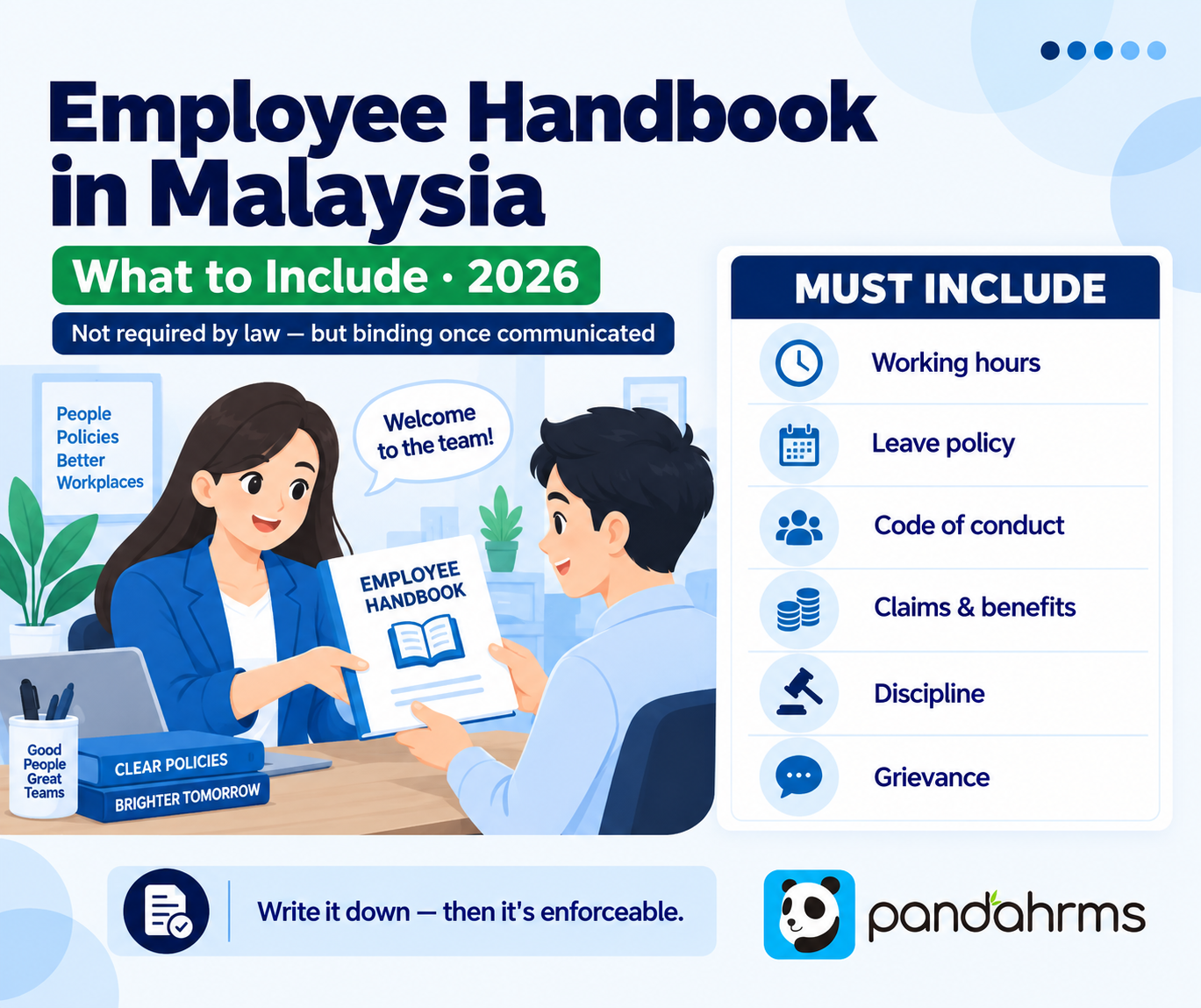
No — Malaysian law doesn’t compel you to have one. But that misses the point. A handbook is one of the most valuable HR tools you can create, because once a policy is properly documented and communicated to employees, it becomes part of the terms and conditions of employment — and can be enforced. Rules that live only in someone’s head are almost impossible to rely on in a dispute.
What to Include in an Employee Handbook
A strong handbook usually covers:
| Section | What it covers |
|---|---|
| Welcome & company info | Vision, values, and how the handbook works. |
| Working hours & attendance | Hours, rest days, lateness, and clock-in rules. |
| Leave policy | Annual, sick, and other leave — at least the Employment Act minimums, plus how to apply. |
| Salary, claims & benefits | Pay dates, overtime, claims/reimbursement process, and benefits. |
| Code of conduct | Expected behaviour, dress code, IT and social media use. |
| Disciplinary procedure | Misconduct, warnings, show-cause and inquiry process. |
| Confidentiality & data | Handling of company and personal data. |
| Anti-harassment & grievance | How to raise complaints and how they’re handled. |
| Resignation & exit | Notice periods, handover, and offboarding. |
Why Every Employer Needs One
- Consistency — everyone is treated by the same rules, which protects you against claims of unfair or selective treatment.
- Enforceability — documented, communicated policies can actually be relied on in a disciplinary case or dispute.
- Clarity — employees know where they stand, which reduces day-to-day questions and friction.
- Faster onboarding — new hires get one reference for how the company works.
Best Practices
- Align with the law — never set terms below the Employment Act minimums (they’d be void). See our guide on the types of leave in Malaysia.
- Write plainly — clear language beats legal jargon employees won’t read.
- Get written acknowledgement — have each employee confirm they’ve received and read it; this is what makes the policies binding.
- Keep it updated — review it as laws and company practices change.
Where Pandahrms Helps
A handbook only works if people actually receive it and the policies are applied consistently. With Pandahrms, you can share the handbook and company policies during digital onboarding, capture each employee’s acknowledgement, and store it in their record — so you have proof they received it. Even better, the policies stop being just words: leave rules, claim limits, and working hours from your handbook are configured directly into the system, so what’s written is exactly what’s applied. Policy and practice finally match.
Final Thoughts
An employee handbook isn’t bureaucracy — it’s the rulebook that keeps your workplace fair, consistent, and defensible. Cover the essentials, keep every policy at or above the legal minimum, get employees to acknowledge it, and keep it current. Do that, and “is that in our policy?” stops being an argument and becomes a simple, settled answer.
Frequently Asked Questions (FAQs)
- Is an employee handbook legally required in Malaysia?
No, it’s not legally mandatory. But it’s strongly recommended — once policies are documented and communicated to employees, they form part of the terms of employment and can be enforced. - What should an employee handbook include?
Typically: company info, working hours and attendance, leave, salary/claims/benefits, code of conduct, disciplinary procedure, confidentiality, anti-harassment and grievance, and resignation/exit — all at or above Employment Act minimums. - Does a handbook override the employment contract?
No. The contract governs the individual’s terms; the handbook sets shared company policies. They should be consistent, and neither can fall below the Employment Act minimums. - How do I make handbook policies enforceable?
Communicate them clearly and get each employee to acknowledge in writing that they’ve received and read the handbook. That acknowledgement is what allows you to rely on the policies later. - How often should the handbook be updated?
Review it regularly — at least when employment laws change or your company introduces new policies — so it never contradicts current law or practice.